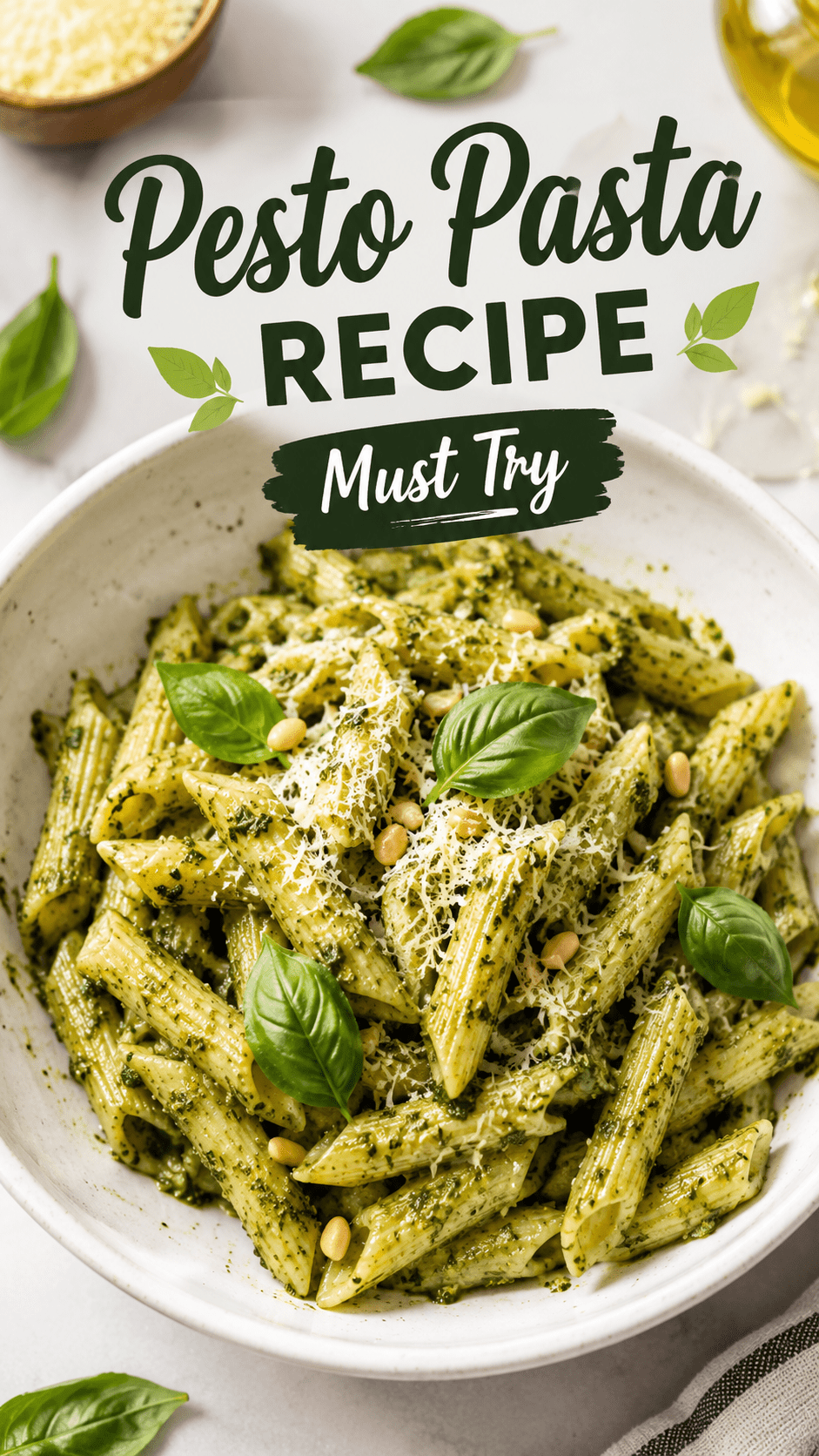
You grab a fork, twirl it, take one bite, and suddenly you’re questioning every jar of store-bought pesto you’ve ever trusted.
That’s what happens with this recipe. And once you make it yourself, going back feels criminal.
Pesto pasta is one of those dishes that sounds fancy but is genuinely one of the easiest things you’ll ever cook. Fresh basil, good olive oil, a handful of pantry staples, and about 20 minutes of your time.
That’s it.
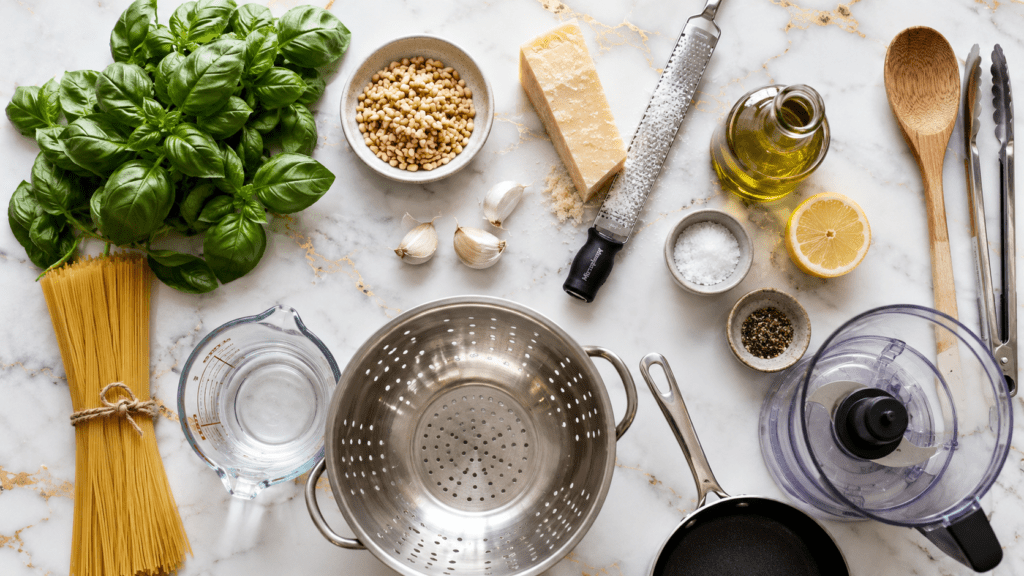
What You’ll Need
For the Pesto:
- 2 cups fresh basil leaves (packed)
- ½ cup freshly grated Parmesan cheese
- ⅓ cup extra virgin olive oil
- ¼ cup pine nuts (toasted)
- 3 garlic cloves
- ½ teaspoon salt
- ¼ teaspoon black pepper
- 1 tablespoon fresh lemon juice
For the Pasta:
- 12 oz spaghetti or linguine
- 1½ tablespoons salt (for pasta water)
- ½ cup reserved pasta water
- 2 tablespoons extra virgin olive oil (for finishing)
- ½ cup freshly grated Parmesan (for serving)
- Freshly cracked black pepper (to taste)
- Fresh basil leaves (optional, for garnish)
Tools You’ll Need
- Large pot
- Food processor or blender
- Colander
- Wooden spoon or tongs
- Measuring cups and spoons
- Microplane or box grater
- Small skillet (for toasting pine nuts)
- Liquid measuring cup (to scoop pasta water)
Pro Tips
These are the things nobody tells you until you’ve already made the dish wrong twice.
- Never skip the pasta water. This is non-negotiable. That starchy, salty water is what turns your pesto from a chunky paste into a silky sauce that coats every strand. Add it a little at a time.
- Toast your pine nuts. Takes 2 minutes in a dry pan and adds a depth of flavor that raw pine nuts simply cannot touch. Watch them closely though — they go from golden to burnt embarrassingly fast.
- Don’t add pesto to boiling pasta. Take the pot off the heat first or the heat will kill the fresh flavor and turn your vibrant green sauce a sad, army green color.
- Use room temperature pesto. If you’ve stored your pesto in the fridge, let it sit out for 10-15 minutes before tossing. Cold pesto seizes up and doesn’t coat the pasta as evenly.
- Finish with good olive oil. A drizzle of quality extra virgin right at the end adds a richness that makes the whole bowl taste more expensive than it is.
Substitutions and Variations
This recipe is flexible. Here’s what you can swap without ruining everything:
| Ingredient | Substitution |
|---|---|
| Pine nuts | Walnuts, almonds, or cashews |
| Parmesan | Pecorino Romano or nutritional yeast (vegan) |
| Basil | Arugula, spinach, or a mix of fresh herbs |
| Spaghetti | Linguine, fettuccine, penne, or gluten-free pasta |
| Olive oil | Avocado oil works in a pinch |
Want to make it a full meal? Toss in grilled chicken, sautéed shrimp, cherry tomatoes, or roasted zucchini. All of them work beautifully here.
Dairy-free? Swap Parmesan for nutritional yeast and use a vegan-friendly pasta. The sauce still comes out creamy and delicious.
Make Ahead Tips
Pesto actually gets better after sitting for a bit — the flavors meld together in a way that fresh-blended pesto hasn’t had time to do yet.
- Pesto sauce: Make it up to 5 days ahead. Store it in a jar with a thin layer of olive oil on top (this keeps it from oxidizing and turning brown).
- Freeze it: Pour leftover pesto into an ice cube tray, freeze, and pop the cubes into a bag. Use them straight from frozen — just drop a cube or two into hot pasta.
- Pasta: Cook your pasta up to 2 days ahead. Toss with a little olive oil so it doesn’t stick, store in an airtight container in the fridge, and reheat gently with a splash of water.
How to Make Pesto Pasta
Step 1: Toast the Pine Nuts
Add the pine nuts to a small, dry skillet over medium heat. Stir constantly for 2-3 minutes until golden and fragrant. Remove from heat immediately and let cool.
Step 2: Make the Pesto
Add the toasted pine nuts, fresh basil, garlic cloves, Parmesan, lemon juice, salt, and pepper to a food processor. Pulse 5-6 times to break everything down.
With the processor running, slowly drizzle in the olive oil through the top. Blend until smooth but slightly textured — you want it creamy, not watery. Taste and adjust salt if needed.
Step 3: Cook the Pasta
Bring a large pot of water to a rolling boil. Add 1½ tablespoons of salt (the water should taste like the sea — this is the only chance you have to season the pasta itself).
Cook pasta according to package instructions until al dente. Before draining, scoop out at least ½ cup of pasta water. This step matters more than you think.
Drain the pasta.
Step 4: Toss Everything Together
Return the drained pasta to the pot (off the heat). Add the pesto and 2-3 tablespoons of reserved pasta water. Toss everything together with tongs or a wooden spoon.
Add more pasta water, a tablespoon at a time, until the sauce is glossy and coats every strand beautifully.
Drizzle with a little extra olive oil, crack fresh black pepper on top, and finish with extra Parmesan.
Step 5: Serve Immediately
Pesto pasta waits for no one. Serve it right away while it’s still warm and the sauce is at peak glossiness.
Nutritional Breakdown (Per Serving)
Based on 4 servings
| Nutrient | Amount |
|---|---|
| Calories | ~520 kcal |
| Protein | 16g |
| Carbohydrates | 58g |
| Fat | 24g |
| Fiber | 3g |
| Sodium | 480mg |
Want to lighten it up? Use whole wheat pasta for extra fiber, reduce the olive oil in the pesto by half, and skip the finishing drizzle. Still delicious, just a little leaner.
Meal Pairing Suggestions
Pesto pasta pairs well with:
- A simple green salad with lemon vinaigrette (the brightness cuts through the richness of the pesto)
- Garlic bread — if you’re going to eat pesto pasta, you may as well commit
- A glass of light white wine like Pinot Grigio or Sauvignon Blanc
- Roasted vegetables — especially cherry tomatoes or asparagus
Leftovers and Storage
Pesto pasta doesn’t store quite like other pasta dishes, but it’s still totally doable.
- Fridge: Store in an airtight container for up to 3 days.
- Reheating: Add a splash of water or a drizzle of olive oil before reheating on the stove over low heat. Stir frequently. The microwave works too, but the pasta tends to clump — toss it halfway through.
- Cold pesto pasta: A lot of people actually prefer this eaten cold the next day, almost like a pasta salad. Try it before you dismiss it.
FAQ
Can I use store-bought pesto?
Yes, and it’ll still taste good. But homemade pesto takes 5 minutes in a food processor and tastes about ten times better, so it’s worth trying at least once.
Why did my pesto turn brown?
Oxidation. It’s a totally normal chemical reaction when basil is exposed to air and heat. To slow it down: add a thin layer of olive oil on top when storing, and don’t add pesto to piping-hot pasta directly. It’s still safe to eat — just less pretty.
Can I use dried basil instead of fresh?
Dried basil won’t work here. The whole point of this sauce is the bright, fresh flavor of real basil leaves. No dried substitute comes close.
What pasta shape works best?
Long pasta — spaghetti, linguine, fettuccine — works best because the pesto clings to it well. That said, penne or fusilli are great if you want the sauce to get into the pasta rather than just on it.
My pesto tastes bitter. What happened?
Over-processing the basil generates heat which can cause bitterness. Pulse in short bursts and don’t let the processor run continuously for too long. Also, make sure you’re using fresh, young basil — mature leaves with thick stems can taste more bitter.
Can I make this nut-free?
Yes! Leave the pine nuts out entirely or swap for sunflower seeds. The sauce will be slightly less creamy but still flavorful.
Wrapping Up
If you’ve never made pesto from scratch before, this is the recipe that will make you wonder why you ever bought it jarred.
It’s fast, it’s fresh, and it genuinely tastes like something you’d order at a restaurant and pay way too much money for.
Give it a shot this week — and then come back and drop a comment below. Tell me how it turned out, what you added, what you swapped, or any questions you hit along the way. I love hearing how these recipes come together in other people’s kitchens. 🍝