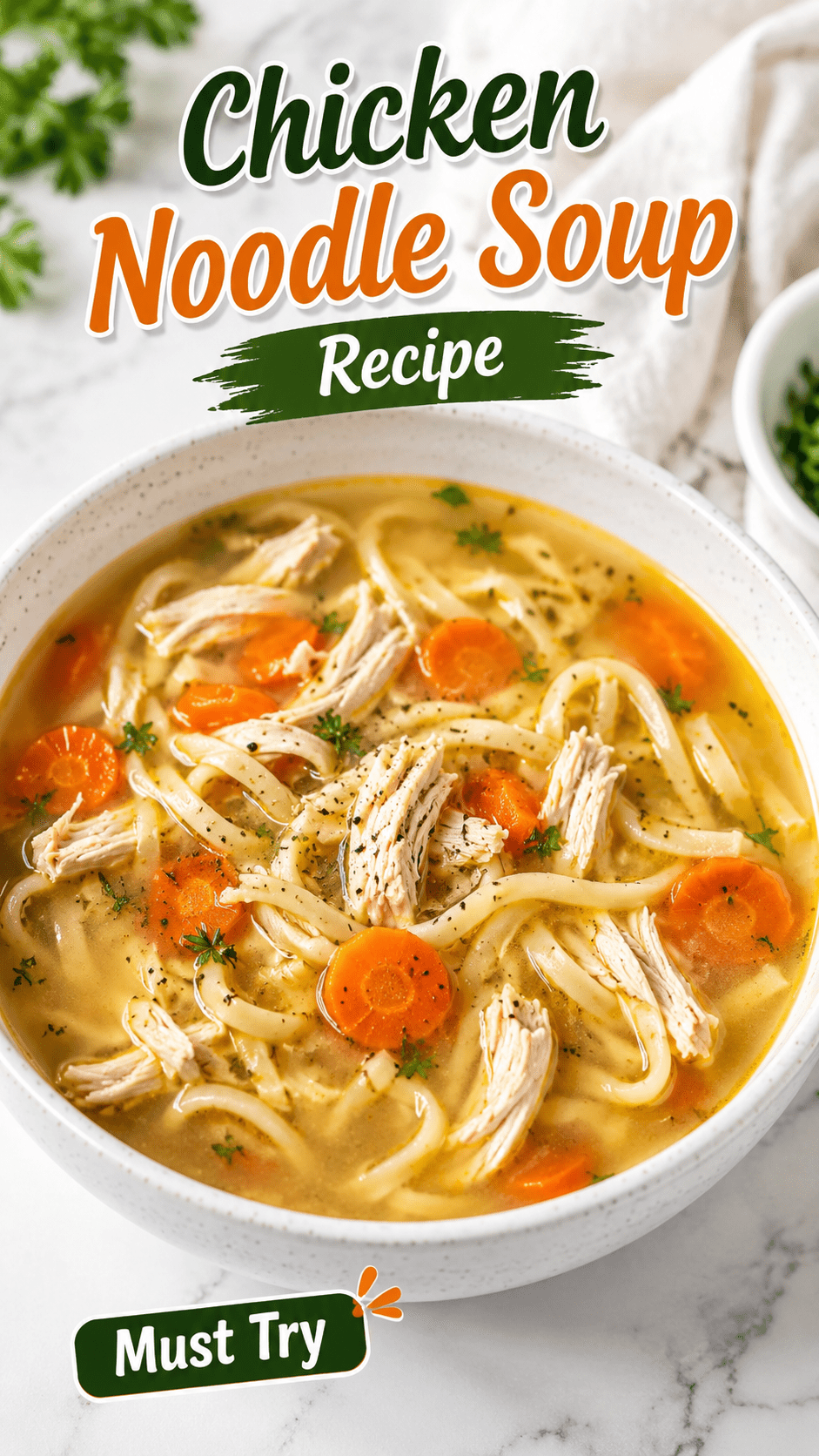
There’s a version of chicken noodle soup that comes from a can.
And then there’s this version.
It takes about 45 minutes, uses simple ingredients you probably already have, and the flavor difference is honestly a little embarrassing for the canned stuff.
The broth is rich, the chicken is tender, the noodles are perfectly cooked, and the whole thing smells like a hug. (You know exactly what I mean.)
This is the kind of soup that makes a sick day feel slightly less terrible, a cold night feel actually cozy, and a random Tuesday feel a little more like something.
Keep reading — because by the end, you’ll know every trick to make this completely foolproof. ⬇️
What You’ll Need
For the Soup
- 1.5 lbs (680g) boneless, skinless chicken breasts or thighs
- 8 cups (2 liters) low-sodium chicken broth
- 3 medium carrots, peeled and sliced into rounds
- 3 stalks celery, sliced
- 1 medium yellow onion, diced
- 4 cloves garlic, minced
- 2 cups (about 120g) egg noodles, uncooked
- 2 tablespoons olive oil
- 1 teaspoon dried thyme
- 1 teaspoon dried parsley (or 2 tablespoons fresh)
- 1/2 teaspoon dried oregano
- Salt and black pepper to taste
- 1 bay leaf
- Juice of half a lemon (trust me on this one)
Tools You’ll Need
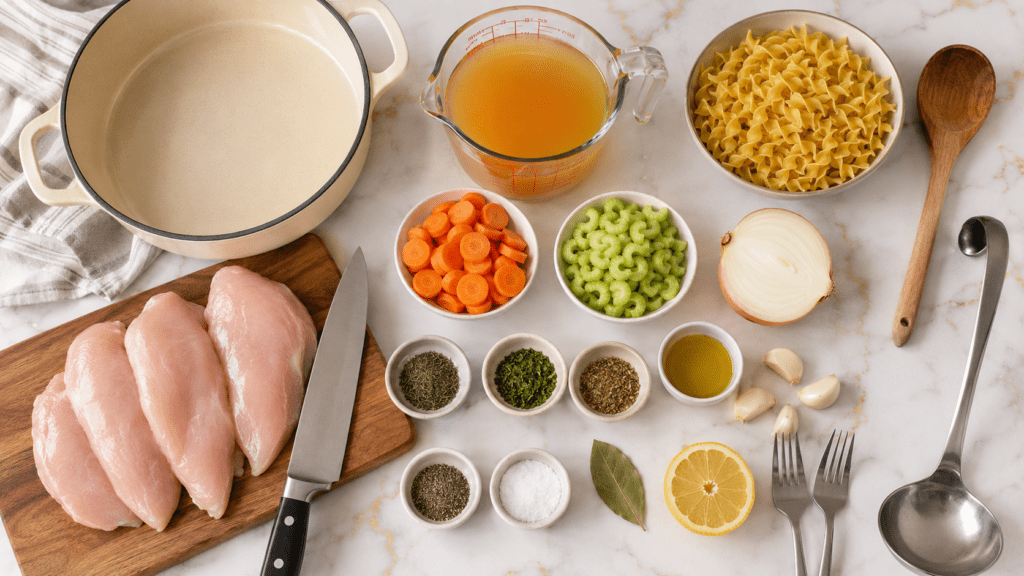
- Large pot or Dutch oven (at least 5-6 quart)
- Cutting board
- Chef’s knife
- Wooden spoon or silicone spatula
- Ladle
- Two forks (for shredding the chicken)
- Measuring cups and spoons
Pro Tips
These are the things I really wish someone had told me before I started making homemade soup.
- Use chicken thighs if you can. Breasts work, but thighs stay juicier and add way more flavor to the broth as they cook. It’s a small switch with a big payoff.
- Don’t add the noodles too early. If you add them at the start, they’ll turn into mush by the time you serve. Add them in the last 8-10 minutes — that’s their sweet spot.
- Cook the chicken directly in the broth. Skip pre-cooking it separately. Poaching it right in the soup builds way more depth of flavor than you’d get otherwise.
- Add a squeeze of lemon at the end. This sounds weird, but a small splash of lemon juice right before serving brightens the whole thing. It wakes up every other flavor in the bowl.
- Season in layers. Salt a little as you go — when you add the veggies, when you add the broth, when you add the noodles. Waiting until the end makes it harder to get the balance right.
Substitutions and Variations
Not everyone has the same pantry (or the same dietary needs), so here’s how to make this work for you:
Chicken swaps:
- Rotisserie chicken works great — just shred it and add it in the last 10 minutes
- Turkey breast is a solid substitute, especially after the holidays
Noodle swaps:
- Wide egg noodles are classic, but you can use rotini, ditalini, or any small pasta
- For gluten-free: rice noodles or gluten-free pasta
- Low-carb option: sub in zucchini noodles added at the very end
Broth options:
- Homemade chicken stock is a game-changer if you have it
- Vegetable broth works if you want a lighter base
Veggie additions:
- Diced potatoes for a heartier version
- Spinach or kale stirred in at the end
- Corn or peas for a little sweetness
Make Ahead Tips
Good news: this soup is actually better the next day.
The flavors have more time to develop overnight, and the broth gets even richer.
One thing to know: if you’re making this ahead, store the noodles separately from the soup. Noodles sitting in broth for hours will get soggy and absorb most of the liquid. Cook them fresh when you’re ready to serve, then add them in.
The base (everything except the noodles) keeps in the fridge for up to 4 days.
Nutritional Info (Per Serving, Approx.)
| Nutrient | Amount |
|---|---|
| Calories | ~280 |
| Protein | 28g |
| Carbohydrates | 22g |
| Fat | 8g |
| Fiber | 2g |
| Sodium | ~480mg (varies by broth) |
Based on 6 servings using chicken breast and egg noodles.
Diet-friendly swaps:
- Gluten-free: Use GF pasta or rice noodles
- Dairy-free: Already dairy-free as written 🙌
- Lower sodium: Use homemade or no-salt-added broth, skip added salt
- High protein: Add an extra half pound of chicken or stir in white beans
Great meal pairings:
- Crusty sourdough or garlic bread for dipping
- A simple green salad with lemon vinaigrette
- Grilled cheese (the classic combo for a reason)
How to Make It: Full Instructions
Serves: 6 | Prep Time: 15 min | Cook Time: 35-40 min | Total: ~50 min
Step 1: Sauté the aromatics
Heat the olive oil in your large pot over medium heat. Add the diced onion and cook for 3-4 minutes until softened. Add the garlic and cook for another minute until fragrant — don’t let it burn.
Step 2: Add the vegetables
Toss in the sliced carrots and celery. Stir everything together and let it cook for about 2-3 minutes. This gives the veggies a little head start.
Step 3: Pour in the broth
Add your chicken broth and stir in the thyme, parsley, oregano, bay leaf, and a generous pinch of salt and pepper. Bring everything to a boil over medium-high heat.
Step 4: Add the chicken
Once the broth is boiling, add your whole chicken breasts or thighs directly to the pot. Reduce the heat to a gentle simmer. Let the chicken poach for about 18-20 minutes until cooked through (internal temp should hit 165°F / 74°C).
Step 5: Shred the chicken
Remove the chicken with tongs or a slotted spoon. Place it on your cutting board and use two forks to shred it into bite-sized pieces. It should pull apart easily.
Step 6: Add noodles
Return the shredded chicken to the pot. Bring the broth back up to a boil and add your egg noodles. Cook for 8-10 minutes, or until noodles are tender.
Step 7: Finish and taste
Remove the bay leaf. Squeeze in the lemon juice. Taste and adjust seasoning — add more salt, pepper, or herbs as needed.
Step 8: Serve
Ladle into bowls, top with fresh parsley if you have it, and serve hot.
That’s genuinely it. No complicated steps, no fancy techniques.
Leftovers and Storage
Fridge: Store in an airtight container for up to 4 days. The flavors actually deepen, so day two and three are peak soup days.
Freezer: Freeze the soup base (without noodles) for up to 3 months. Thaw overnight in the fridge, reheat on the stovetop, then cook fresh noodles to add in.
Reheating tip: Add a small splash of water or broth when reheating — the noodles absorb liquid as it sits, so the soup gets thicker over time.
FAQ
Can I use store-bought rotisserie chicken?
Absolutely. Skip the poaching step entirely, shred your rotisserie chicken, and add it in the last 10 minutes with the noodles. It cuts the cook time down significantly.
My broth tastes bland. What do I do?
Taste it and add more salt first — that’s usually the culprit. A splash of soy sauce can also deepen the flavor without making it taste like soy sauce. Or try simmering it a bit longer uncovered to concentrate it.
Can I make this in a slow cooker?
Yes. Add everything except the noodles and lemon juice to the slow cooker. Cook on low for 6-7 hours or high for 3-4. Shred the chicken, stir in noodles, and cook on high for another 15-20 minutes until tender. Add the lemon at the end.
What’s the best type of noodle for chicken soup?
Classic egg noodles are the gold standard — they hold their texture well and have a slightly rich flavor that works perfectly here. If you want something sturdier, try ditalini or small shells.
Can I make this dairy-free?
It already is, as written. No butter or cream needed — the richness comes entirely from the chicken and broth.
How do I make the broth richer?
Add a parmesan rind to the pot while it simmers (sounds unusual, works every single time). Or use homemade stock instead of store-bought. Even just simmering it uncovered for 10 extra minutes helps concentrate the flavor.
Can I add more vegetables?
Go for it. Potatoes, corn, zucchini, spinach — all work. Just add heartier vegetables early and delicate greens in the last few minutes.
Wrapping Up
If you’ve never made homemade chicken noodle soup before, this is the recipe to start with.
It’s simple, it’s forgiving, and it tastes like something that took way more effort than it actually did.
The kind of soup that makes people ask for the recipe.
Give it a try this week and come back to leave a comment below — tell me how it turned out, what you changed, or any questions that came up along the way. I genuinely love hearing how these recipes land in real kitchens. 🍜