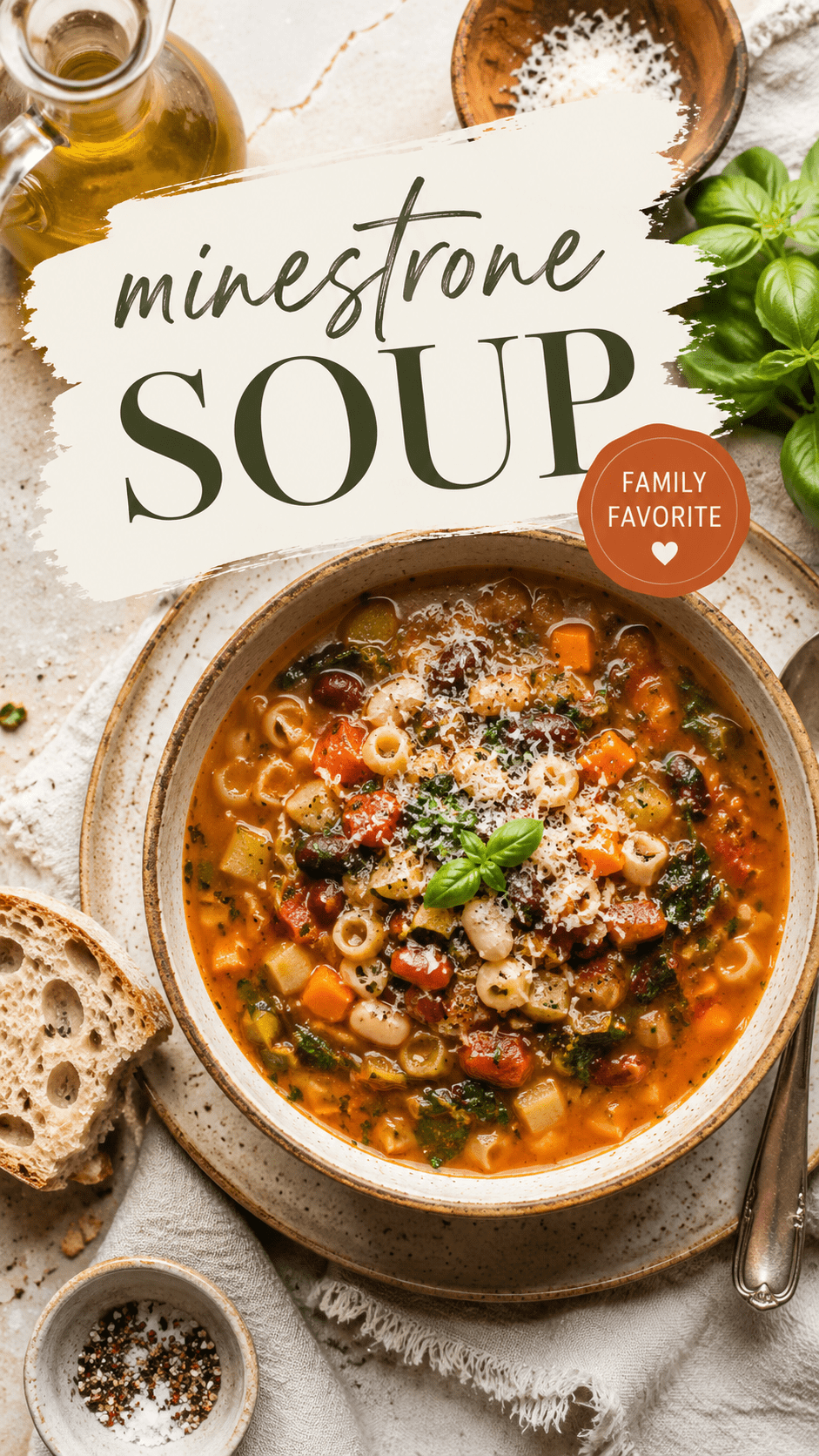
I didn’t expect a bowl of vegetables and beans to stop me mid-bite.
But that’s exactly what happened the first time I made this minestrone from scratch, instead of the sad canned version I grew up on.
The broth was deep. The vegetables still had a little bite. And somehow it tasted like it had been simmering for six hours, even though it hadn’t.
This is the soup I make now when the weather turns, when someone in my house is sick, or honestly, when I just want my kitchen to smell like an Italian grandmother lives there.
It’s simple, it’s forgiving, and it makes your whole house smell incredible. 🍲
Side Note: If you’re into cozy, veggie-packed comfort food, you’ll probably also love this one.
What Is Minestrone, Really?
Minestrone is an Italian vegetable soup, and the name literally translates to “big soup.”
That’s basically the only rule. Beyond that, it’s whatever vegetables, beans, and pasta you have on hand, simmered together in a tomato-based broth.
Every region in Italy has its own version. Some skip the pasta. Some add rice instead. Some throw in a rind of parmesan while it cooks (more on that in a second, because it’s a game changer).
There’s no wrong way to make it. But there is a better way, and that’s what we’re doing today.
What You’ll Need
Here’s everything that goes into this pot of magic.
Produce:
- 1 medium yellow onion, diced
- 2 carrots, diced
- 2 celery stalks, diced
- 3 garlic cloves, minced
- 1 medium zucchini, diced
- 2 cups green beans, trimmed and cut into 1-inch pieces
- 2 cups fresh spinach or kale, chopped
Pantry:
- 3 tablespoons olive oil
- 1 can (28 oz) crushed tomatoes
- 1 can (15 oz) diced tomatoes
- 6 cups vegetable or chicken broth
- 1 can (15 oz) cannellini beans, drained and rinsed
- 1 can (15 oz) kidney beans, drained and rinsed
- 1 cup small pasta (ditalini or elbow macaroni work great)
- 1 parmesan rind (optional, but don’t skip it if you can help it)
- 1 teaspoon dried oregano
- 1 teaspoon dried basil
- 1 bay leaf
- Salt and pepper, to taste
- Grated parmesan, for serving
That’s it. Nothing fancy, nothing you can’t find at a regular grocery store.
Tools You’ll Need
- A large soup pot or Dutch oven
- A sharp knife and cutting board
- A wooden spoon
- Measuring cups and spoons
- A ladle for serving
How to Make Minestrone Soup
Step 1: Sauté the base. Heat the olive oil in your pot over medium heat. Add the onion, carrots, and celery. Cook for about 5 minutes, stirring occasionally, until the onion turns soft and slightly see-through.
Step 2: Add the garlic. Stir in the garlic and cook for another 30 seconds. Just until it smells incredible. Don’t let it burn, or it’ll turn bitter fast.
Step 3: Build the broth. Pour in the crushed tomatoes, diced tomatoes, and broth. Add the oregano, basil, and bay leaf. If you’re using the parmesan rind, drop it in now.
Step 4: Let it simmer. Bring everything to a gentle boil, then reduce the heat to low. Cover and let it simmer for 20 minutes so all those flavors can actually get to know each other.
Step 5: Add the hearty stuff. Stir in the zucchini, green beans, and both cans of beans. Simmer uncovered for another 10 minutes.
Step 6: Cook the pasta separately. This part matters more than you’d think, so I’ll explain it below. Cook your pasta in a separate pot of salted water until al dente, then set aside.
Step 7: Finish it off. Stir the spinach or kale into the soup and let it wilt for 2 to 3 minutes. Remove the bay leaf and parmesan rind. Season with salt and pepper.
Step 8: Combine and serve. Add a scoop of cooked pasta to each bowl, then ladle the soup on top. Finish with a generous handful of grated parmesan.
Pro Tips
A few things I learned the hard way, so you don’t have to.
- Cook the pasta separately, always. If you cook it directly in the soup, it soaks up all the broth and turns to mush by day two. Keeping it separate means your leftovers stay perfect.
- Don’t skip the parmesan rind. It sounds like a small thing. It is not a small thing. It adds a savory depth you genuinely can’t replicate any other way.
- Dice your vegetables roughly the same size. This isn’t just about looks. It means everything cooks evenly, so you don’t end up with mushy zucchini and undercooked carrots in the same bite.
- Taste before you salt. Broth, canned tomatoes, and parmesan are all salty on their own. Taste first, then season at the end.
- Let it sit for 10 minutes before serving. I know it’s tempting to dig in immediately. But minestrone actually tastes better once it rests a bit and the flavors settle.
Substitutions and Variations
This soup is genuinely hard to mess up. Here’s how to make it your own.
| Original | Swap It For |
|---|---|
| Cannellini beans | Chickpeas or navy beans |
| Green beans | Frozen peas or diced potatoes |
| Ditalini pasta | Small shells, orzo, or gluten-free pasta |
| Vegetable broth | Chicken broth or bone broth |
| Kale | Swiss chard or cabbage |
| Parmesan rind | A splash of soy sauce for umami (I know, but it works) |
Want it heartier? Brown some Italian sausage before you sauté the vegetables.
Want it vegan? Skip the parmesan rind and cheese on top, or use a plant-based parmesan alternative.
Make Ahead Tips
Minestrone is one of those soups that’s honestly better the next day.
You can make the entire soup base (everything except the pasta) up to 3 days ahead. Store it in the fridge, then reheat and add freshly cooked pasta right before serving.
You can also freeze the soup base for up to 3 months. Just thaw it overnight in the fridge and cook your pasta fresh when you’re ready to eat.
Leftovers and Storage
Store the soup and pasta separately if you have leftovers. This one small step keeps everything tasting freshly made.
- Fridge: Up to 5 days, in an airtight container.
- Freezer: Up to 3 months, soup base only (no pasta).
- Reheating: Warm on the stovetop over medium-low heat, adding a splash of broth or water if it’s thickened up.
FAQ
Can I make this in a slow cooker? Yes. Sauté the onion, carrots, celery, and garlic first, then transfer everything except the pasta and greens to your slow cooker. Cook on low for 6 to 7 hours, then stir in the greens and cooked pasta at the end.
Is minestrone soup healthy? It’s packed with fiber, vegetables, and plant-based protein from the beans, making it a genuinely nourishing meal, especially with the pasta kept on the lighter side.
Why is my minestrone bland? Usually it means it needs more salt, more time to simmer, or a parmesan rind. Acid helps too, so try a splash of red wine vinegar right before serving.
Can I use fresh tomatoes instead of canned? You can, but you’ll need about 6 large, chopped, plus a bit more broth. Canned tomatoes tend to give a richer, more consistent flavor for this recipe.
What’s the difference between minestrone and vegetable soup? Minestrone specifically includes beans and pasta or rice, giving it more heartiness and protein than a typical vegetable soup.
Wrapping Up
This minestrone turned into one of those recipes I make on repeat, and I have a feeling it might become one of yours too.
It’s the kind of soup that makes your kitchen smell incredible, fills you up without weighing you down, and somehow tastes even better the next day.
Give it a try this week, and let me know in the comments how it turned out. If you made any swaps or added your own twist, I’d genuinely love to hear about it. 🍅