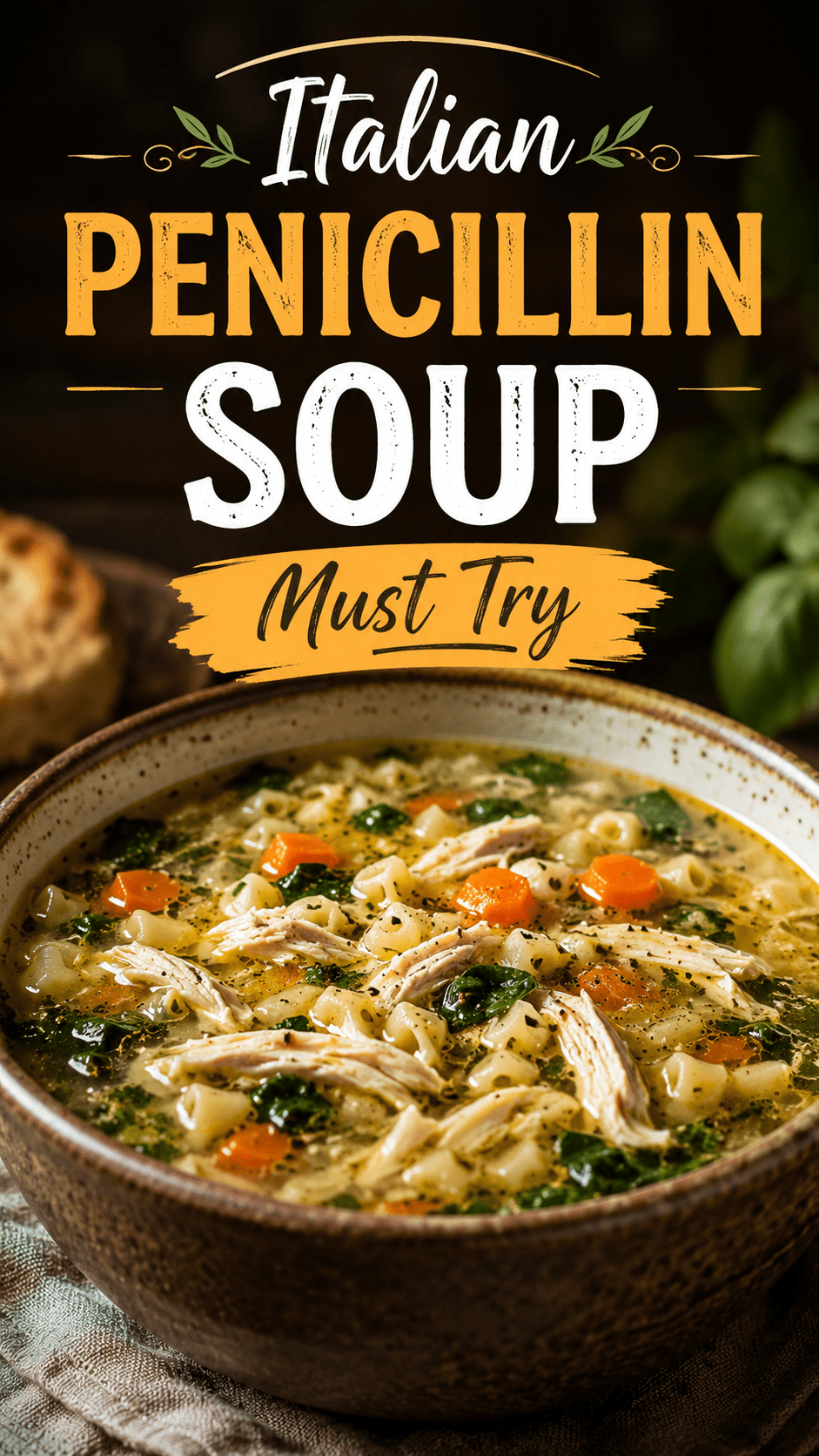
Italian Penicillin Soup Recipe
You know that soup that hits so hard it feels like medicine? This is that soup.
Italian Penicillin — also called Stracciatella or sometimes just “Italian egg drop soup” — is one of those recipes that sounds too simple to be special. But one spoonful and you’ll completely rethink that.
It’s silky, rich broth. Wispy ribbons of egg. A blizzard of Parmesan. And enough garlic and lemon to make your whole body feel like it just exhaled.
The Italians have been using this soup as cold and flu “medicine” for generations — and honestly? It works. 😮 (More on that later.)
What Makes This Soup Different
Most people have heard of Jewish penicillin — that classic chicken noodle soup. But the Italian version has a completely different personality.
Instead of noodles, you get:
- Whisked eggs poured into simmering broth — they cook instantly into soft, cloud-like strands
- A snowstorm of freshly grated Parmesan
- Fresh lemon juice that brightens everything
- Nutmeg — just a pinch, but it changes everything
It’s light but deeply satisfying. And it comes together in under 20 minutes.
What You’ll Need
The Broth
- 6 cups good quality chicken broth (homemade is ideal, store-bought works too — just get low sodium)
- 3 cloves garlic, smashed
- 1 small Parmesan rind (optional but highly recommended)
- Salt and pepper to taste
The Egg Mixture
- 4 large eggs
- 1 cup freshly grated Parmesan cheese, plus more for serving
- Pinch of freshly grated nutmeg
- 2 tablespoons fresh lemon juice (about 1 lemon)
- Salt and pepper to taste
Optional Add-ins
- 1 cup baby spinach or kale (wilts right in)
- ½ cup small pasta like pastina or acini di pepe
- Fresh parsley for serving
- Crusty bread for dunking
Tools You’ll Need
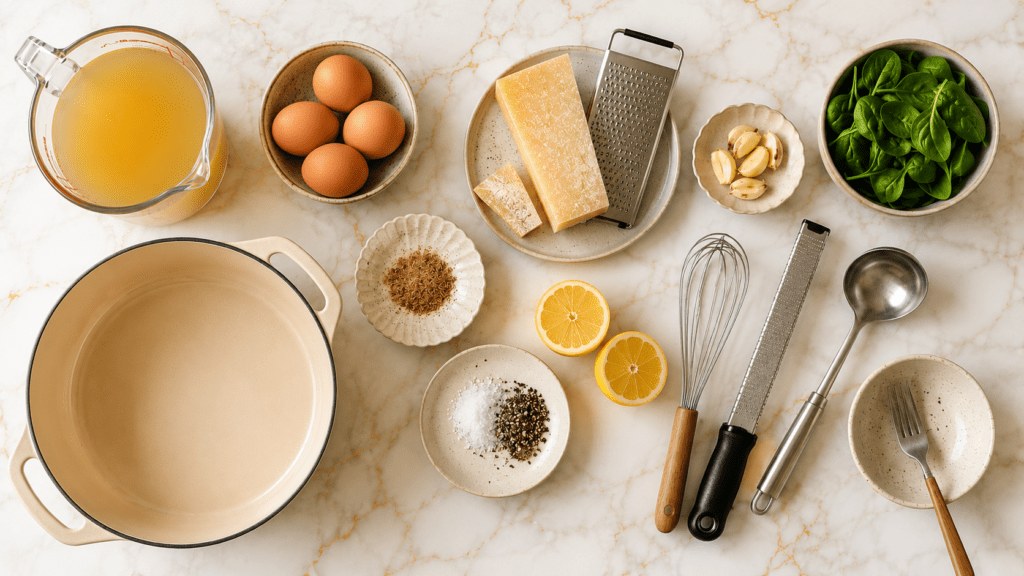
- Large saucepan or Dutch oven
- Whisk
- Fine grater or microplane (for Parmesan and nutmeg)
- Ladle
- Fork or small whisk for the egg mixture
- Measuring cups and spoons
Pro Tips
These are the things that make the difference between a good bowl and a great bowl.
- Use the Parmesan rind. Toss it into the broth while it simmers. It adds this incredible savory depth that you can’t get any other way. Most grocery stores sell them separately, or just save yours from the block.
- Whisk the eggs really well. You want them fully combined with the Parmesan before they hit the broth. Lumpy egg mixture = uneven strands.
- Keep the broth at a gentle simmer — not a rolling boil. If the broth is boiling too aggressively, the eggs cook too fast and turn rubbery instead of soft and silky.
- Pour the egg mixture slowly in a thin stream while stirring the broth in one direction. This is the trick to getting those beautiful, wispy ribbons.
- Add the lemon juice at the very end. Not during cooking. The fresh brightness gets cooked away if it goes in too early.
Substitutions & Variations
This soup is very flexible. Here’s what you can swap or add:
| Ingredient | Substitution |
|---|---|
| Chicken broth | Vegetable broth (makes it vegetarian) |
| Parmesan | Pecorino Romano |
| Fresh lemon juice | A tiny splash of white wine vinegar |
| Nutmeg | A pinch of white pepper |
| Baby spinach | Arugula, shredded kale, or even peas |
Want to bulk it up? Add a handful of small pasta (pastina, orzo, or ditalini) to the simmering broth and cook until tender before adding the egg mixture.
Want more protein? Shred some rotisserie chicken into the bowl before ladling the soup over it.
Make Ahead Tips
The broth can be made up to 3 days ahead and stored in the fridge.
But here’s the thing — don’t add the egg mixture until right before serving. The eggs don’t reheat well and the texture gets a bit odd. The good news is that once the broth is ready, the egg step takes literally 2 minutes.
Hosting a crowd? Keep the broth warm on low heat and pour each portion to order. It feels fancy and takes zero extra effort.
How to Make Italian Penicillin Soup
This is simpler than you think. Start to finish: about 20 minutes.
Step 1: Build the broth
Pour the chicken broth into a large saucepan. Add the smashed garlic and Parmesan rind if using. Bring to a gentle simmer over medium heat and let it simmer for about 10 minutes. The garlic will infuse the broth with flavor without overpowering it.
Step 2: Make the egg mixture
While the broth simmers, whisk together the eggs, 1 cup of grated Parmesan, a pinch of nutmeg, and a little salt and pepper. Whisk until completely smooth and combined.
Step 3: The magic moment
Remove the garlic cloves and Parmesan rind from the broth. Keep it at a gentle simmer. Slowly pour the egg mixture in a thin, steady stream into the broth while stirring the broth with a fork in one direction. The eggs will cook almost instantly into silky ribbons.
Step 4: Add the lemon and greens
Turn off the heat. Stir in the fresh lemon juice. If you’re using spinach, toss it in now and let it wilt for about 30 seconds.
Step 5: Taste and serve
Taste the broth. Adjust salt and pepper. Ladle into bowls, pile on extra Parmesan, and serve immediately with crusty bread.
That’s genuinely it. 🫶
Nutrition Breakdown
Per serving (makes 4 servings):
| Nutrient | Amount |
|---|---|
| Calories | ~180 |
| Protein | 16g |
| Fat | 11g |
| Carbohydrates | 4g |
| Sodium | ~700mg (varies by broth) |
Why it actually works like medicine:
- Chicken broth contains cysteine — an amino acid that helps thin mucus and reduce inflammation
- Garlic has allicin, a compound with proven antimicrobial properties
- Eggs deliver complete protein to support immune function
- Lemon juice adds a solid hit of vitamin C
- Steam from hot soup helps open airways
The Italians knew what they were doing long before modern medicine caught up. 😄
Meal Pairing Suggestions
This soup works brilliantly as:
- A starter before roasted chicken or pasta
- A light lunch with crusty sourdough
- A sick-day dinner with nothing else required
- A first course at a dinner party (it looks very impressive for how little effort it takes)
Leftovers & Storage
Important: Once the eggs are added, this soup is best eaten immediately.
The egg strands get a bit rubbery when reheated and the texture changes. So if you know you’ll have leftovers, keep the broth separate and add the egg mixture fresh when you reheat it.
- Broth (without eggs): Refrigerate up to 4 days or freeze up to 3 months
- Soup with eggs: Best eaten within 24 hours; reheat very gently on low
FAQ
Can I use store-bought broth? Yes. Just go for a good quality, low-sodium broth. You’ll be seasoning it yourself so you want control over the salt level.
What is a Parmesan rind and where do I find one? It’s the hard outer edge of a block of Parmesan that’s left after the cheese is used up. Save yours in the freezer or buy them separately at most grocery stores or Italian delis. Totally optional, but a really nice touch.
Can I make this dairy-free? The eggs are essential to the recipe, but you can skip the Parmesan. The soup will still be delicious, just less rich. Use nutritional yeast as a topper instead.
My eggs scrambled into chunks instead of ribbons. What happened? The broth was probably boiling too hard. Make sure it’s just barely simmering — you want to see small bubbles, not a vigorous boil. Also, pour the egg mixture very slowly and stir constantly.
Can I add pasta? Absolutely. Add ¼ to ½ cup of small pasta (pastina, orzo, or stelline) to the simmering broth and cook until tender before adding the egg mixture.
Is this the same as egg drop soup? Similar technique, totally different flavor profile. Chinese egg drop soup uses cornstarch to thicken the broth. Italian penicillin uses Parmesan and a pure chicken broth base. Both are incredible — just different.
Can I double the recipe? Yes, easily. Just scale everything up and use a larger pot.
Wrapping Up
This soup is proof that some of the most comforting food in the world takes almost no time at all.
It’s the kind of recipe you’ll make once and then keep in your back pocket forever — for sick days, cold nights, lazy Sundays, and dinner parties where you want to look like you know what you’re doing. 😄
Give it a try and then come back and tell me how it went. Did you add pasta? Throw in some spinach? I’d love to know what you did with it — and any questions you have along the way, drop them in the comments below.