I burned my first three attempts at fried chicken.
Not “a little too dark” burned. I’m talking smoke alarm, open-the-windows, order-takeout burned.
So if you’ve ever stood over a pan of oil feeling personally betrayed by a chicken thigh, I get it. I’ve been there. And after enough trial and error (and a few very patient tips from my mother-in-law), I finally landed on the method that gives me shatteringly crispy skin and juicy meat every single time.
This is that recipe. 🍗
Let’s get into it.
What You’ll Need
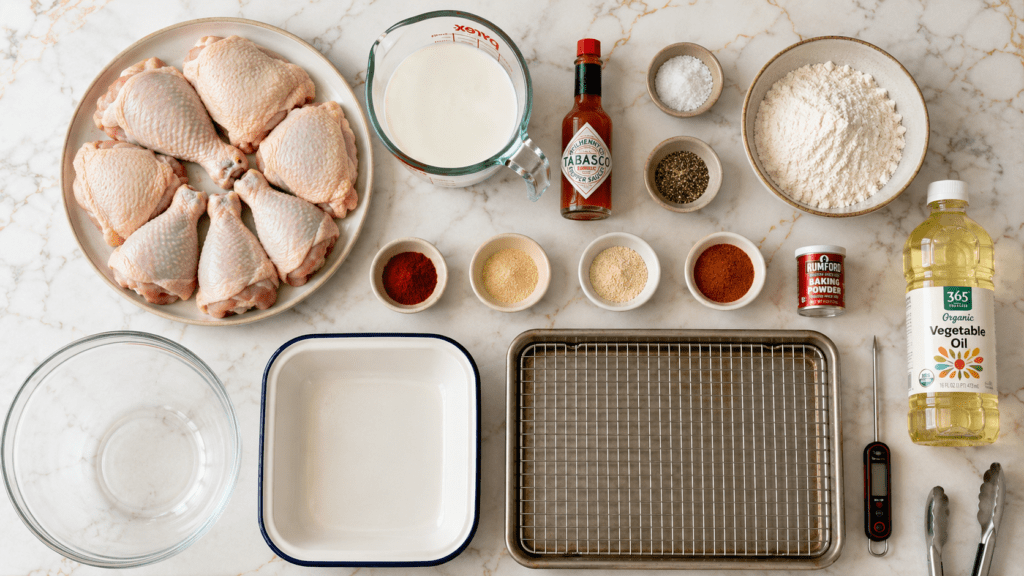
Here’s everything you’ll be grabbing from the pantry and fridge.
For the chicken and marinade:
- 8 bone-in, skin-on chicken pieces (thighs and drumsticks work best)
- 2 cups buttermilk
- 1 tablespoon hot sauce
- 1 teaspoon salt
- 1 teaspoon black pepper
For the dredge:
- 2 cups all-purpose flour
- 1 tablespoon paprika
- 1 tablespoon garlic powder
- 1 tablespoon onion powder
- 2 teaspoons salt
- 1 teaspoon cayenne pepper
- 1 teaspoon black pepper
- 1/2 teaspoon baking powder
For frying:
- 4 to 6 cups vegetable oil or peanut oil
That’s it. No obscure ingredients, no special trip to a specialty store.
Tools You’ll Need
- A large mixing bowl (for the marinade)
- A shallow dish or pie plate (for dredging)
- A heavy-bottomed pot or cast iron skillet
- A meat thermometer
- A wire rack set over a baking sheet
- Tongs
The wire rack is the one item people skip, and honestly, it’s doing more work than you think.
Pro Tips
A few things I learned the hard way so you don’t have to.
- Don’t skip the buttermilk soak. Even a couple hours makes a difference, but overnight is where the magic happens. It tenderizes the meat and helps the coating stick.
- Double dip for extra crunch. After dredging once, dip the chicken back in the buttermilk, then back in the flour. That second coat is where the crackly texture comes from.
- Let the coated chicken rest for 15-20 minutes before frying. This helps the crust bond to the chicken instead of falling off in the oil.
- Keep your oil temperature steady. This one surprised me the most. Oil that’s too hot burns the outside before the inside cooks. Too cool, and you get greasy, soggy chicken. I aim for 325°F to 350°F and check it often.
- Don’t overcrowd the pot. Fry in batches. Too much chicken at once drops the oil temperature fast, and that’s a one-way ticket to sad, pale chicken.
How to Make Fried Chicken
Step 1: Marinate the Chicken
In a large bowl, whisk together the buttermilk, hot sauce, salt, and pepper. Add the chicken pieces, making sure they’re fully submerged.
Cover and refrigerate for at least 2 hours, though overnight is ideal.
Step 2: Mix the Dredge
In a shallow dish, combine the flour, paprika, garlic powder, onion powder, salt, cayenne, black pepper, and baking powder. Whisk it together well.
Step 3: Dredge the Chicken
Remove one piece of chicken from the buttermilk, letting the excess drip off. Coat it fully in the flour mixture, pressing gently so it sticks.
For extra crunch, dip it back into the buttermilk, then back into the flour again.
Place the coated chicken on a wire rack and repeat with the rest.
Step 4: Let It Rest
Let the dredged chicken sit for 15-20 minutes at room temperature. This little pause makes a noticeable difference in the final crust.
Step 5: Heat the Oil
Pour oil into a heavy pot until it’s about 2 inches deep. Heat it to 325°F to 350°F using a thermometer to check.
Step 6: Fry the Chicken
Carefully lower a few pieces into the oil, skin side down. Don’t overcrowd the pot.
Fry for 12-15 minutes, flipping occasionally, until the internal temperature hits 165°F and the outside is deep golden brown.
Step 7: Drain and Rest
Transfer the chicken to a wire rack (not paper towels, which trap steam and soften the crust). Let it rest for 5 minutes before serving.
Substitutions and Variations
- No buttermilk? Mix 2 cups regular milk with 2 tablespoons of lemon juice or white vinegar and let it sit for 10 minutes.
- Want it spicier? Add an extra teaspoon of cayenne to the dredge, or double the hot sauce in the marinade.
- Gluten-free version: Swap the all-purpose flour for a 1:1 gluten-free flour blend.
- Boneless option: Boneless, skinless thighs work great and cut the frying time down to about 8-10 minutes.
- Oven-fried version: Bake the dredged chicken on a wire rack at 425°F for 35-40 minutes, flipping halfway, for a lighter (but still crispy) version.
Make Ahead Tips
- The chicken can marinate in the buttermilk mixture up to 24 hours in advance.
- You can dredge the chicken up to 2 hours before frying. Just keep it on the wire rack in the fridge, uncovered, so the coating stays dry.
- Fried chicken also reheats surprisingly well, so it’s a great make-ahead option for parties.
Nutrition and Diet Notes
A single fried chicken thigh (with skin) comes in around 350-400 calories, depending on the size and how much coating it picks up.
If you’re watching sodium, cut the added salt in the marinade and dredge by half. And for anyone avoiding dairy, canned coconut milk mixed with a splash of lemon juice works surprisingly well in place of buttermilk.
Pairing Suggestions
This chicken plays well with almost anything, but here are a few of my favorites:
| Side Dish | Why It Works |
|---|---|
| Creamy coleslaw | The cool crunch balances the rich, hot chicken |
| Buttermilk biscuits | Because more buttermilk is never a bad idea |
| Mashed potatoes | Classic comfort food pairing |
| Pickles | Cuts through the richness |
| Cornbread | Slightly sweet, slightly crumbly, always right |
Leftovers and Storage
Store leftover fried chicken in an airtight container in the fridge for up to 4 days.
To reheat and keep the crust crispy, skip the microwave. Instead, reheat in a 375°F oven for about 15-20 minutes, or in an air fryer for 8-10 minutes.
You can also freeze cooked fried chicken for up to 3 months. Thaw it in the fridge overnight before reheating.
FAQ
Why did my coating fall off in the oil? This usually happens when the chicken goes straight from the fridge into hot oil, or the rest time gets skipped. Letting the dredged chicken sit for 15-20 minutes helps the coating set.
Can I use chicken breasts instead? Yes, though I’d recommend cutting them into smaller pieces since they cook faster than dark meat and can dry out if left in too long.
What oil is best for frying chicken? Peanut oil and vegetable oil both have high smoke points and neutral flavors, making them ideal choices.
How do I know the oil is the right temperature without a thermometer? Drop a small pinch of flour into the oil. If it sizzles immediately and floats, the oil is ready.
Can I make this ahead for a party? Absolutely. Fry it a few hours ahead, then reheat in the oven right before serving to bring back the crunch.
Wrapping Up
Good fried chicken takes a little patience, but it’s honestly one of those recipes that feels like a win every single time it comes out of the pot.
Give this one a try, and let me know how it turns out in the comments. I’d love to hear what sides you paired it with, or any twist you added to make it your own.
And if you run into any questions along the way, drop them below. I read every comment. 🍗