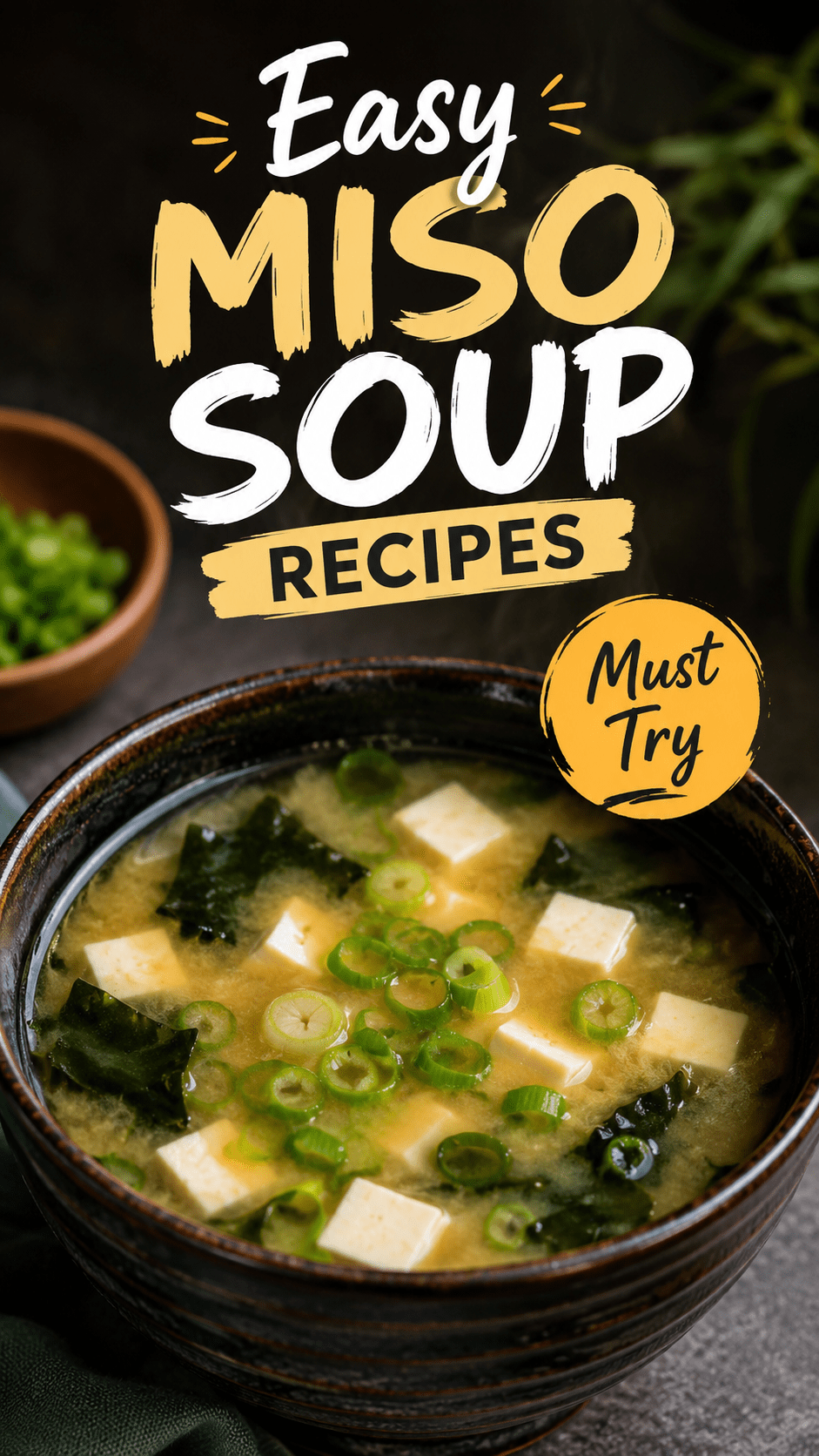
Easy Miso Soup Recipes
You know those soups that feel like a warm hug in a bowl? Miso soup is exactly that.
And the scary part? It takes less time to make from scratch than it does to boil water for instant ramen.
I used to reach for the little miso packets at the grocery store, thinking homemade was some complicated Japanese culinary project. Turns out, it’s one of the easiest soups you’ll ever make. And once you taste the real thing, going back to the packet feels like a crime.
This recipe is light, savory, deeply comforting, and ready in about 15 minutes. Oh, and there’s a step near the end that most people skip entirely — and it completely changes the flavor. Keep reading.
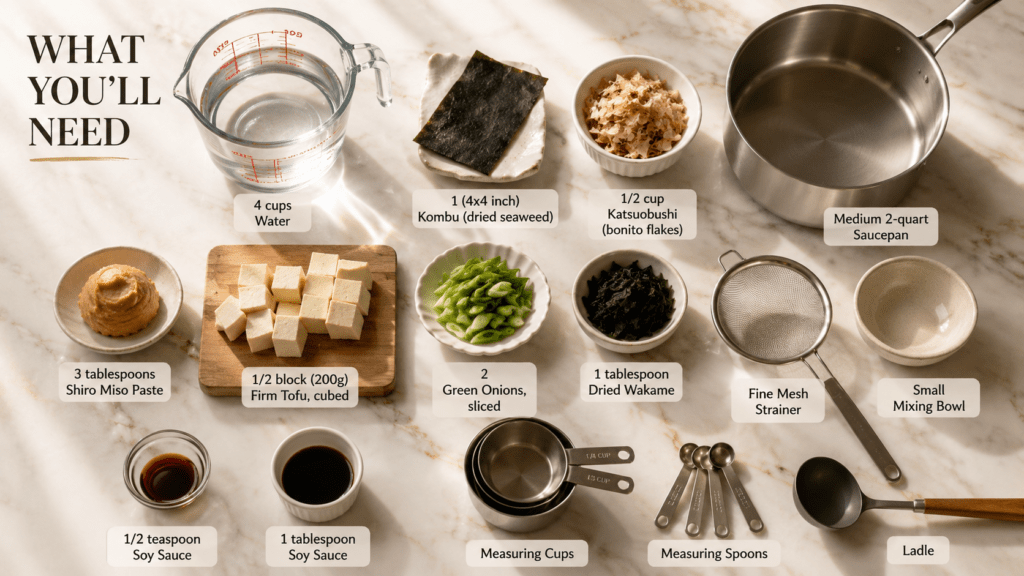
What You’ll Need
The Broth Base
- 4 cups water
- 1 piece kombu (about 4×4 inches / 10cm square), dried
- ½ cup katsuobushi (bonito flakes) — this is what makes the broth taste alive
The Soup
- 3 tablespoons white miso paste (shiro miso)
- ½ block firm tofu (about 7 oz / 200g), cut into ½-inch cubes
- 2 green onions (scallions), thinly sliced
- 1 tablespoon dried wakame seaweed (rehydrates in minutes)
- ½ teaspoon soy sauce (optional, for a deeper flavor)
Optional Add-ins
- 1 soft-boiled egg, halved
- Shiitake mushrooms, sliced thin
- Baby spinach, a small handful
- Clams or shrimp (for a heartier version)
Tools You’ll Need
- Medium saucepan (at least 2 quarts)
- Fine mesh strainer
- Small mixing bowl (for dissolving the miso)
- Ladle
- Measuring cups and spoons
- Sharp knife and cutting board
Pro Tips
These are the things that will take your miso soup from “pretty good” to “okay wait, this is incredible.”
1. Never boil the miso. This is the big one. Miso is a fermented paste packed with probiotics and delicate flavor compounds. Boiling it kills both. Always take the pot off the heat (or lower to a very gentle simmer) before you stir the miso in. Your gut and your taste buds will thank you.
2. Dissolve the miso separately first. Plopping miso paste straight into the pot creates uneven, lumpy distribution. Scoop a few tablespoons of the hot broth into a small bowl, whisk in the miso until smooth, then pour it back in. Perfectly balanced every time.
3. Don’t skip the kombu soak. The magic of Japanese dashi broth starts with a cold soak of kombu (kelp) before any heat hits it. Even 20-30 minutes makes a noticeable difference. If you have time, soak it in cold water in the fridge for a few hours or overnight.
4. Pull the kombu before it boils. Kombu releases a slimy, bitter compound when it gets too hot. Pull it out of the water right as the water starts to bubble (around 140-160°F / 60-70°C). Do not let it reach a full boil.
5. Rehydrate the wakame before adding it. Drop the dried wakame seaweed into a small bowl of cold water for 5 minutes before adding it to the soup. It’ll expand 3-4x in size and you’ll avoid adding too much by accident.
Substitutions and Variations
Not everyone has a Japanese grocery store nearby. Here’s how to adapt:
| Ingredient | Swap |
|---|---|
| Kombu | Skip it + use 1 tsp soy sauce for extra umami |
| Bonito flakes | Use vegetable broth for a fully vegan version |
| White miso (shiro) | Red miso (akamiso) for a bolder, saltier flavor |
| Firm tofu | Silken tofu for a softer texture |
| Wakame seaweed | Skip it or use baby spinach instead |
| Fresh green onions | Chives work just as well |
Vegan miso soup: Use kombu-only dashi (skip the bonito flakes) and choose a miso paste that doesn’t contain bonito or dashi. Many white misos are naturally vegan — just check the label.
Heartier version: Add udon noodles, clams, or sliced pork belly. It becomes a totally different meal.
Make Ahead Tips
The dashi broth (kombu + bonito flakes base) can be made ahead and stored in the fridge for up to 5 days, or frozen for up to 3 months.
Keep the broth plain — don’t add miso, tofu, or seaweed until you’re ready to serve. The miso paste can separate and the tofu texture suffers when reheated.
When you’re ready to eat: heat the broth, add your toppings, dissolve the miso in, done. You’ve essentially got a weeknight soup ready in 5 minutes flat.
Nutritional Breakdown (Per Serving)
Based on 4 servings, standard recipe
| Nutrient | Amount |
|---|---|
| Calories | ~70 kcal |
| Protein | 5g |
| Carbohydrates | 5g |
| Fat | 3g |
| Sodium | ~800mg |
| Fiber | 1g |
Worth noting: Miso is fermented, so it contains beneficial probiotics. It’s also a natural source of manganese, zinc, copper, and B vitamins. Just watch the sodium if you’re keeping an eye on salt intake — it adds up fast with soy sauce and miso together.
Meal Pairing Suggestions
Miso soup pairs beautifully with:
- Steamed white rice — the classic Japanese pairing
- Onigiri (rice balls) for a light lunch
- Grilled salmon or teriyaki chicken
- Soba noodles as a light side dish
- A simple cucumber and sesame salad for balance
How to Make Easy Miso Soup
Prep time: 5 minutes Cook time: 10 minutes Total time: 15 minutes Servings: 4
Step 1: Make the Dashi Broth
Add 4 cups of cold water and the kombu piece to your saucepan. Let it soak for at least 10-20 minutes (longer is better, even room temp soaking works).
Place the pot over medium heat. Watch it closely — as soon as you see small bubbles forming at the bottom (not a full boil), remove the kombu and discard it.
Step 2: Add the Bonito Flakes
Bring the water to a gentle boil. Add the katsuobushi (bonito flakes) all at once. Let them steep for 2-3 minutes without stirring, then remove the pot from the heat.
Strain the broth through a fine mesh strainer into a bowl or another pot, pressing gently on the flakes. Your dashi is done. It should smell light, savory, and oceanic.
Step 3: Rehydrate the Wakame
While the broth is steeping, soak your dried wakame in a small bowl of cold water for 5 minutes. Drain and set aside.
Step 4: Prepare the Tofu
Cut the tofu into small ½-inch cubes. Pat them dry gently with a paper towel so they don’t water down your broth.
Step 5: Heat the Broth and Add Toppings
Return the strained dashi to your saucepan over medium-low heat. Add the tofu cubes and rehydrated wakame. Heat gently for 2-3 minutes until warmed through.
Do not let it reach a rolling boil.
Step 6: Dissolve the Miso (The Step Most People Rush)
Turn the heat off (or very low). Ladle about ¼ cup of the hot broth into a small bowl. Add the miso paste and whisk until completely smooth with no lumps.
Pour the dissolved miso back into the pot and stir gently to combine.
Taste it. Adjust with a little more miso if you want it stronger, or a splash more water if it’s too salty.
Step 7: Serve Immediately
Ladle into bowls and top with sliced green onions. Add any optional toppings you like. Serve right away — miso soup is best fresh.
Leftovers and Storage
In the fridge: Store leftover miso soup (miso already added) for up to 2 days. The tofu gets softer and the flavors deepen, which many people actually prefer.
Reheating: Warm it very gently on the stovetop over low heat. Do not boil. Microwave works too — 2 minutes on medium power.
Freezing miso soup: Skip it. The tofu becomes rubbery and the texture suffers significantly. If you want to prep ahead, freeze just the plain dashi broth instead.
FAQ
Can I use store-bought broth instead of making dashi? Yes, vegetable or chicken broth works in a pinch. The flavor profile shifts, but it’s still good. Add a small splash of soy sauce to deepen the umami.
What’s the difference between white, red, and yellow miso? White miso (shiro) is mild, slightly sweet, and great for soups. Red miso (akamiso) is aged longer, darker, saltier, and more intense. Yellow miso falls in between. For this recipe, white miso is the classic choice.
My miso soup tastes too salty. What happened? You likely added too much miso or reduced the broth too much. Add a splash more water or plain dashi to dilute. Always taste before adding more miso.
Can I make this gluten-free? Most miso pastes are gluten-free (they’re made from soybeans, rice, or barley). Check the label to be sure — barley-based miso contains gluten. Use tamari instead of soy sauce if needed.
Is it okay to drink miso soup from the bowl? In Japan, that’s actually the traditional way to eat it. The bowl is lifted to the lips and the broth is sipped, while the tofu and toppings are eaten with chopsticks.
Why does my miso soup look cloudy? That’s totally normal and actually a sign that the miso is properly incorporated. Cloudy miso soup = good miso soup. Crystal clear broth means you might have added too little miso.
Can I use miso from the grocery store? Absolutely. Most large grocery stores stock white miso paste in the refrigerated Asian foods section. Look near the tofu. Brands like Hikari, Marukome, or Miso Master are all great.
Wrapping Up
Fifteen minutes, one pot, and a bowl of soup that tastes like you actually know what you’re doing in the kitchen.
That’s the thing about miso soup. It looks like something only a Japanese grandmother should make, but once you know the basics (don’t boil the miso, dissolve it first, pull the kombu early), it’s one of the most forgiving recipes in existence.
And honestly? It’s the kind of meal you’ll add to your weekly rotation without even thinking about it. Light enough for lunch, comforting enough for a cold evening, and simple enough for a Tuesday night when you just can’t deal.
Give it a try this week. And when you do, come back and leave a comment below — I’d love to hear how it turned out for you, what you added in, and any questions you run into along the way. 🍜