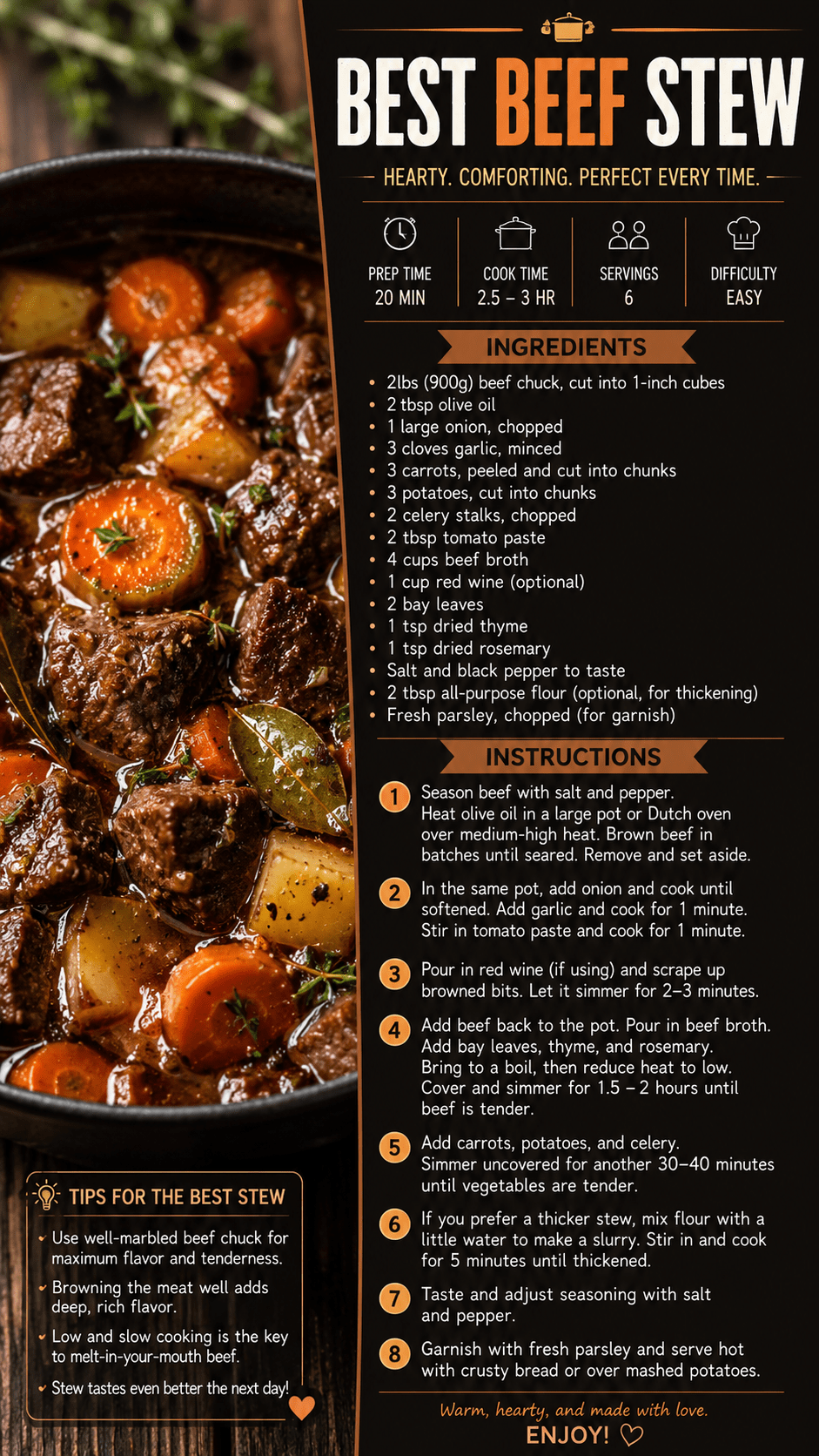
I made this stew for the first time on a random Tuesday and my husband walked into the kitchen, took one sniff, and asked if we were “having people over.”
We were not having people over. It was just a Tuesday. That’s how good this smells.
Guinness beef stew is one of those recipes that sounds fancy but is honestly one of the most forgiving things you’ll ever cook. You brown some meat, dump everything in a pot, and let beer and time do the heavy lifting.
The beer part throws people off the most. No, it won’t taste boozy. The bitterness cooks out and what’s left is this deep, almost chocolatey richness you can’t get from broth alone.
I’ve made this stew probably 30 times now. I’ve messed it up in every way possible (rubbery meat, watery broth, one memorable burnt-bottom disaster). So everything below is what actually works.
What You’ll Need
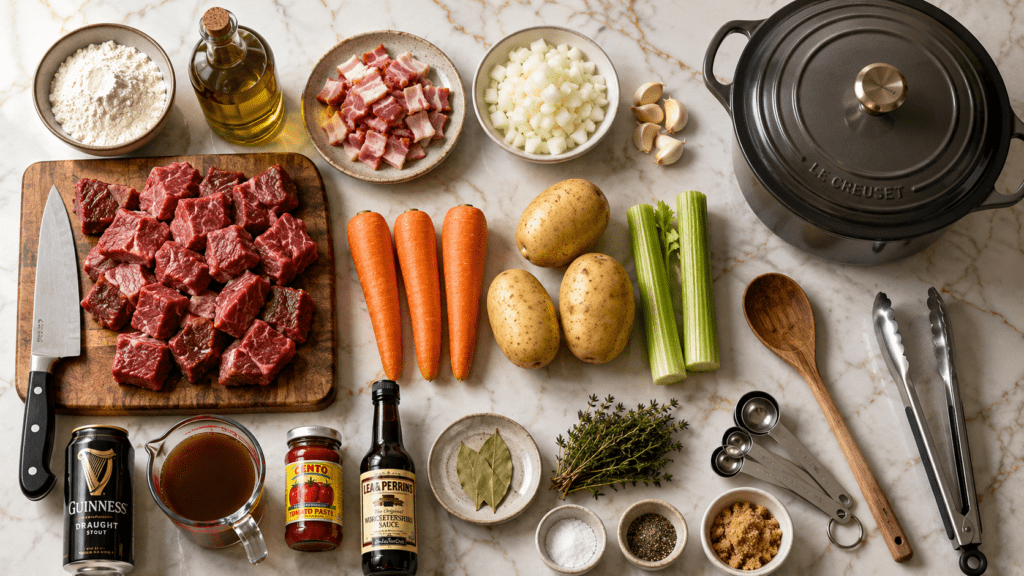
For the stew:
- 2.5 lbs beef chuck roast, cut into 1.5-inch cubes
- 3 tbsp all-purpose flour
- 2 tbsp olive oil
- 3 strips thick-cut bacon, chopped
- 1 large yellow onion, diced
- 4 cloves garlic, minced
- 3 large carrots, cut into chunks
- 3 medium potatoes, cubed (Yukon gold work great)
- 2 stalks celery, sliced
- 1 can (14.9 oz) Guinness stout
- 2 cups beef broth
- 2 tbsp tomato paste
- 2 tbsp Worcestershire sauce
- 2 bay leaves
- 1 tsp fresh thyme (or ½ tsp dried)
- Salt and pepper, to taste
- 1 tbsp brown sugar (trust me on this)
Optional but worth it:
- Fresh parsley, chopped, for serving
- Crusty bread, for the broth you will absolutely fight someone over
Tools You’ll Need
- Large Dutch oven or heavy-bottomed pot with a lid
- Sharp knife and cutting board
- Wooden spoon
- Measuring cups and spoons
- Tongs (for browning the meat in batches)
Pro Tips
1. Dry your meat before browning it. Pat the beef cubes completely dry with paper towels first. Wet meat steams instead of browns, and you’ll get gray cubes instead of that deep caramelized crust that makes the whole stew taste better.
2. Don’t crowd the pot. Brown the beef in two or three batches, not all at once. Overcrowding drops the pan’s temperature and your meat just sits there sweating instead of searing.
3. Use the bacon fat. Don’t skip it. Cooking the bacon first and using that fat to brown the beef adds a smokiness you genuinely cannot replicate with plain oil. This step alone changed my stew game.
4. Low and slow, always. A rapid boil will make your meat tough no matter how long you cook it. You want a gentle simmer, barely bubbling, for the full two-plus hours.
5. Taste before you serve, not just before you simmer. Flavors mellow out over the cooking time. What tastes perfectly seasoned at the start can taste flat after two hours of simmering. Always re-season right before serving.
Substitutions and Variations
- No Guinness? Any dry stout works. Avoid sweet or fruity beers, they’ll throw off the balance.
- Need it alcohol-free? Swap the beer for extra beef broth plus a splash of balsamic vinegar for that same depth.
- Want it gluten-free? Use a gluten-free flour blend for dredging and double check your Worcestershire sauce label.
- No bacon on hand? Skip it and brown the beef in butter instead. You’ll lose a little smokiness but it’s still excellent.
- Slow cooker version: Brown the meat and bacon on the stove first, then dump everything into a slow cooker on low for 7-8 hours.
- Instant Pot version: Same browning steps, then pressure cook on high for 35 minutes with a natural release.
Make Ahead Tips
This stew is genuinely better the next day. The flavors keep deepening as it sits.
- Make it up to 2 days ahead, store covered in the fridge, and reheat low and slow on the stove.
- You can also freeze the fully cooked stew (minus the potatoes if you’re picky about texture) for up to 3 months.
- If freezing, undercook the potatoes slightly since they’ll finish softening when reheated.
How to Make Guinness Beef Stew
- Pat the beef dry and season generously with salt and pepper. Toss the cubes in flour until lightly coated.
- Cook the bacon in your Dutch oven over medium heat until crispy. Remove and set aside, leaving the fat in the pot.
- Brown the beef in batches in the bacon fat, about 2-3 minutes per side, until deeply golden. Remove and set aside with the bacon.
- Sauté the onion in the same pot for 4-5 minutes until softened. Add the garlic and cook another minute.
- Stir in the tomato paste and cook for 1 minute to deepen the flavor.
- Pour in the Guinness, scraping up all those browned bits stuck to the bottom of the pot (that’s where the flavor lives).
- Add the beef broth, Worcestershire sauce, bay leaves, thyme, and brown sugar. Return the beef and bacon to the pot.
- Bring to a gentle simmer, then cover and reduce heat to low. Let it cook for 1.5 hours, stirring occasionally.
- Add the carrots, potatoes, and celery. Cover again and simmer for another 45 minutes to an hour, until the meat is fall-apart tender and the vegetables are soft.
- Remove the bay leaves, taste, and adjust salt and pepper.
- Serve hot, topped with fresh parsley and a thick slice of crusty bread for dunking.
A Few Extra Details
Nutritional ballpark (per serving, serves 6): Roughly 420 calories, 28g protein, 18g fat, 30g carbs. This will shift depending on your exact cuts and portion sizes.
Time-saving tip: Chop all your vegetables while the beef browns in batches. You’ll cut your active prep time almost in half.
Pairing suggestions: This stew loves a side of buttery mashed potatoes, soda bread, or just more of that crusty bread. A simple green salad on the side cuts through the richness nicely.
Leftovers and Storage
- Fridge: Store in an airtight container for up to 4 days.
- Freezer: Freeze in portioned containers for up to 3 months.
- Reheating: Warm gently on the stove over low heat, adding a splash of broth if it’s thickened up too much in the fridge.
- Heads up: The flavor only gets better with time, so don’t be afraid to make a big batch.
FAQ
Does the alcohol fully cook out? Most of it does during the long simmer, but not 100%. If you need it completely alcohol-free, use the broth substitution above.
Can I use a different cut of beef? Chuck roast is ideal because the fat and connective tissue break down into tenderness. Leaner cuts like sirloin will turn dry and chewy with this long of a cook time.
Why is my stew watery? You likely need more time uncovered at the end, or you can mix 1 tablespoon of cornstarch with cold water and stir it in to thicken things up.
Can I make this without beer at all? Yes, see the substitution section above. It will taste slightly different but still delicious.
What’s the best pot for this? A Dutch oven is ideal because it holds heat evenly, but any heavy-bottomed pot with a tight lid will work.
Wrapping Up
This is the kind of recipe that makes your whole house smell like you know what you’re doing in the kitchen, even on your laziest Tuesday.
Give it a try this week. Let the beer do its job, let the meat fall apart, and let the smell pull your family into the kitchen before dinner’s even ready.
Drop a comment below once you’ve made it. I want to know if your kitchen smelled as good as mine did, and if you tried any of the swaps above.