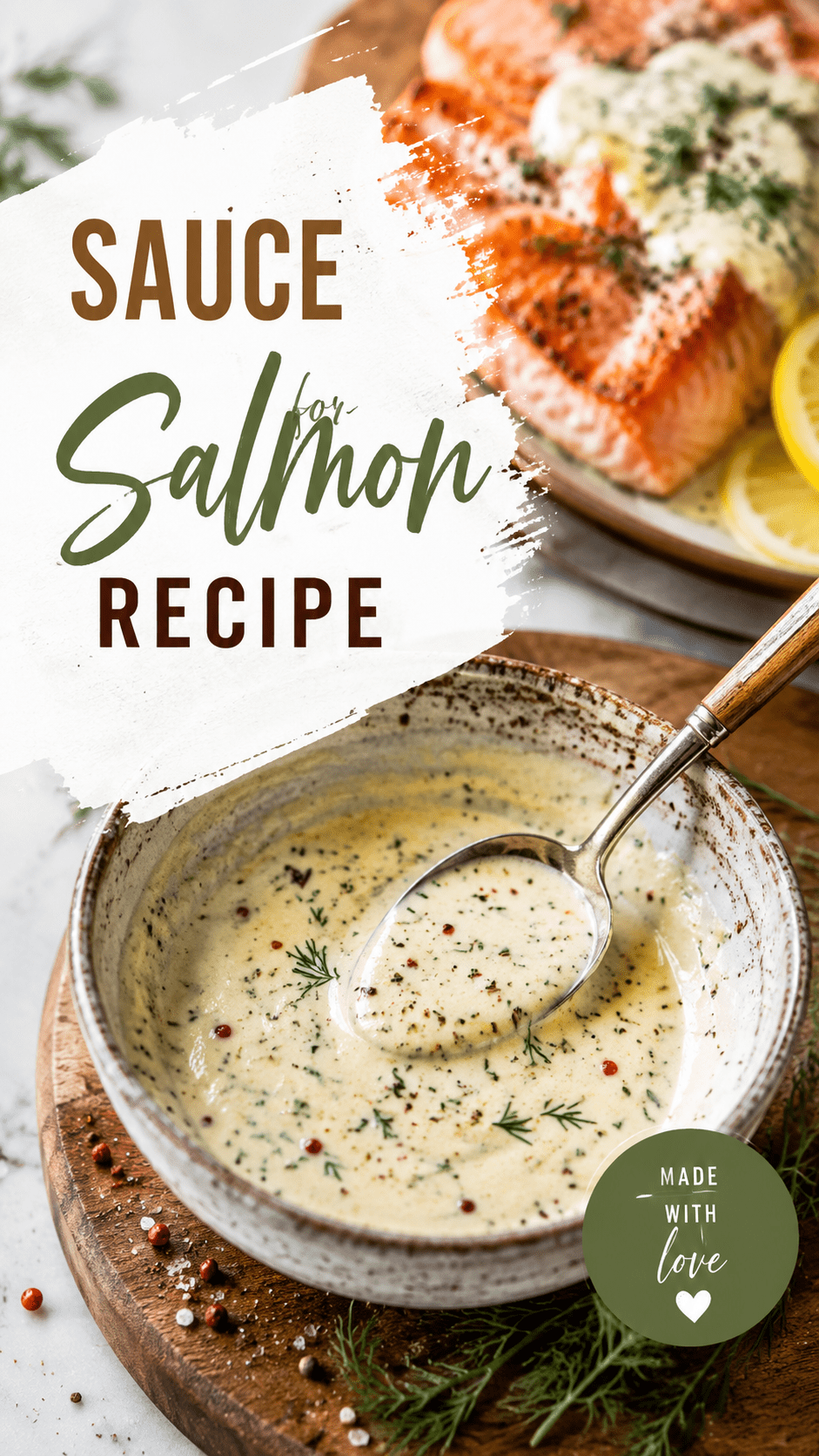
Silas is not a sauce guy. 🙂
He’s a “just squeeze some lemon on it” kind of eater. So when he asked for the recipe for this sauce halfway through dinner, I knew I had something worth sharing.
It happened on a random Tuesday. I had salmon thawing in the fridge and zero plans for it. I didn’t want the same lemon butter thing we always do, so I grabbed the sour cream, a fistful of dill, and just started stirring.
Fifteen minutes later, Silas was scraping his plate with a piece of bread. Then he did it again with a second piece.
That’s when this sauce earned a permanent spot in our rotation.
It’s creamy, it’s a little tangy, and it’s got just enough garlic to make the whole kitchen smell incredible. It comes together in one pan while your salmon cooks, so there’s no extra dishes and no extra stress.
Let’s get into it.
What You’ll Need
| Ingredient | Amount |
|---|---|
| Salmon fillets | 4 (6 oz each) |
| Butter | 2 tbsp |
| Garlic, minced | 3 cloves |
| Sour cream | 1 cup |
| Heavy cream | 1/4 cup |
| Fresh dill, chopped | 3 tbsp |
| Dijon mustard | 1 tsp |
| Lemon juice | 1 tbsp |
| Chicken or vegetable broth | 1/4 cup |
| Salt | to taste |
| Black pepper | to taste |
| Olive oil | 1 tbsp |
That’s it. Nothing exotic, nothing you have to hunt down at three different stores.
Tools You’ll Need
- Large skillet
- Whisk
- Cutting board
- Sharp knife
- Measuring cups and spoons
- Fish spatula (a regular spatula works too)
Pro Tips From My Kitchen
1. Pat your salmon dry before cooking. Wet salmon steams instead of searing. A few seconds with a paper towel gives you that golden crust everyone wants.
2. Don’t skip the mustard. It’s just one teaspoon, but it adds a little tang that keeps the sauce from tasting flat. You won’t taste “mustard.” You’ll just wonder why it’s so good.
3. Keep the heat low once the cream goes in. Sour cream can split if it gets too hot too fast. Low and slow keeps it silky.
4. Use fresh dill if you can. Dried dill works in a pinch, but fresh dill gives this sauce its bright, herby flavor. It’s the star of the show here.
5. Let the salmon rest for two minutes before serving. This keeps all those juices inside the fish instead of running out onto your cutting board.
How to Make Creamy Dill Salmon Sauce
- Season the salmon. Pat the fillets dry and season both sides with salt and pepper.
- Sear the salmon. Heat the olive oil in a large skillet over medium-high heat. Add the salmon skin side down and cook for 4 to 5 minutes. Flip and cook another 3 to 4 minutes, until it flakes easily. Remove the salmon and set it aside.
- Build the sauce base. In the same skillet, lower the heat to medium and add the butter. Once melted, add the garlic and cook for 30 seconds, just until fragrant.
- Add the broth. Pour in the broth and scrape up any browned bits from the bottom of the pan. This is where a lot of the flavor is hiding.
- Stir in the cream. Reduce the heat to low. Whisk in the sour cream, heavy cream, and Dijon mustard until smooth.
- Finish the sauce. Stir in the lemon juice and fresh dill. Taste and adjust the salt and pepper.
- Bring it together. Return the salmon to the skillet, spooning the sauce over the top. Let it warm through for 1 to 2 minutes.
- Serve. Plate the salmon with extra sauce spooned over the top and a sprinkle of fresh dill.
Substitutions and Variations
| Original | Substitution | Notes |
|---|---|---|
| Sour cream | Plain Greek yogurt | Slightly tangier, still creamy |
| Heavy cream | Half and half | Lighter, less rich |
| Fresh dill | Dried dill (1 tbsp) | Use less, flavor is more concentrated |
| Salmon | Trout or halibut | Adjust cook time based on thickness |
| Chicken broth | Vegetable broth | Keeps it lighter |
| Butter | Ghee | For a dairy-forward but lactose-lighter option |
Want it spicier? Add a pinch of red pepper flakes with the garlic. Want it brighter? Add extra lemon juice at the end.
Make Ahead Tips
You can make the sauce up to a day ahead. Store it in the fridge in an airtight container.
When you’re ready to serve, warm it gently over low heat and whisk in a splash of broth or cream if it’s thickened too much. Cook your salmon fresh though. Reheated salmon never has that same texture.
Estimated Nutritional Breakdown
These numbers are estimates only, not lab-tested values. Actual nutrition will vary based on exact ingredients and portion sizes.
| Nutrient | Per Serving (approx.) |
|---|---|
| Calories | 420 |
| Protein | 34g |
| Fat | 29g |
| Carbohydrates | 4g |
| Sodium | 480mg |
What to Serve With It
This sauce is rich, so I like pairing it with something simple on the side.
- Roasted asparagus or green beans
- Garlic mashed potatoes
- A crisp green salad with a light vinaigrette
- Steamed rice to soak up extra sauce
- Crusty bread (non-negotiable in our house)
Leftovers and Storage
Store leftover salmon and sauce separately if you can. It keeps the fish from getting soggy.
Fridge: Up to 3 days in an airtight container.
Reheating: Warm the sauce in a pan over low heat. Add the salmon at the end just to warm through, not to cook further.
Freezing: The sauce doesn’t freeze well because of the dairy. It can separate and turn grainy once thawed.
FAQ
Can I use frozen salmon? Yes. Just thaw it completely and pat it very dry before searing.
Will the sauce taste like sour cream? Not really. Once it’s warmed with the garlic, broth, and dill, it mellows out into something closer to a savory cream sauce.
Can I make this dairy free? You can try a dairy free sour cream and coconut cream substitute, though the flavor and texture will shift a bit.
What if my sauce looks curdled? That usually means the heat was too high. Pull it off the heat, whisk in a splash of cold cream, and it should smooth back out.
Can I use this sauce on other proteins? Definitely. It works great on chicken, on trout, and even spooned over roasted potatoes.
Wrapping Up
This sauce turned a plain Tuesday dinner into something Silas still brings up. That’s really all I want from a recipe. Something simple enough for a weeknight, but good enough that someone reaches for seconds without thinking twice.
Give it a try this week and let me know how it goes in the comments. I’d love to hear what you served it with, or if you tried one of the variations above.
And if you make it, tag me. I always love seeing your kitchens in action.