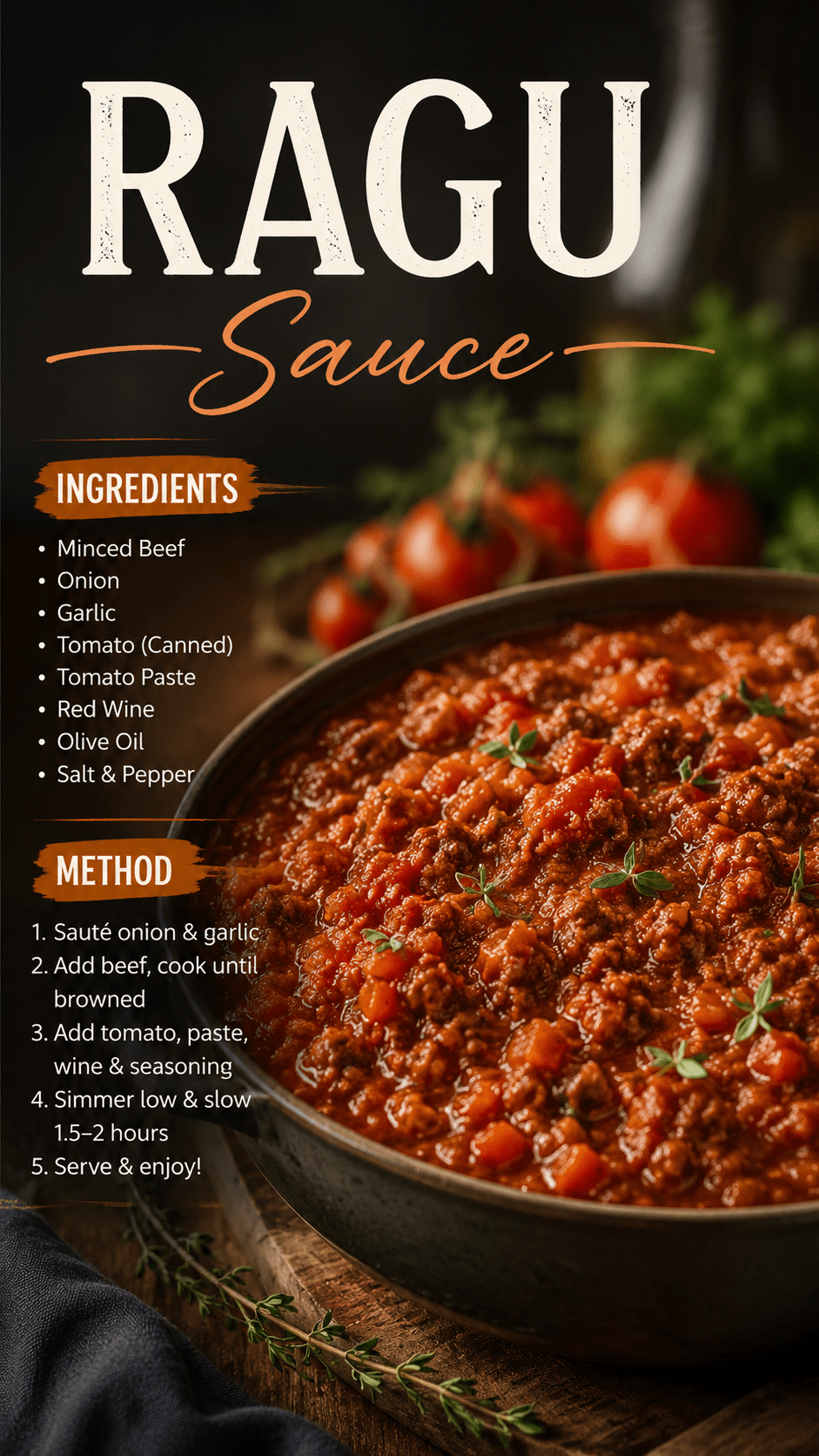
Can a sauce actually change how you cook dinner?
I didn’t think so either. Then I made real ragu for the first time and just… stopped buying the jarred stuff.
This isn’t your weeknight 20-minute marinara. Ragu is slow, rich, and a little bit of a project. But it’s also one of those recipes that makes your whole kitchen smell like an Italian grandmother lives there.
I learned this version after one too many disappointing store-bought sauces and a lot of trial and error in my own kitchen. It’s deeply savory, a little sweet from the wine, and so thick it practically hugs the pasta.
If you’ve got a free afternoon and a big pot, let’s make something worth the wait.
What You’ll Need
For the meat base:
- 1 lb ground beef (80/20 blend works best)
- 1/2 lb ground pork
- 4 oz pancetta, diced
- 2 tbsp olive oil
For the vegetables:
- 1 medium yellow onion, finely diced
- 2 carrots, finely diced
- 2 celery stalks, finely diced
- 4 garlic cloves, minced
For the sauce:
- 1 cup dry red wine
- 1 cup whole milk
- 1 (28 oz) can crushed tomatoes
- 2 tbsp tomato paste
- 2 cups beef broth (more as needed)
- 2 bay leaves
- 1 tsp dried oregano
- Salt and pepper, to taste
- Parmesan rind (optional, but highly recommended)
To serve:
- 1 lb pasta (tagliatelle or pappardelle are traditional)
- Fresh parmesan, grated
- Fresh basil or parsley, chopped
Pro Tips
1. Don’t rush the browning.
Let the meat sit untouched in the pot for a few minutes before stirring. That deep brown crust is where most of your flavor comes from.
2. The milk isn’t optional.
It sounds weird, I know. But it softens the acidity from the tomatoes and makes the sauce silky instead of sharp.
3. Low and slow wins every time.
This sauce wants 2.5 to 3 hours on low heat. Rushing it with high heat will dry it out and you’ll lose all that melt-in-your-mouth texture.
4. Save your parmesan rinds.
Toss one into the pot while it simmers. It adds a salty, nutty depth you genuinely cannot get any other way.
5. Always reserve pasta water.
A splash of that starchy water at the end helps the sauce cling to every noodle instead of pooling at the bottom of the bowl.
Tools You’ll Need
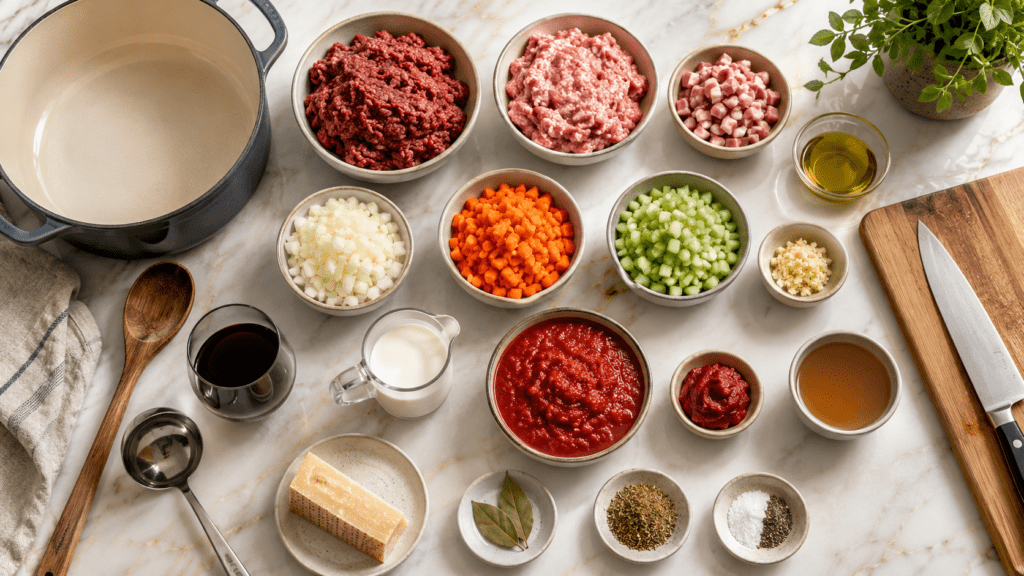
- Large heavy-bottomed pot or Dutch oven
- Wooden spoon
- Sharp knife and cutting board
- Ladle
- Large pasta pot
- Colander
Substitutions and Variations
Ragu is forgiving. Here’s where you can switch things up:
- No pork? Use all beef, or swap in ground veal for a more traditional Bolognese-style ragu.
- Skip the wine and use extra beef broth with a splash of balsamic vinegar instead.
- Dairy-free? Swap the milk for unsweetened oat milk. It won’t be quite as silky, but it still works.
- Want it spicier? Add a pinch of red chili flakes with the garlic.
- Vegetarian version? Swap the meat for finely chopped mushrooms and lentils. It’s a completely different vibe, but still deeply savory.
Make Ahead Tips
This sauce is honestly better the next day.
- Make it up to 3 days ahead and store it in the fridge.
- The flavors deepen overnight, so don’t skip this step if you have the time.
- It also freezes beautifully for up to 3 months in an airtight container.
How to Make It
Step 1: Render the pancetta.
Heat the olive oil in your pot over medium heat. Add the pancetta and cook until it’s crispy and the fat has rendered out, about 5 minutes.
Step 2: Brown the meat.
Add the ground beef and pork to the pot. Break it up slightly, but let it sit for 3-4 minutes before stirring so it gets a nice crust. Cook until browned, about 8-10 minutes total.
Step 3: Add the vegetables.
Stir in the onion, carrot, and celery. Cook for 7-8 minutes, until softened. Add the garlic and cook for another minute.
Step 4: Deglaze with wine.
Pour in the red wine and scrape the bottom of the pot. Let it simmer for 3-4 minutes until it reduces slightly.
Step 5: Add the milk.
Pour in the milk and let it simmer for another 5 minutes. This step tenderizes the meat and balances the acidity to come.
Step 6: Bring in the tomatoes.
Add the crushed tomatoes, tomato paste, beef broth, bay leaves, oregano, and parmesan rind if using. Stir everything together.
Step 7: Simmer low and slow.
Bring to a gentle simmer, then reduce the heat to low. Cover partially and let it cook for 2.5 to 3 hours, stirring occasionally. Add more broth if it gets too thick.
Step 8: Season and finish.
Remove the bay leaves and parmesan rind. Taste and season with salt and pepper.
Step 9: Cook the pasta.
Boil your pasta in salted water until just shy of al dente. Reserve a cup of pasta water before draining.
Step 10: Combine and serve.
Toss the pasta directly into the sauce with a splash of pasta water. Top with fresh parmesan and herbs.
Leftovers and Storage
- Fridge: Store in an airtight container for up to 4 days.
- Freezer: Freezes well for up to 3 months. Lay it flat in a freezer bag to save space.
- Reheating: Warm gently on the stove with a splash of water or broth to loosen it back up.
Additional Tips
Nutritional breakdown (per serving, sauce only, based on 6 servings):
| Nutrient | Amount |
|---|---|
| Calories | ~340 |
| Protein | 22g |
| Fat | 21g |
| Carbs | 9g |
Pairing suggestions:
- A simple arugula salad with lemon vinaigrette
- Crusty garlic bread
- A glass of the same red wine you cooked with
Time-saving tip:
Prep your vegetables the night before and store them in the fridge. It cuts your active cooking time down significantly on the day you make it.
FAQ
Can I make this in a slow cooker?
Yes. Brown the meat and vegetables on the stove first, then transfer everything to a slow cooker on low for 6-8 hours.
Why did my sauce turn out watery?
It probably needs more time. Ragu thickens as it reduces, so give it more time uncovered on low heat.
Can I use fresh tomatoes instead of canned?
You can, but you’ll need about 3 lbs of fresh tomatoes, peeled and crushed, plus a little extra simmer time to break them down.
What’s the difference between ragu and Bolognese?
Bolognese is technically a type of ragu, specifically from Bologna, and traditionally includes milk and sometimes a bit of nutmeg. This recipe is a hybrid leaning Bolognese-style.
Wrapping Up
This is the kind of recipe that turns a regular Tuesday into something memorable.
Give it the time it deserves, and it’ll reward you with a sauce so good you’ll want to lick the pot.
Make it this weekend, then come back and tell me how it turned out. I’d love to know what you paired it with.