
I used to think miso soup was just the free thing that showed up before your sushi.
Then I actually made it from scratch. And honestly? I felt a little embarrassed for ever doubting it.
This soup takes maybe 15 minutes. It’s salty, savory, deeply comforting, and somehow tastes like it took way longer than it did.
I’ve made this one more times than I can count now, mostly because it’s the easiest thing to throw together on a night when I don’t want to think too hard about dinner.
Let’s get into it.
What You’ll Need
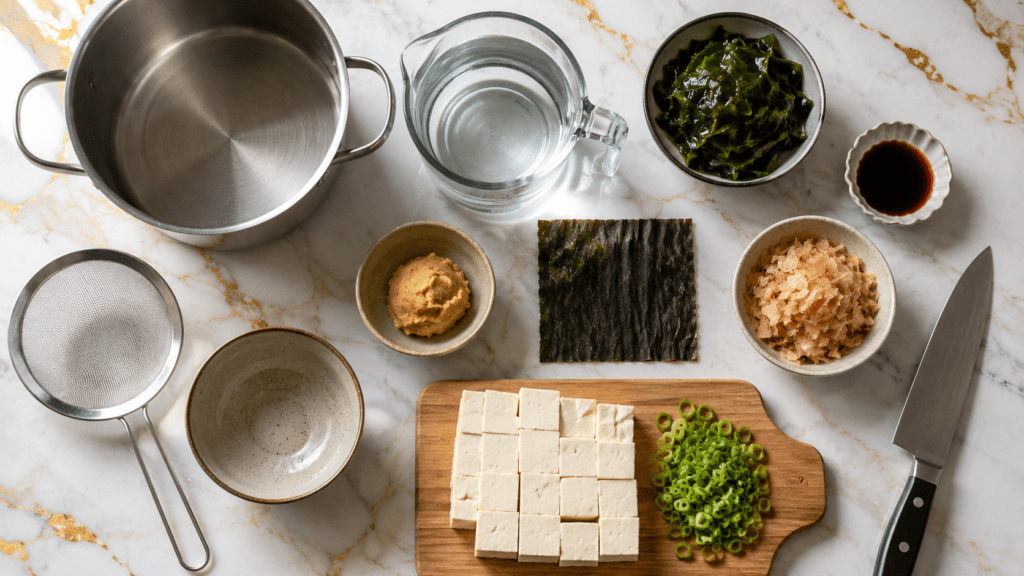
Here’s everything you’ll need to pull this together:
- 4 cups water
- 3 tablespoons white miso paste
- 1 sheet kombu (dried kelp), about 4×4 inches
- 1 cup bonito flakes (skip for vegetarian, more on that below)
- 14 oz soft or medium tofu, cubed
- 2 green onions, thinly sliced
- 1 cup wakame (dried seaweed), rehydrated
- 1 teaspoon soy sauce (optional, for extra depth)
That’s it. Eight ingredients, most of which last forever in your pantry.
Tools You’ll Need
Nothing fancy here:
- A medium pot
- A fine mesh strainer
- A small bowl or ladle for dissolving the miso
- A sharp knife for the tofu and green onions
Pro Tips (Learn From My Mistakes)
1. Never boil the miso. This is the one rule that actually matters. Boiling miso kills the good bacteria and makes the flavor go flat and weirdly bitter. Add it at the very end, off direct heat.
2. Dissolve the miso separately first. Scoop a ladle of warm broth into a small bowl, whisk the miso into that, then pour it back into the pot. If you just dump miso paste straight into the pot, you’ll get clumps that never fully dissolve. 🥄
3. Softer tofu means silkier soup. I know firm tofu feels like the “safer” choice. But soft or silken tofu is traditional here, and it makes the soup feel almost creamy.
4. Make your own dashi if you have 10 extra minutes. Store-bought dashi packets work fine in a pinch. But homemade dashi (just kombu and bonito flakes steeped in water) tastes noticeably richer. It’s a small effort for a big payoff.
5. Taste before adding salt. Miso brands vary a lot in saltiness. Always taste before reaching for extra soy sauce or salt.
Substitutions and Variations
Miso soup is genuinely one of the most flexible recipes I know. Here’s how to make it your own:
| Original | Swap | Why It Works |
|---|---|---|
| Bonito flakes | Kombu only (no fish flakes) | Makes it fully vegetarian/vegan |
| White miso | Red or brown miso | Bolder, saltier, more intense flavor |
| Wakame | Spinach or bok choy | Adds a different texture and color |
| Soft tofu | Firm tofu | Holds its shape better if you like more bite |
| Green onions | Mushrooms (shiitake work great) | Adds an earthy, umami boost |
You can also add a soft-boiled egg, cooked noodles, or even shrimp if you want to turn this into more of a full meal instead of a side.
Make Ahead Tips
You can prep the dashi broth up to 3 days ahead and store it in the fridge.
Just don’t add the miso until you’re ready to reheat and serve. Miso loses its punch and its good-for-you properties if it sits in hot broth for too long.
A Few Extra Details Worth Knowing
Nutrition-wise, miso soup is shockingly light. A typical serving runs around 60-80 calories, depending on how much tofu you use.
It’s also naturally high in probiotics, since miso is fermented. That’s part of why it’s been a staple in Japanese diets for centuries.
For different diets:
- Vegan/vegetarian: skip the bonito flakes, use kombu-only dashi
- Gluten-free: double check your miso brand, some contain barley
- Low sodium: use less miso and add a splash of low-sodium soy sauce to taste instead
Pairing suggestions: This goes perfectly next to rice bowls, teriyaki chicken, or a simple sushi night at home.
How to Make Miso Soup
- Add the water and kombu to a pot. Let it sit for 10 minutes so the kombu can soften.
- Turn the heat to medium and slowly bring the water to just below a boil. Remove the kombu right before it boils.
- Add the bonito flakes and simmer for 2 minutes. Then strain the broth through a fine mesh strainer. This is your dashi.
- Return the strained dashi to the pot over low heat.
- Add the cubed tofu and rehydrated wakame. Simmer gently for 2-3 minutes.
- Scoop out a small ladle of the warm broth into a bowl. Whisk in the miso paste until fully smooth.
- Pour the dissolved miso back into the pot. Stir gently.
- Turn off the heat immediately. Do not let it boil again.
- Ladle into bowls and top with sliced green onions.
- Serve right away, while it’s hot.
Leftovers and Storage
Miso soup is best fresh, but leftovers still work.
Store it in an airtight container in the fridge for up to 2 days.
When reheating, warm it gently on the stove over low heat. Avoid the microwave if you can, since it tends to overheat unevenly and can make the tofu rubbery.
Freezing isn’t recommended. The tofu texture changes a lot once thawed, and honestly it’s just not worth it for a soup this quick to make fresh.
FAQ
Can I use miso paste straight from a packet mix? You can, but it won’t taste nearly as good. Packet mixes are often loaded with sodium and lack the depth you get from real miso paste.
What’s the difference between white and red miso? White miso is fermented for a shorter time, so it’s milder and slightly sweet. Red miso ferments longer, so it’s saltier and more intense.
Do I have to use kombu? Kombu is what gives the broth its signature umami base. You can skip it, but the soup will taste noticeably flatter.
Is miso soup actually healthy? Yes, genuinely. It’s low calorie, high in probiotics, and a good source of minerals like manganese and vitamin K, especially if you use wakame.
Why did my tofu fall apart? Soft tofu is delicate. Add it gently and avoid stirring too aggressively once it’s in the pot.
Wrapping Up
This is one of those recipes that looks intimidating on a restaurant menu but is genuinely one of the easiest things you’ll ever make at home.
Once you’ve got the dashi down, everything else falls into place fast.
Give it a try this week, and let me know in the comments how it turned out. I’d love to hear what swaps or add-ins you tried, and if you have any questions about the process, drop them below and I’ll help however I can.