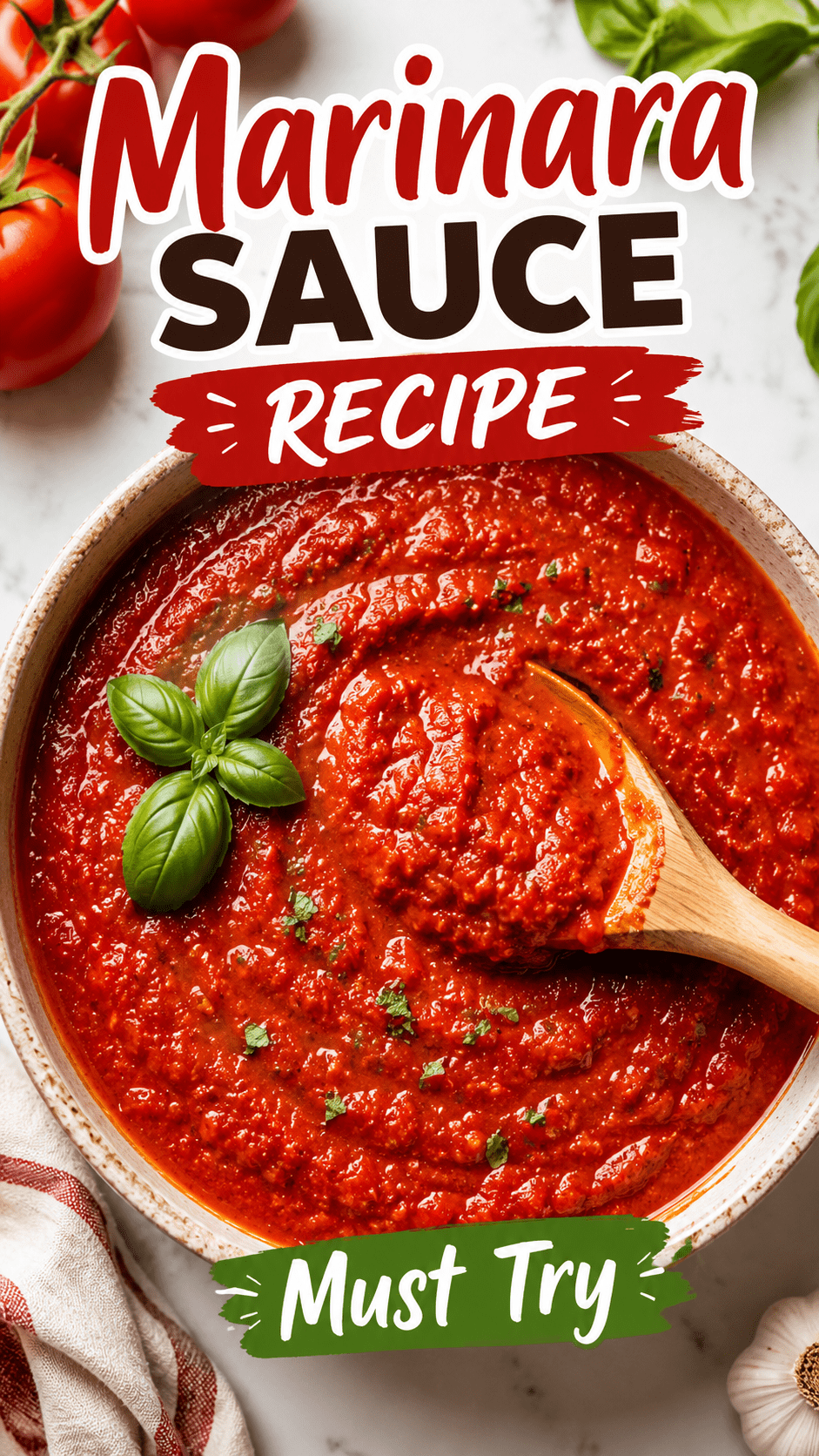
You’ve tasted the jarred stuff. You’ve accepted it. But once you make this from scratch, you’ll never go back.
I’m not kidding. Homemade marinara sauce is one of those things that feels like it should be complicated, but it’s genuinely not. It takes about 30 minutes, uses ingredients you probably already have, and tastes like something that’s been simmering all day.
The secret? It’s less about technique and more about what you put in. A few quality ingredients, the right heat, and you’ve got a sauce that makes everything it touches taste better.
And yes, “everything” is a strong word. But I’ll back it up by the end of this post.
What You’ll Need
For the Sauce
- 2 cans (28 oz each) whole San Marzano tomatoes
- 4 tablespoons extra virgin olive oil
- 6 cloves garlic, thinly sliced
- 1 small yellow onion, finely diced
- 1 teaspoon crushed red pepper flakes (adjust to taste)
- 1 teaspoon granulated sugar
- 1 teaspoon kosher salt (plus more to taste)
- ½ teaspoon black pepper
- 1 small bunch fresh basil (about 10–12 leaves)
- 1 teaspoon dried oregano
Tools You’ll Need
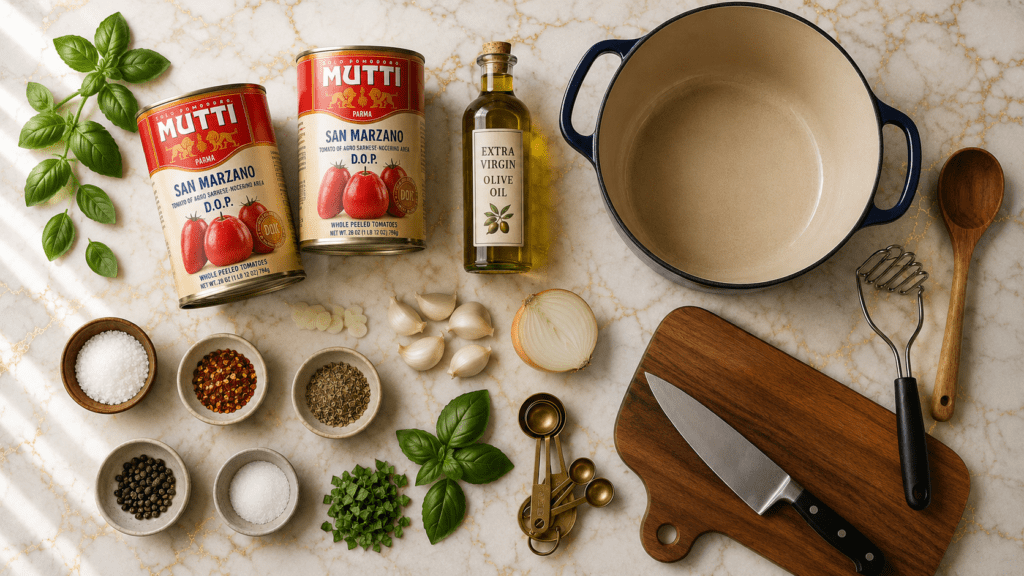
- Large heavy-bottomed saucepan or Dutch oven
- Wooden spoon or silicone spatula
- Can opener
- Cutting board and chef’s knife
- Measuring spoons
- Potato masher or large fork (for crushing tomatoes)
- Ladle (for serving or storing)
Pro Tips
These are the things that make a real difference, especially your first time making this:
- San Marzano tomatoes are non-negotiable. They’re lower in acidity and sweeter than regular canned tomatoes. Regular crushed tomatoes work, but the flavor won’t be the same. Look for the DOP seal on the can to confirm they’re the real ones from Italy.
- Don’t rush the garlic. Slice it thin (not minced) and cook it low and slow in the olive oil. You want it golden, not brown. Burned garlic will make the whole sauce bitter and there’s no fixing that.
- Crush the tomatoes by hand before adding them. Reach into the can and squeeze each tomato before it goes into the pan. It sounds messy (it is), but it gives you more control over the final texture.
- Tear the basil, don’t cut it. Cutting fresh basil with a knife bruises it and turns it bitter. Tear the leaves right before you add them in.
- Taste as you go. Canned tomatoes vary in sweetness and salt. A tiny pinch of sugar can balance things out if your sauce tastes too sharp. Keep tasting and adjusting until it hits right.
How to Make Marinara Sauce
Total Time: 30 minutes | Yield: About 4 cups | Servings: 4–6
Step 1: Soften the onion
Heat 4 tablespoons of olive oil in a large saucepan over medium-low heat. Add the diced onion and cook for 5–7 minutes, stirring occasionally, until it’s soft and translucent. Don’t rush this.
Step 2: Add the garlic
Add the sliced garlic and red pepper flakes to the pan. Cook for another 2–3 minutes until the garlic is fragrant and just starting to turn golden. Keep the heat low.
Step 3: Add the tomatoes
Pour both cans of San Marzano tomatoes into the pan (crushed by hand first). Stir everything together. Add the sugar, salt, pepper, and dried oregano.
Step 4: Simmer
Bring the sauce to a gentle boil, then reduce heat to low. Let it simmer uncovered for 20 minutes, stirring every few minutes. It’ll thicken and deepen in color as it cooks.
Step 5: Finish with basil
Turn off the heat. Tear the fresh basil leaves and stir them in. Taste, adjust salt if needed, and serve.
That’s it. Seriously.
Substitutions and Variations
The base recipe is simple by design, which makes it easy to adjust:
| Swap | Instead of | Notes |
|---|---|---|
| Fire-roasted canned tomatoes | San Marzano | Adds a smoky depth |
| Shallots | Yellow onion | Milder, slightly sweeter flavor |
| Dried basil (1 tsp) | Fresh basil | Works in a pinch, add with oregano |
| Anchovy paste (½ tsp) | Nothing | Deepens the umami without tasting “fishy” |
| Honey | Granulated sugar | Same effect, slightly more floral |
Want a spicy arrabbiata version? Double the red pepper flakes and skip the sugar.
Vodka sauce upgrade? After simmering, stir in ¼ cup heavy cream and 2 tablespoons vodka. Cook 5 more minutes.
Make-Ahead Tips
Marinara sauce is actually better the next day. The flavors have more time to meld and develop.
- Refrigerator: Make a double batch and store in a sealed glass jar for up to 5 days.
- Freezer: Freeze in 1-cup portions in freezer bags or containers for up to 3 months. Thaw overnight in the fridge or reheat directly from frozen on low heat.
If you’re prepping for a busy week, making this on Sunday will save you so much time. It reheats beautifully.
Nutrition Breakdown (Per ½ Cup Serving)
| Nutrient | Amount |
|---|---|
| Calories | ~90 kcal |
| Total Fat | 7g |
| Saturated Fat | 1g |
| Carbohydrates | 8g |
| Sugar | 5g |
| Fiber | 2g |
| Protein | 1.5g |
| Sodium | ~320mg |
Values are approximate and based on the listed ingredients.
Meal Pairing Suggestions
Marinara sauce is one of those things where the real question is what you won’t pair it with. A few of my favorites:
- Classic spaghetti or rigatoni — can’t go wrong, ever
- Chicken parmesan — make the sauce, pound the chicken, done
- Baked gnocchi — pour the sauce over gnocchi, top with mozzarella, bake at 400°F until bubbly
- Shakshuka-style eggs — simmer eggs directly in the sauce for a fast weeknight dinner
- Pizza base — skip the store-bought and spread this on your dough instead
- Dipping sauce — for bread, mozzarella sticks, or arancini
Leftovers and Storage
| Storage Method | How Long | Tips |
|---|---|---|
| Fridge (airtight jar) | Up to 5 days | Let it cool completely before sealing |
| Freezer (portioned) | Up to 3 months | Label with the date |
| Reheating | Stovetop over low | Add a splash of water if it thickened too much |
One of the best things about this recipe is that it scales easily. Make a big pot, store in portions, and you’ve got an instant meal base ready to go any night of the week.
FAQ
Can I use fresh tomatoes instead of canned? You can, but it takes significantly longer and requires more tomatoes (about 3 lbs for the same yield). Canned San Marzanos are actually preferred by most Italian chefs because they’re picked and packed at peak ripeness.
Why is my marinara too acidic? This usually comes from the tomatoes. Add a small pinch of sugar or a tiny bit of baking soda (¼ teaspoon max) to balance it out. Also, longer simmering reduces acidity naturally.
Do I have to use olive oil? Olive oil is a core part of the flavor here. A neutral oil like vegetable oil won’t give you the same richness. If you’re out, butter works as a substitute and creates a slightly creamier result.
Can I blend the sauce for a smoother texture? Absolutely. Use an immersion blender right in the pan, or transfer to a blender in batches. Just be careful with hot liquids in a sealed blender.
Is marinara the same as tomato sauce? Not exactly. Marinara is simpler, faster, and made without meat or cream. Traditional tomato sauce often includes onions cooked down longer, sometimes butter, and is used as a base for more complex dishes. Marinara is intentionally light and quick.
Can I add meat to this? Yes. Brown ground beef, Italian sausage, or pancetta in the pan before adding the onions. Drain most of the fat, then follow the rest of the recipe as written.
Wrapping Up
If you’ve been sleeping on homemade marinara, this is your sign to finally try it.
It’s 30 minutes. A handful of ingredients. And the flavor difference compared to anything from a jar is genuinely shocking the first time you taste it side by side.
Make it once and you’ll understand why Italian home cooks have been making this the same way for generations. There’s a reason it hasn’t changed.
Now go make it. Then come back and drop a comment below. Did you add anything? Did you use it on something unexpected? Did someone eat it straight from the pan with a spoon? (No judgment — I’ve done it.)
I’d love to hear how it went. 🍅