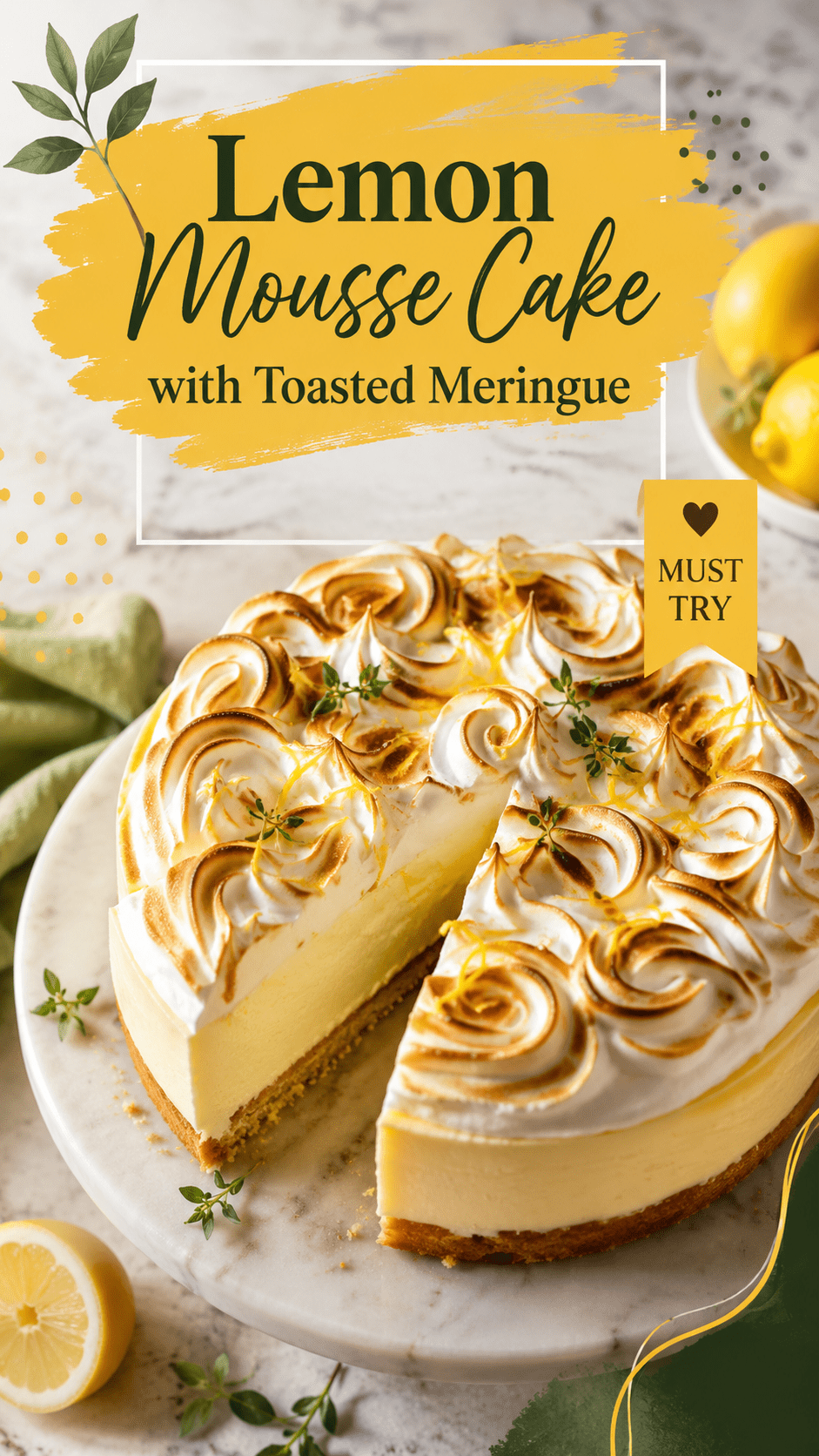
I brought this cake to a dinner party once and someone asked which bakery I ordered it from.
I just smiled and said “the one in my kitchen.”
That’s the thing about this lemon mousse cake. It looks like it took a pastry degree to pull off, with that golden, torched meringue swirled on top like little waves. But underneath all that drama, it’s really just a soft lemon cake layer, a cloud of tangy mousse, and a meringue that gets a quick blast with a kitchen torch.
Silas is not a lemon dessert guy. He’s a chocolate-or-nothing kind of person. He ate two slices of this one and asked when I was making it again.
That’s how I knew this recipe needed to be written down properly.
I’d made variations of lemon desserts for years, but this one came together almost by accident. I had leftover mousse from another project, a spare cake layer in the fridge, and a torch I’d bought on a whim months earlier and barely used. I stacked them together mostly out of curiosity.
It’s been on repeat ever since. 🍋
The torched meringue is really what sells it. It looks intimidating, like something you’d need a culinary background to pull off. But it’s genuinely one of the simpler parts of this whole process, and it’s the part everyone comments on first.
Why This Recipe Is Worth Making
Lemon desserts can go one of two ways. Either they’re so sour your face scrunches up, or they’re so sweet you can’t taste the lemon at all.
This cake sits right in the middle. The mousse is bright and a little tart, the cake layer is soft and simple, and the toasted meringue on top adds this toasty, marshmallow-like sweetness that balances everything out.
It’s also not a fussy layer cake. No stacking three sponges and hoping they don’t slide around. It’s one cake layer, one mousse layer, and a meringue topping you can pipe or just swoop on with a spoon.
The texture is really what surprises people. The mousse sets up light and airy, almost like a lemon cheesecake that got whipped with clouds. It’s not dense, and it’s not overly sweet, which makes it feel a lot less heavy than a typical slice of cake.
You also don’t need any special baking skills for this. If you can whisk, fold, and hold a torch steady for a few seconds at a time, you can make this cake.
What You’ll Need
Here’s everything going into this cake, split out by section so nothing gets confusing.
For the lemon cake layer:
| Ingredient | Amount |
|---|---|
| All-purpose flour | 1 ¼ cups |
| Granulated sugar | ¾ cup |
| Baking powder | 1 tsp |
| Salt | ¼ tsp |
| Unsalted butter, melted | ¼ cup |
| Eggs | 2 large |
| Lemon zest | 1 tbsp |
| Lemon juice | 2 tbsp |
| Whole milk | ¼ cup |
| Vanilla extract | 1 tsp |
For the lemon mousse:
| Ingredient | Amount |
|---|---|
| Heavy cream, cold | 1 ½ cups |
| Cream cheese, softened | 8 oz |
| Granulated sugar | ½ cup |
| Lemon juice | ⅓ cup |
| Lemon zest | 1 tbsp |
| Unflavored gelatin | 1 ½ tsp |
| Cold water | 2 tbsp |
For the toasted meringue:
| Ingredient | Amount |
|---|---|
| Egg whites | 3 large |
| Granulated sugar | ¾ cup |
| Cream of tartar | ¼ tsp |
| Vanilla extract | ½ tsp |
Tools You’ll Need
- 8-inch springform pan
- Hand mixer or stand mixer
- Small saucepan (for the meringue)
- Kitchen torch (a broiler works if you don’t have one)
- Microplane or fine zester
- Mixing bowls, various sizes
Pro Tips Before You Start
1. Cold cream whips faster and holds its shape better. Pop your bowl and beaters in the freezer for 10 minutes before whipping the heavy cream. It genuinely makes a difference.
2. Bloom your gelatin properly. Sprinkle it over the cold water and let it sit undisturbed for 5 minutes. Rushing this step is how you end up with lumpy mousse.
3. Don’t skip the springform pan. This cake needs clean vertical sides to set properly. A regular cake pan will make unmolding a mess.
4. Make the meringue with the hot sugar syrup method (Swiss meringue) for the best texture. It’s more stable than a basic meringue and torches beautifully without weeping.
5. Torch in short bursts. Move the flame constantly and go over the peaks in quick passes. Holding it in one spot too long burns the sugar before it browns evenly.
How to Make Lemon Mousse Cake with Toasted Meringue
Step 1: Bake the lemon cake layer
Preheat your oven to 350°F. Grease the bottom of your springform pan and line it with parchment.
In a bowl, whisk the flour, baking powder, and salt together.
In a separate bowl, whisk the melted butter and sugar, then add the eggs, lemon zest, lemon juice, milk, and vanilla. Mix until smooth.
Fold the dry ingredients into the wet ingredients until just combined. Pour into the pan and bake for 20 to 25 minutes, until a toothpick comes out clean.
Let the cake cool completely in the pan. This part matters. Warm cake will melt your mousse.
Step 2: Make the lemon mousse
Sprinkle the gelatin over the cold water and let it bloom for 5 minutes.
In a large bowl, beat the cream cheese and sugar together until smooth. Add the lemon juice and zest and mix again.
Microwave the bloomed gelatin for 10 seconds, just until liquid, then stir it into the cream cheese mixture.
In a separate bowl, whip the cold heavy cream to stiff peaks. Gently fold it into the cream cheese mixture in two batches, keeping as much air in there as you can.
Pour the mousse over the cooled cake layer, still in the springform pan. Smooth the top and refrigerate for at least 4 hours, ideally overnight.
Step 3: Make the toasted meringue
Once the mousse has set, whisk the egg whites, sugar, and cream of tartar together in a heatproof bowl. Set it over a pot of simmering water and whisk constantly until the sugar dissolves and the mixture reaches 160°F.
Remove from heat and beat with a mixer until stiff, glossy peaks form. Add the vanilla in the last minute of whipping.
Step 4: Assemble and torch
Release the cake from the springform pan. Pile the meringue on top, using a spoon or piping bag to create swirls and peaks.
Torch the meringue in quick, sweeping motions until it’s golden brown in spots. Slice and serve right away.
Substitutions and Variations
| Original | Substitute | Notes |
|---|---|---|
| Lemon | Lime or orange | Adjust sugar slightly if using orange |
| Heavy cream | Coconut cream | Chill the can overnight first |
| Cream cheese | Mascarpone | Slightly softer mousse texture |
| Kitchen torch | Broiler | Watch closely, it browns fast |
| All-purpose flour | 1:1 gluten-free blend | Cake layer works well with this swap |
Make Ahead Tips
The cake and mousse layers can be made a full day ahead of time. Keep the assembled cake covered in the fridge until you’re ready to serve.
The meringue is best made and torched right before serving. It holds for a few hours in the fridge, but the toasted top loses some of its texture over time.
Estimated Nutrition (Per Slice)
These numbers are estimates based on standard ingredient values. For exact nutrition information based on your specific brands, I’d recommend running the recipe through a tool like Cronometer before relying on these for dietary tracking.
| Nutrient | Estimated Amount |
|---|---|
| Calories | 320 |
| Fat | 22g |
| Carbohydrates | 27g |
| Sugar | 21g |
| Protein | 5g |
Pairing Suggestions
This cake is rich and tangy, so it pairs well with something light on the side.
- A cup of black tea or Earl Grey
- Fresh berries on the plate
- A small scoop of vanilla bean ice cream for extra indulgence
Leftovers and Storage
Store leftover cake covered in the fridge for up to 3 days. The meringue will soften over time, but the mousse and cake layer hold up well.
I don’t recommend freezing this one. The mousse texture changes once thawed and gets a little watery.
FAQ
Can I make this without a kitchen torch? Yes. Put the assembled cake under the broiler for 30 to 60 seconds, watching it the entire time. It browns fast under a broiler.
Why did my mousse turn out runny? This usually means the gelatin wasn’t fully bloomed or the cream wasn’t whipped to stiff peaks before folding.
Can I use bottled lemon juice? You can, but fresh juice makes a noticeable difference here since lemon is the main flavor.
Is the meringue safe to eat since the eggs aren’t fully cooked? The Swiss meringue method heats the egg whites to 160°F, which is within the safe temperature range for egg whites.
Can I make this into cupcakes instead of a full cake? I haven’t tested that version myself, but a mini springform or ramekin setup could work with some trial and error on bake time.
How far ahead can I make the cake layer? Up to 2 days ahead, wrapped tightly and stored in the fridge.
My mousse layer is sliding off the cake. What happened? This usually means the cake wasn’t fully cooled before you added the mousse, or the mousse was poured before it thickened slightly. Let both cool and set properly next time.
Can I skip the meringue entirely? Yes. The cake still tastes great without it, though you’ll lose that toasted, marshmallow-like flavor on top. A dusting of powdered sugar works as a simple substitute.
Wrapping Up
This lemon mousse cake looks like it belongs behind a bakery glass case, but it’s really just three simple parts stacked on top of each other.
If you end up making it, I’d love to know how it turned out. Drop a comment below and let me know if Silas-level skeptics in your house came around too.