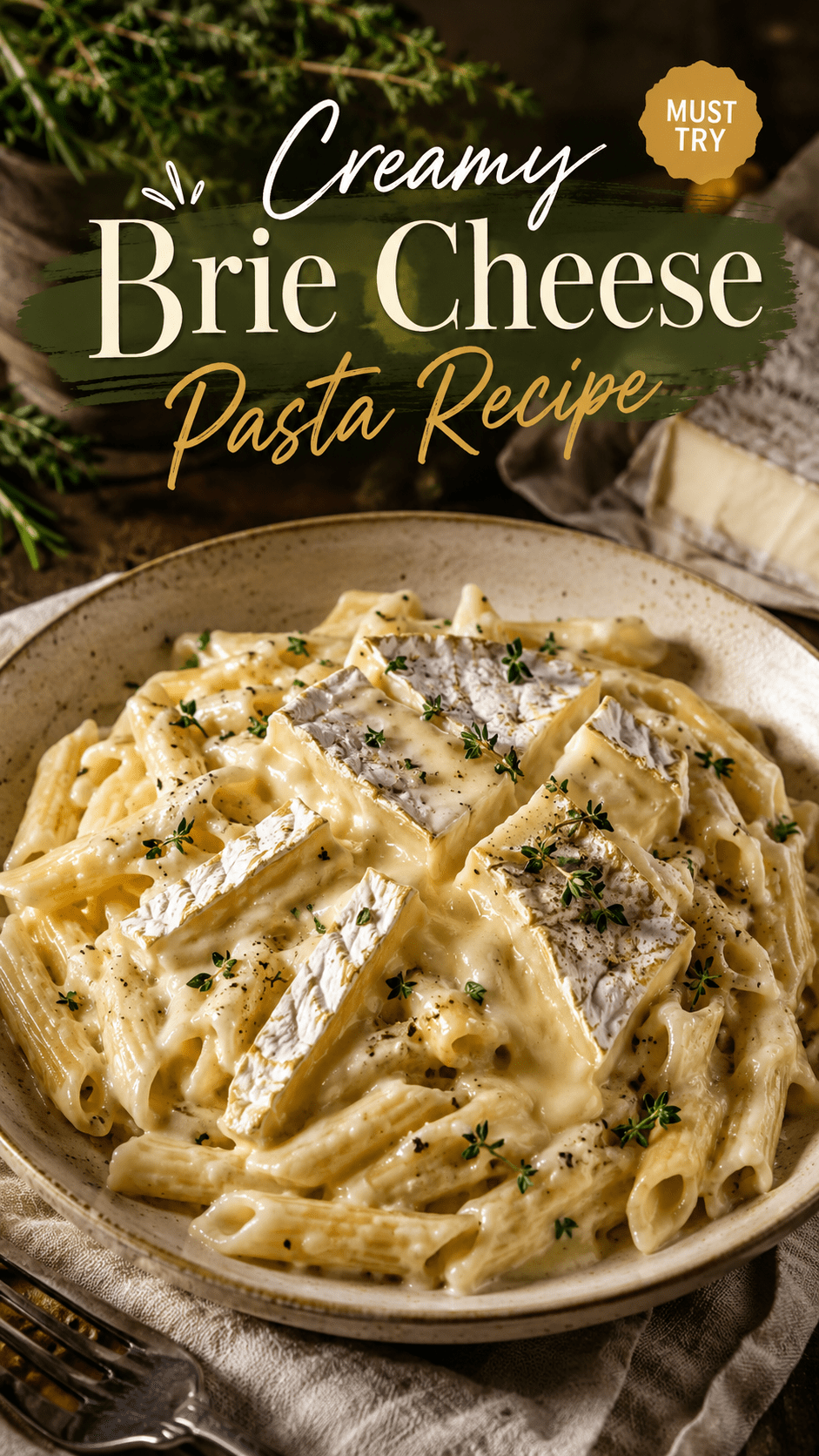
I didn’t know brie belonged in pasta until I accidentally left a wheel of it too close to a hot pan.
It melted into the sauce before I could stop it.
And honestly? It was the best mistake I’ve made in my kitchen all year.
That soft, buttery cheese turned an ordinary weeknight pasta into something that tasted like it came from a restaurant with candles and a wine list. 🧀
So now it’s a regular thing in my house. And I’m sharing it with you because everyone deserves a dinner that feels fancy but takes almost no effort.
Here’s everything you need to make it happen.
What You’ll Need
You probably have most of this already.
- 12 oz pasta (fettuccine, penne, or rigatoni all work great)
- 8 oz brie cheese, rind removed and cut into chunks
- 3 tablespoons unsalted butter
- 4 garlic cloves, minced
- 1 cup heavy cream
- ½ cup dry white wine (optional, but so good)
- ½ cup grated parmesan
- 1 teaspoon fresh thyme leaves
- ½ teaspoon red pepper flakes
- Salt and black pepper to taste
- ½ cup reserved pasta water
- Fresh parsley, chopped, for topping
That’s it. No weird specialty ingredients here.
Tools You’ll Need
Nothing fancy required.
- A large pot for boiling pasta
- A colander
- A large skillet or saucepan (deep enough for sauce)
- A wooden spoon
- A sharp knife and cutting board
- Measuring cups
- Tongs
- A ladle (for that pasta water)
How to Make Creamy Brie Cheese Pasta
Step 1: Boil the pasta.
Bring a large pot of salted water to a boil. Cook your pasta until it’s just shy of al dente. It’ll finish cooking in the sauce, so don’t overdo it here.
Before draining, scoop out ½ cup of that starchy pasta water. You’ll want it later.
Step 2: Build the flavor base.
While the pasta cooks, melt the butter in a large skillet over medium heat.
Add the minced garlic and let it cook for about 1 minute, just until fragrant. Don’t let it brown or it’ll turn bitter.
Step 3: Add the wine (if using).
Pour in the white wine and let it simmer for 2 to 3 minutes. This cooks off the alcohol and leaves behind all that rich flavor.
Skip this step if you don’t have wine on hand. It’ll still be delicious.
Step 4: Bring in the cream.
Lower the heat slightly and pour in the heavy cream. Let it warm through for a couple of minutes, stirring occasionally.
Step 5: Melt in the brie.
This is the fun part.
Add your brie chunks straight into the sauce. Stir gently and let the cheese melt completely into the cream. It’ll look a little lumpy at first, then suddenly turn silky and smooth.
Step 6: Season it up.
Stir in the parmesan, thyme, red pepper flakes, salt, and pepper. Taste as you go. Brie is salty on its own, so go easy at first.
Step 7: Combine with pasta.
Add your drained pasta directly into the skillet. Toss everything together using tongs.
If the sauce feels too thick, add a splash of that reserved pasta water. Keep adding a little at a time until it coats every noodle.
Step 8: Serve immediately.
Top with fresh parsley and an extra crack of black pepper. Serve it while it’s warm and the sauce is still glossy.
Pro Tips From My Kitchen
A few things I learned the hard way, so you don’t have to.
- Freeze the brie for 10 minutes before cutting it. It firms up and makes chopping way less messy.
- Remove as much rind as possible. A little bit is fine and actually melts okay, but too much rind can make the sauce chalky instead of silky.
- Don’t skip the pasta water. This starchy liquid is what turns a good sauce into a genuinely great one. It helps the sauce cling to every noodle instead of pooling at the bottom of the bowl.
- Keep the heat low once the cream goes in. High heat can cause cream sauces to separate, and nobody wants a greasy, broken sauce.
- Taste before you add extra salt. Brie and parmesan both bring plenty of salt on their own.
Substitutions and Variations
This recipe is forgiving, so feel free to make it your own.
| Original Ingredient | Substitution Option |
|---|---|
| Brie | Camembert or triple cream cheese |
| Heavy cream | Half and half (lighter, slightly less rich) |
| White wine | Chicken broth |
| Fettuccine | Any pasta shape you have on hand |
| Red pepper flakes | Black pepper or omit entirely |
Want to make it a full meal? Toss in some crispy pancetta, grilled chicken, or sautéed mushrooms. Spinach works beautifully too if you want a little green in there.
Make Ahead Tips
This dish is best fresh, but you can prep pieces of it ahead of time.
- Chop your garlic and cut the brie up to a day in advance. Store them separately in the fridge.
- You can also cook the pasta a few hours ahead. Just toss it with a little olive oil so it doesn’t stick, and reheat it briefly in the sauce.
I wouldn’t recommend making the full sauce too far ahead though. Cream sauces are happiest fresh off the stove.
A Few Extra Details Worth Knowing
Nutrition-wise: one serving (about ¼ of the recipe) comes in around 520 to 600 calories, depending on your exact pasta and cream measurements. It’s rich, so a smaller portion paired with a salad goes a long way.
For a lighter version: swap half the cream for chicken broth or milk. You’ll lose a bit of the richness but still get that creamy texture.
Pairing suggestions: a simple arugula salad with lemon vinaigrette cuts through the richness nicely. A crusty baguette on the side is basically mandatory for scooping up leftover sauce.
Time-saving tip: mince your garlic and portion your brie while the pasta water comes to a boil. That way you’re not standing around waiting.
Leftovers and Storage
Store leftovers in an airtight container in the fridge for up to 3 days.
The sauce will thicken quite a bit once it’s cold, which is totally normal.
To reheat, add a splash of milk or cream to a saucepan over low heat, then stir in your pasta until it loosens back up. Microwaving works too, just do it in short bursts and stir often so the sauce doesn’t separate.
I don’t recommend freezing this one. Cream-based sauces tend to get grainy once thawed.
FAQ
Can I use a different cheese if I don’t have brie? Yes. Camembert works almost identically. Even a mix of cream cheese and parmesan can get you close in a pinch.
Why is my sauce grainy instead of smooth? This usually happens if the heat was too high when the cheese melted in. Low and slow is the key here.
Can I make this without wine? Absolutely. Just skip that step and go straight to the cream. It’ll still taste incredible.
Is the rind on brie safe to eat? Yes, it’s edible. But for this recipe, removing most of it gives you a smoother sauce.
Can I double this recipe? Definitely. Just use a larger skillet so everything has room to combine evenly.
Wrapping Up
This is one of those recipes that looks way more impressive than the effort it actually takes.
Twenty minutes, a handful of ingredients, and suddenly dinner feels like an event.
Give it a try this week and let me know how it turns out in the comments below. I’d love to hear what you paired it with, or any little twist you added to make it your own.
And if you have questions along the way, drop them below too. I read every single comment. 🍝