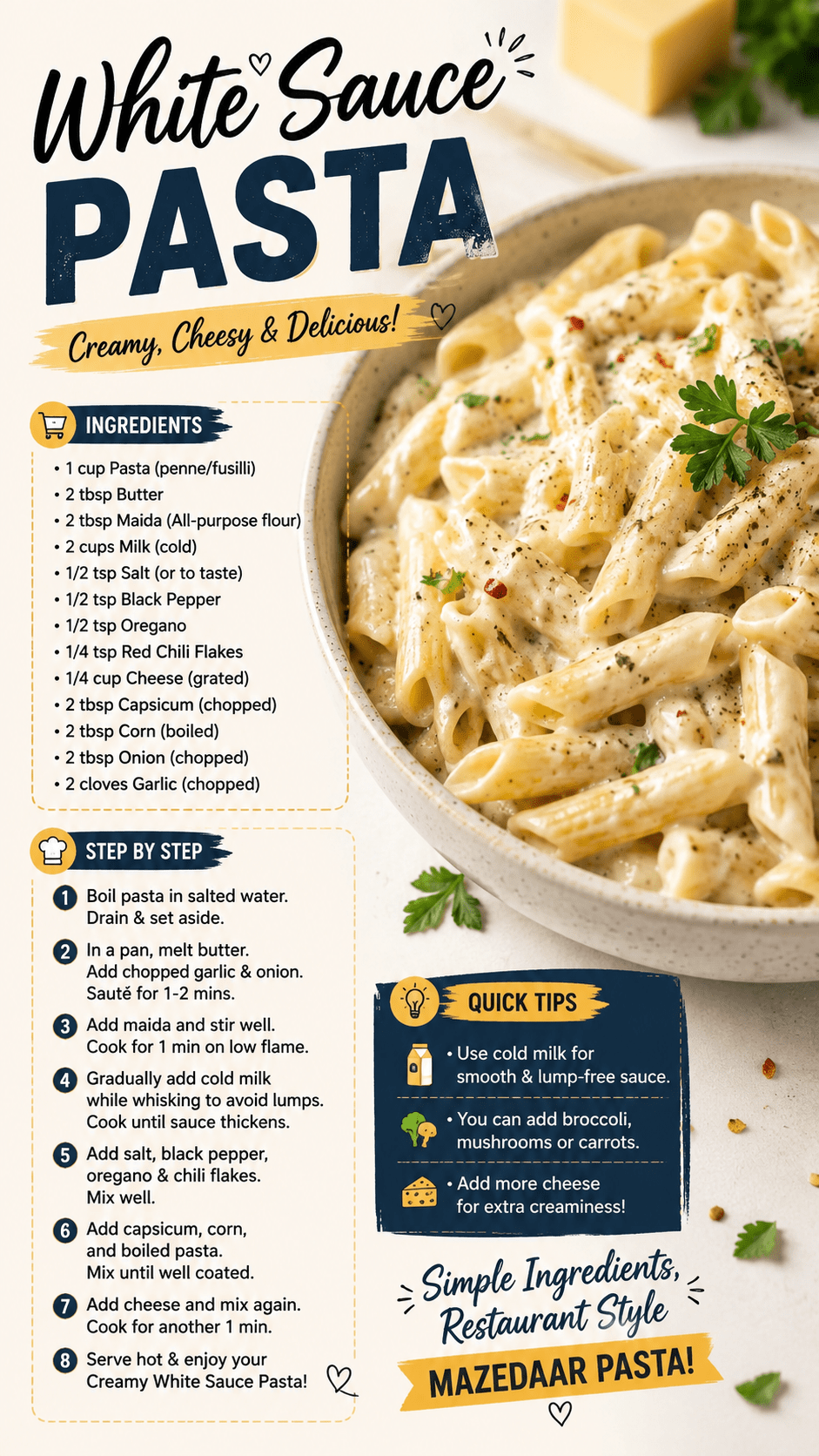
You know those dinners that feel way fancier than the effort you actually put in?
This is that dinner.
White sauce pasta (also called pasta in white sauce or béchamel pasta) is creamy, rich, and the kind of thing that makes you feel like you actually know what you’re doing in the kitchen.
And here’s the part that might surprise you: the whole thing comes together in under 30 minutes.
No complicated techniques. No obscure ingredients. Just a handful of pantry staples turning into something genuinely delicious.
What You’ll Need
For the Pasta
- 300g (10 oz) pasta (penne, rigatoni, or fettuccine work great)
- Water for boiling
- 1 tsp salt (for the pasta water)
For the White Sauce (Béchamel)
- 3 tbsp unsalted butter
- 3 tbsp all-purpose flour
- 2 cups (480ml) whole milk, warmed
- ½ tsp garlic powder (or 2 cloves fresh garlic, minced)
- ¼ tsp nutmeg (freshly grated if possible)
- Salt and black pepper to taste
- ½ cup (50g) Parmesan cheese, freshly grated
- ¼ cup (25g) mozzarella cheese, shredded
Optional Add-ins
- 1 cup cooked chicken, shredded or diced
- ½ cup mushrooms, sautéed
- A handful of fresh spinach
- Red pepper flakes for heat
- Fresh parsley for garnish
Tools You’ll Need
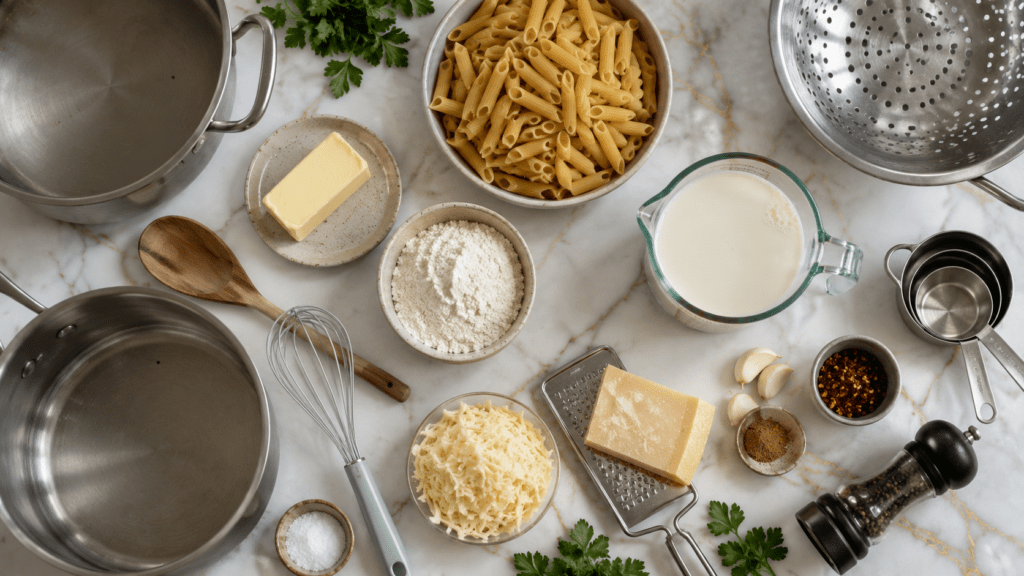
- Large pot (for boiling pasta)
- Medium saucepan (for the sauce)
- Wooden spoon or silicone spatula
- Whisk
- Colander
- Measuring cups and spoons
- Grater (for fresh cheese)
Pro Tips
These are the things that actually make a difference once you’ve made this recipe a few times.
- Warm your milk before adding it. Cold milk added to a hot roux is the number one reason white sauce turns lumpy. Give the milk 60 seconds in the microwave and your sauce will be silky smooth every time.
- Salt your pasta water generously. It should taste like light seawater. This is your only real chance to season the pasta itself, and it matters more than most people think.
- Save a cup of pasta water before draining. Starchy pasta water is basically liquid gold for loosening up a thick sauce. Add a splash at the end if things look too thick.
- Use freshly grated cheese, not pre-shredded. Pre-shredded cheese has anti-caking agents that can make your sauce grainy. Takes 30 extra seconds to grate it yourself and the difference is real.
- Pull the pasta slightly before al dente. It’ll finish cooking in the sauce and absorb those flavors. If you cook it all the way through first, it can turn mushy once it hits the heat again.
Substitutions and Variations
Make It Dairy-Free
- Swap butter for vegan butter or olive oil
- Use oat milk or unsweetened almond milk in place of whole milk
- Nutritional yeast works well instead of Parmesan for that cheesy, savory flavor
Make It Gluten-Free
- Use your favorite gluten-free pasta
- Replace all-purpose flour with a 1:1 gluten-free flour blend or cornstarch (use half the amount if using cornstarch)
Add Some Protein
- Grilled or rotisserie chicken is a classic pairing
- Crispy bacon or pancetta mixed in adds a smoky depth
- Shrimp sautéed in butter and garlic takes this to full restaurant-level territory
Make It Extra Indulgent
- Swap half the milk for heavy cream
- Stir in a tablespoon of cream cheese for extra richness
- Top with breadcrumbs and broil for 2-3 minutes for a golden, crispy top
Make Ahead Tips
White sauce pasta is honestly at its peak fresh, but if you need to prep ahead:
- The béchamel sauce can be made up to 2 days in advance and stored in an airtight container in the fridge. Press plastic wrap directly onto the surface to prevent a skin from forming.
- When reheating, add a splash of milk and whisk over low heat to bring it back to a smooth, pourable consistency.
- Cooked pasta can also be stored separately (toss with a little olive oil to prevent sticking) and combined with the sauce when ready to serve.
Nutritional Breakdown (Per Serving, Approx.)
Based on 4 servings with no optional add-ins
| Nutrient | Amount |
|---|---|
| Calories | ~480 kcal |
| Protein | ~15g |
| Carbohydrates | ~58g |
| Fat | ~20g |
| Calcium | ~25% DV |
Want to lighten it up? Use low-fat milk, reduce the butter by 1 tbsp, and skip the extra mozzarella. Still delicious, just a bit lighter.
Meal Pairing Suggestions
This pasta is rich, so you want sides that balance it out.
- Simple green salad with lemon vinaigrette cuts through the creaminess perfectly
- Garlic bread if you’re fully committing to the comfort food vibe 🍞
- Roasted vegetables like broccoli, asparagus, or cherry tomatoes add color and freshness
- A glass of crisp white wine (Pinot Grigio or Sauvignon Blanc) if you’re making this a whole moment
How to Make White Sauce Pasta
Step 1: Cook the Pasta
Bring a large pot of water to a boil. Add 1 tsp salt.
Cook the pasta 1-2 minutes less than the package directions (you’ll finish it in the sauce). Before draining, scoop out about 1 cup of pasta water. Set aside.
Drain and set the pasta aside.
Step 2: Make the Roux
In a medium saucepan, melt butter over medium heat.
Once melted, add the flour all at once and whisk constantly for about 1-2 minutes. You want it to smell slightly nutty, not raw. This step cooks out the flour flavor and is worth those 2 minutes.
Step 3: Build the Sauce
Start adding the warmed milk slowly, about ¼ cup at a time, whisking constantly after each addition.
This is where patience pays off. Keep whisking, keep adding milk gradually, and watch it transform into a smooth, velvety sauce.
Once all the milk is incorporated, add garlic powder (or fresh garlic), nutmeg, salt, and pepper.
Let it simmer on low heat for 3-4 minutes, stirring occasionally, until it’s thick enough to coat the back of a spoon.
Step 4: Add the Cheese
Remove from heat and stir in the Parmesan and mozzarella until fully melted.
Taste it. Adjust the salt and pepper. This is your moment.
Step 5: Combine
Add the drained pasta to the sauce. Toss well to coat every piece.
If the sauce is too thick, add that reserved pasta water a little at a time until you reach your preferred consistency.
If you’re adding any extras (chicken, mushrooms, spinach), stir them in now.
Step 6: Serve
Plate immediately and top with:
- Extra Parmesan
- Fresh cracked black pepper
- Fresh parsley
- A pinch of red pepper flakes if you like heat
Eat while it’s hot. It’s a completely different experience when it’s still steaming. 🍝
Leftovers and Storage
Storing: Let the pasta cool completely, then store in an airtight container in the fridge for up to 3 days.
Reheating: White sauce pasta thickens a lot when it sits. The secret to reheating it well:
- Add a splash of milk or water to the container
- Reheat on the stovetop over low heat, stirring constantly
- Or microwave in 30-second intervals, stirring in between, with a damp paper towel covering the bowl
Freezing: Not recommended. The béchamel sauce tends to separate when frozen and thawed, and the pasta texture suffers. Make it fresh, eat it fresh.
FAQ
Can I use any type of pasta for this recipe?
Yes, though shapes with ridges or tubes (penne, rigatoni, fusilli) tend to hold onto the sauce best. Long pasta like fettuccine or linguine works great too. Avoid very thin pasta like angel hair, which can get lost in a thick sauce.
My sauce turned out lumpy. What happened?
The most common culprits: cold milk added too quickly, or the roux wasn’t fully cooked before the milk was added. Fix lumpy sauce by running it through a fine mesh strainer or blending it quickly with an immersion blender.
Can I make this without cheese?
You can, but the cheese adds a lot of depth and richness. If you skip it, add a little extra salt and consider a pinch of nutritional yeast for that savory flavor.
How do I keep the sauce from getting a skin?
Press plastic wrap or parchment paper directly onto the surface of the sauce while it’s not being used. No air exposure, no skin.
Is this the same as Alfredo?
Close but not the same. Alfredo is traditionally butter and Parmesan. Béchamel (white sauce) uses a butter-flour roux with milk as the base. White sauce pasta tends to be a little lighter and has a different, more neutral base that takes on other flavors well.
Can I add vegetables directly into the sauce?
Yes. Spinach wilts right in at the end with no extra cooking needed. For heartier vegetables (broccoli, mushrooms, peppers), sauté them separately first, then fold them in when combining pasta and sauce.
Wrapping Up
This white sauce pasta is the kind of recipe that earns a permanent spot in your rotation.
It looks impressive, it tastes like you put in a lot more effort than you actually did, and it can be completely transformed by whatever you add into it. Chicken one night. Mushrooms the next. Shrimp if you’re feeling fancy on a Tuesday.
Give this one a try and tell me what you added to make it yours. Drop a comment below with how it turned out, or if you have questions along the way. I love hearing what different variations people come up with, because every single time someone makes it their own, it becomes something new.