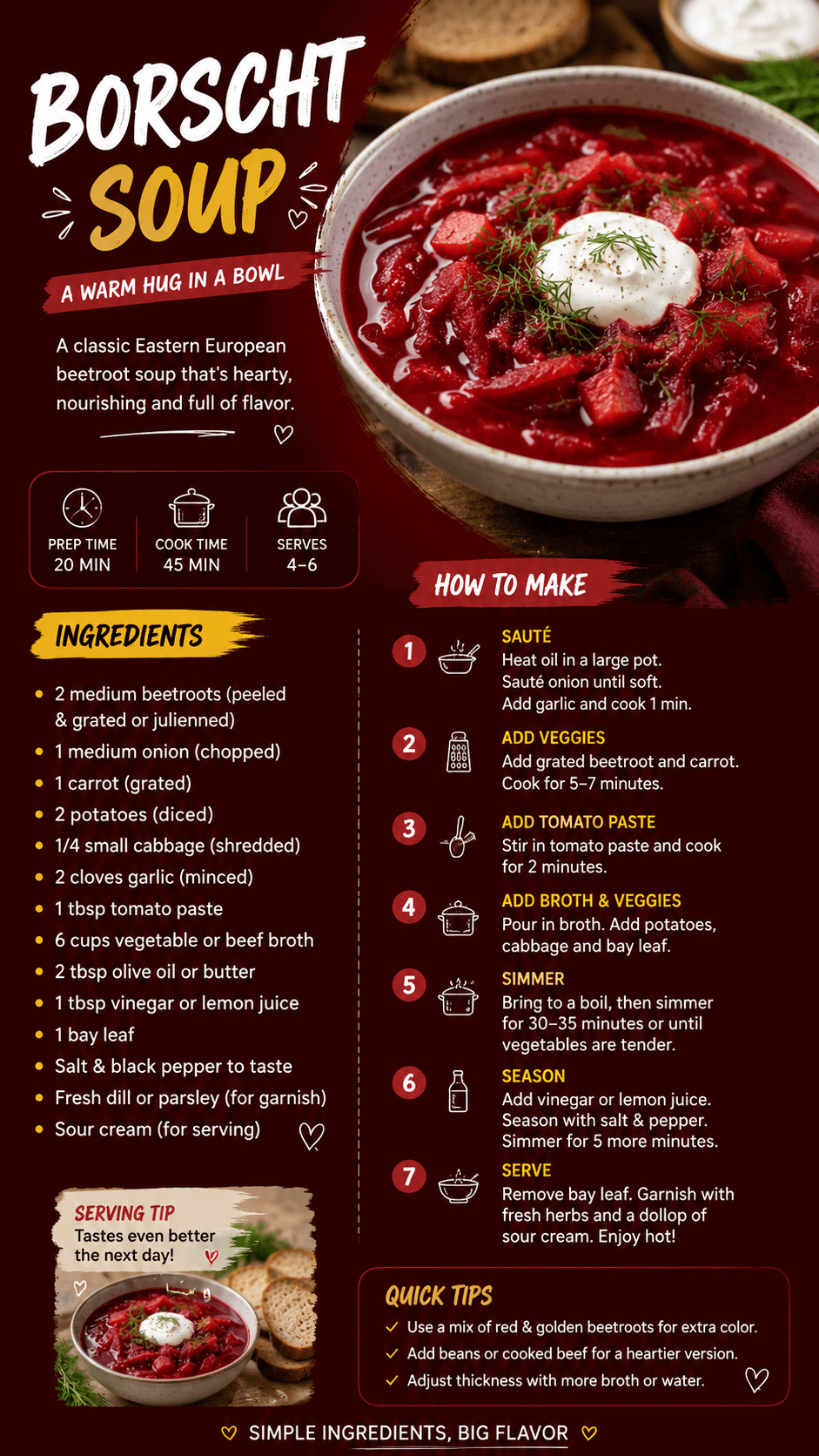
I’ll be upfront with you: I was skeptical the first time I made borscht.
A deep-red soup made from beets? It sounded like something I’d politely eat once and never think about again.
And then I actually made it. And ate three bowls.
Borscht is one of those dishes that sounds intimidating but is actually shockingly simple. It’s hearty, slightly tangy, earthy in the best possible way, and the color alone will make your kitchen feel like a scene from a cozy Eastern European film.
It’s also wildly underrated in the Western food world — and once you try it, you’ll wonder why it took you this long.
What You’ll Need
For the Soup Base
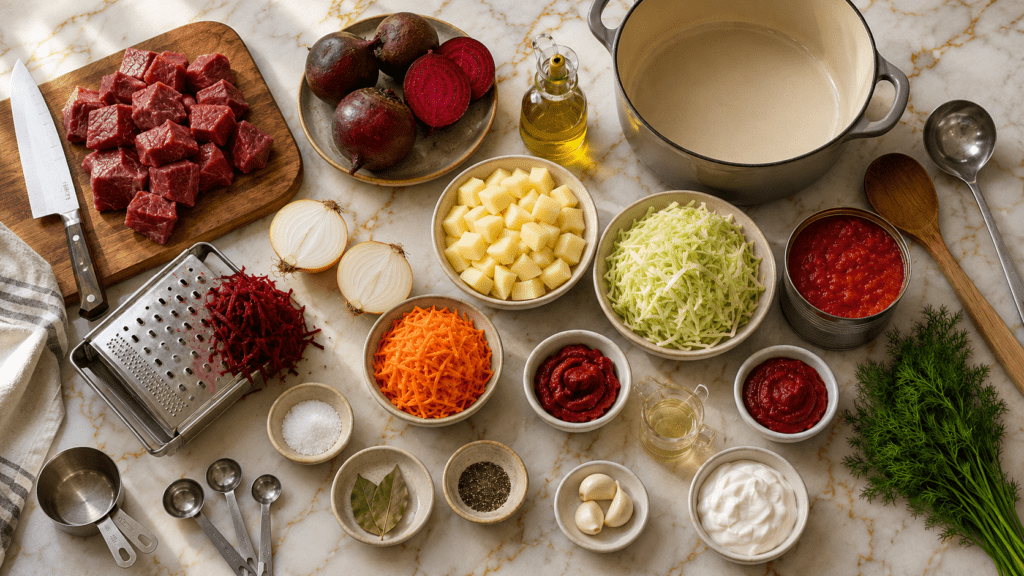
- 1 lb (450g) beef chuck, cut into 1-inch cubes (bone-in works great too)
- 8 cups beef broth (or water with 2 bouillon cubes)
- 3 medium beets, peeled and grated or julienned
- 2 medium potatoes, peeled and diced into 1-inch chunks
- 2 medium carrots, peeled and grated
- 1 medium onion, finely diced
- 3 cloves garlic, minced
- 1/4 head of green cabbage, thinly shredded
- 1 can (14oz) crushed tomatoes
- 2 tablespoons tomato paste
- 2 tablespoons white wine vinegar (or apple cider vinegar)
- 1 tablespoon sugar
- 3 tablespoons olive oil or sunflower oil
- Salt and black pepper to taste
- 2 bay leaves
- Fresh dill, a generous handful
To Serve
- Sour cream (this is non-negotiable, trust me)
- Fresh dill sprigs
- Crusty rye bread or dark bread on the side
Tools You’ll Need
- Large heavy-bottomed pot or Dutch oven (6–8 quart)
- Box grater or food processor with grater attachment
- Cutting board and sharp chef’s knife
- Wooden spoon or ladle
- Measuring cups and spoons
- Peeler
Pro Tips
These are the things I wish someone had told me before I made my first pot of borscht.
1. Grate your beets, don’t cube them. Cubed beets take forever to soften and the color doesn’t bleed into the soup nearly as well. Grated beets cook faster and turn that broth into a gorgeous deep ruby red.
2. Add the vinegar at the end, not the beginning. This is the trick that keeps the color bright. If you add acid too early, the beets lose their vivid color. Stir it in during the last 5 minutes and your borscht will look like it belongs on a magazine cover.
3. Let it sit overnight. Borscht genuinely tastes better the next day. The flavors deepen and mellow out in a way that’s hard to explain until you’ve experienced it. Make it today, have it tomorrow.
4. Don’t skip the sugar. It sounds strange, but a small amount of sugar balances the acidity from the tomatoes and vinegar. You won’t taste it as “sweet” — you’ll just notice the soup tastes more rounded.
5. Sear the beef first. Don’t throw raw beef straight into the pot. A quick sear in oil before adding the broth builds flavor you simply can’t get any other way. That brown crust = depth.
Substitutions and Variations
Not everyone eats meat, and not everyone has every ingredient on hand. Here’s how to make it work either way.
| Ingredient | Substitution |
|---|---|
| Beef chuck | Pork ribs, lamb, or leave it out entirely for vegetarian |
| Beef broth | Vegetable broth |
| White wine vinegar | Apple cider vinegar or lemon juice |
| Fresh dill | Dried dill (use 1 teaspoon) |
| Sour cream | Plain Greek yogurt or a dairy-free sour cream |
Vegetarian borscht is genuinely delicious — just skip the meat, swap in vegetable broth, and add a can of kidney beans for extra heartiness.
Cold borscht (also called chłodnik) is a summer version served chilled with hard-boiled eggs and cucumbers. A completely different vibe, same soul.
Make Ahead Tips
Borscht is actually perfect for making ahead, and here’s why.
- It keeps in the fridge for up to 5 days
- The flavor improves significantly after 24 hours
- It freezes beautifully for up to 3 months (just leave out the potatoes before freezing — they get mushy)
Make a big batch on Sunday and you have lunches sorted for the week.
Nutritional Breakdown (Per Serving, Approximate)
| Nutrient | Amount |
|---|---|
| Calories | ~280 kcal |
| Protein | 22g |
| Carbohydrates | 24g |
| Fat | 10g |
| Fiber | 5g |
| Vitamin C | 35% DV |
| Iron | 18% DV |
| Folate | 22% DV |
Beets are genuinely a nutritional powerhouse — they’re high in folate, manganese, and natural nitrates that support blood pressure and circulation. This is one of those soups where you feel good and it tastes incredible.
Dietary notes:
- Gluten-free as written (just check your broth label)
- Dairy-free with a sour cream swap
- Easily made vegetarian or vegan
Meal pairing suggestions: Serve alongside dark rye bread, pickles, or a simple cucumber-dill salad. If you want to make it a full spread, blinis with butter and a light salad on the side are perfect.
How to Make Borscht Soup
This comes together in about 90 minutes, and most of that is hands-off simmer time. Perfect for a weekend afternoon when you want something cozy on the stove.
Serves: 6–8 Total time: ~90 minutes
Step 1: Sear the beef (10 minutes)
Heat 2 tablespoons of oil in your large pot over medium-high heat.
Season your beef chunks generously with salt and pepper. Sear them in batches — don’t crowd the pan — until browned on all sides. This takes about 3–4 minutes per batch. Remove the beef and set aside.
Step 2: Build the base (10 minutes)
In the same pot, add the remaining tablespoon of oil over medium heat.
Add your diced onion and cook until soft and translucent, about 5 minutes. Add the minced garlic and cook for another minute. Stir in the tomato paste and cook for 2 minutes — it should darken slightly and smell incredible.
Step 3: Add the broth and beef (5 minutes)
Return the seared beef to the pot.
Pour in the beef broth and add your bay leaves. Bring everything to a boil, then reduce to a low simmer. Skim any foam that rises to the top.
Simmer for 30 minutes.
Step 4: Add the vegetables (5 minutes)
Add your grated beets, grated carrots, and diced potatoes into the pot.
Stir in the crushed tomatoes and the shredded cabbage. Season with salt and pepper.
Continue simmering on low for another 30–35 minutes, or until the potatoes are tender and the beef is falling-apart soft.
Step 5: Finish the soup (5 minutes)
Stir in the white wine vinegar, sugar, and most of your fresh dill.
Taste and adjust salt and pepper as needed. Remove the bay leaves.
That’s it.
Step 6: Serve
Ladle into bowls. Add a generous dollop of sour cream on top and a sprig of fresh dill.
Put some crusty bread on the side. Eat immediately.
Leftovers and Storage
Borscht stores like a dream.
- Fridge: Keeps well for up to 5 days in an airtight container. The color might deepen but the flavor only gets better.
- Freezer: Freeze for up to 3 months. Pro tip: leave the potatoes out if you’re specifically making it to freeze — they go grainy when thawed. You can always add freshly cooked potatoes when reheating.
- Reheating: Warm gently on the stovetop over medium-low heat. Add a splash of broth or water if it’s thickened up.
Store the sour cream separately — don’t mix it in before storing.
FAQ
Does borscht always have beef in it?
No. There are tons of variations — vegetarian borscht, borscht with pork, even a cold summer version with no meat at all. The beet base is what makes it borscht.
Why does my borscht lose its color?
Two reasons: overcooking the beets or adding acid too early. Add your vinegar in the last 5 minutes and don’t boil the soup after that point.
Can I use canned beets?
You can, but fresh beets give you better flavor and color. If you’re in a pinch, drain canned beets well and add them in the last 15 minutes of cooking since they’re already soft.
Is borscht Ukrainian or Russian?
This is a loaded question with a genuinely interesting answer. Borscht has roots in Ukrainian cuisine and is deeply tied to Ukrainian culture and history. UNESCO actually recognized Ukrainian borscht-making as an intangible cultural heritage in 2022. It’s been adopted across many Eastern European countries, each with their own regional version, but its origins are Ukrainian.
What does borscht taste like exactly?
Earthy from the beets, slightly tangy from the vinegar, savory from the beef and broth, with a hint of sweetness. The sour cream on top adds a creamy richness that ties everything together. It’s complex but not overwhelming.
Can I make this in a slow cooker?
Yes. Sear the beef and sauté the onion first (still worth it), then add everything except the cabbage, vinegar, and fresh dill into your slow cooker. Cook on low for 7–8 hours or high for 4–5 hours. Add cabbage in the last hour, then stir in vinegar and dill before serving.
How do I know when the beets are cooked?
They’ll be tender when pierced with a fork and the soup will have turned a deep, gorgeous ruby red. That color is your sign everything is going right.
Wrapping Up
If you’ve been sleeping on borscht, this is your sign to make it this weekend.
It’s one of those recipes that looks impressive, tastes like you’ve been cooking for hours, and secretly takes almost no skill at all. A pot of this on a cold evening is one of the most satisfying things you can make — full stop.
And when you do make it, drop a comment below. Tell me how it went, what you changed, or just let me know you ate three bowls like I did. Questions are always welcome too.