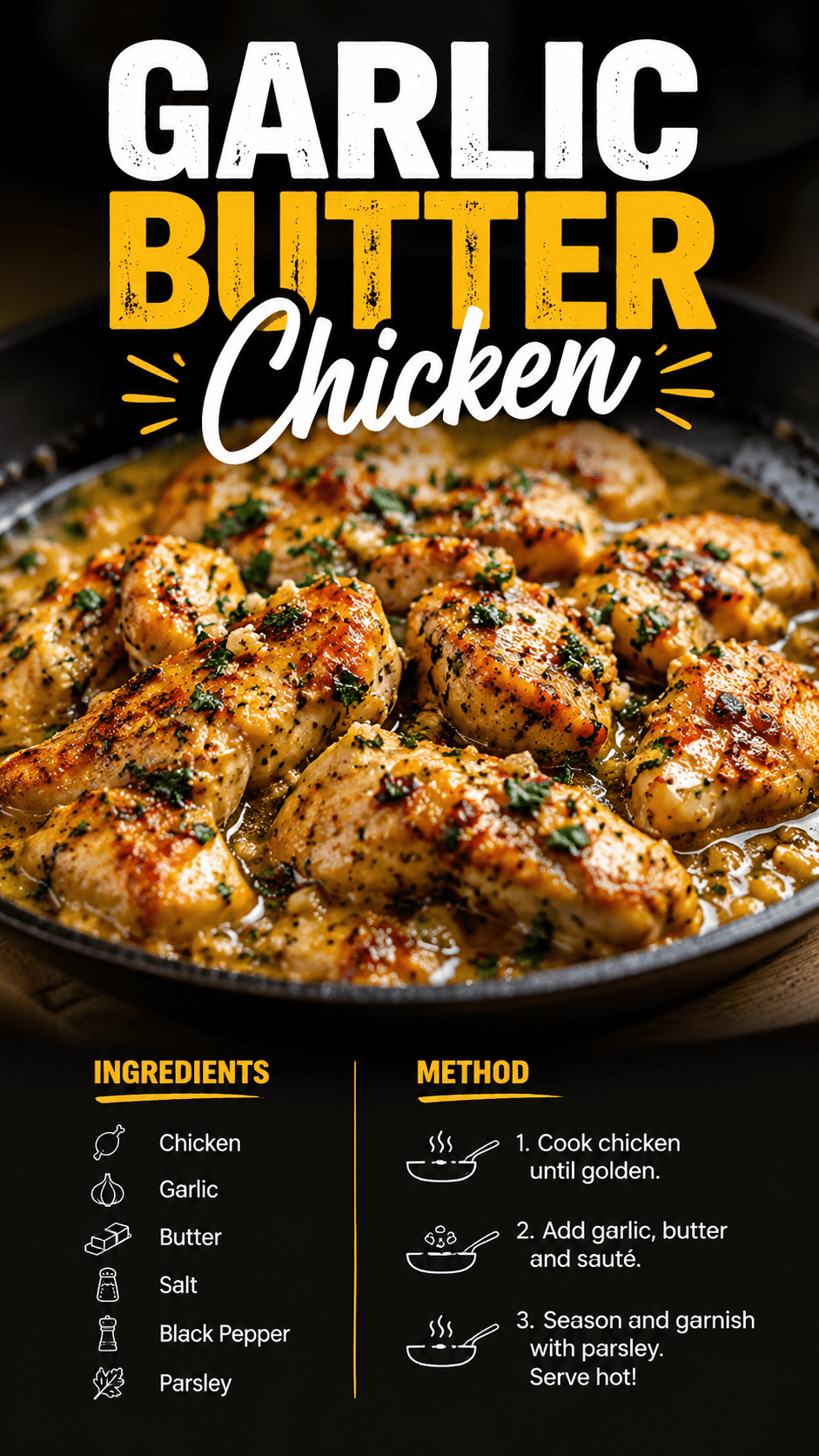
Okay, I need to talk about the chicken dinner that’s been on repeat in my kitchen for the last month.
It’s garlic butter chicken. And it sounds simple because it is simple.
But somehow it tastes like something you’d order at a restaurant and then brag about for a week. 🧈
I’ve made this recipe probably a dozen times now, and every single time my husband asks the same question: “wait, what’s IN this?”
The answer is embarrassingly easy. Let me show you.
Why This Recipe Works So Well
Here’s the thing about garlic butter chicken that most people don’t realize.
It’s not one flavor. It’s three.
You get the deep savory sear on the chicken, the rich garlicky butter sauce, and a little herby brightness at the end that cuts through all that richness.
Most weeknight chicken recipes give you one of those. This one gives you all three in under 30 minutes.
That’s the part that shocked me the first time I made it.
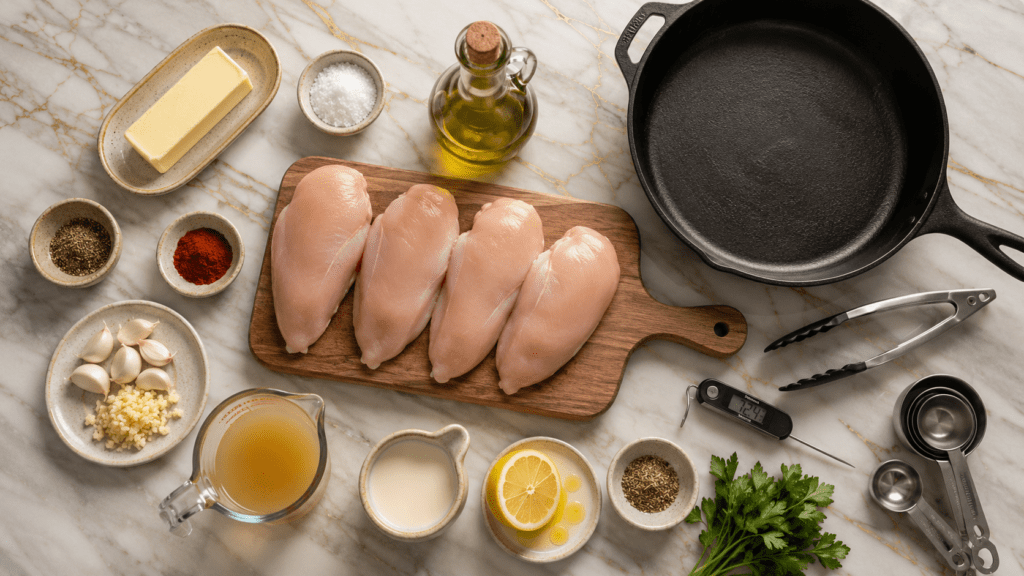
What You’ll Need
For the chicken:
- 4 boneless, skinless chicken breasts (or thighs, if you prefer)
- 1 tsp salt
- 1/2 tsp black pepper
- 1 tsp paprika
- 2 tbsp olive oil
For the garlic butter sauce:
- 4 tbsp unsalted butter
- 6 cloves garlic, minced
- 1/2 cup chicken broth
- 1/4 cup heavy cream
- 1 tbsp lemon juice
- 1/2 tsp Italian seasoning
- Fresh parsley, chopped (for topping)
That’s it. No obscure ingredients, no trip to a specialty store.
Tools You’ll Need
- A large skillet (cast iron works beautifully here)
- Tongs
- A meat thermometer (optional, but it saves you from dry chicken)
- A cutting board and sharp knife
- Measuring spoons and cups
How to Make Garlic Butter Chicken
Step 1: Prep the chicken.
Pat your chicken breasts dry with a paper towel. This matters more than you’d think.
Dry chicken sears. Wet chicken steams. You want the sear.
Season both sides with salt, pepper, and paprika.
Step 2: Sear it.
Heat the olive oil in your skillet over medium-high heat.
Once it’s shimmering, add the chicken.
Let it cook for 5-6 minutes per side, untouched. Don’t move it around. Just let that crust form.
Once both sides are golden and the internal temp hits 165°F, pull the chicken out and set it aside.
Step 3: Build the sauce.
Lower the heat to medium. Add the butter to the same skillet.
Once it’s melted, toss in the garlic and stir for about 30 seconds. It’ll smell incredible almost immediately.
Pour in the chicken broth and scrape up all those browned bits stuck to the pan. That’s flavor you don’t want to waste.
Step 4: Finish the sauce.
Add the heavy cream, lemon juice, and Italian seasoning.
Let it simmer for 3-4 minutes until it thickens slightly.
Step 5: Bring it together.
Add the chicken back into the skillet, spooning that garlic butter sauce over the top.
Let it simmer together for another 2-3 minutes so the chicken soaks up the flavor.
Top with fresh parsley and serve immediately.
Pro Tips From My Kitchen
- Don’t skip drying the chicken. I mentioned it above, but it’s worth repeating because it’s the single biggest reason people end up with rubbery chicken instead of a proper sear.
- Use a meat thermometer. Guessing doneness on chicken is how people end up either dry as cardboard or, worse, undercooked. 165°F is your number.
- Deglaze properly. Those brown bits on the bottom of the pan after searing are basically concentrated flavor. Scrape every bit of it into your sauce.
- Let the chicken rest for 5 minutes before slicing if you’re serving it sliced over rice or pasta. It keeps the juices inside instead of all over your cutting board.
- Fresh garlic only. Jarred garlic works in a pinch, but the flavor difference here is noticeable enough that I’d genuinely skip the recipe rather than use it.
Substitutions and Variations
Want to switch things up? Here’s what works:
| Original | Substitute | Notes |
|---|---|---|
| Chicken breasts | Chicken thighs | More forgiving, harder to overcook |
| Heavy cream | Half-and-half | Slightly thinner sauce, still creamy |
| Heavy cream | Coconut milk | Dairy-free, adds subtle sweetness |
| Butter | Ghee | Great if you’re avoiding dairy solids |
| Fresh parsley | Fresh basil | Different but still bright |
| Chicken broth | White wine + broth | Adds a little acidity and depth |
You can also toss in mushrooms or spinach right before adding the chicken back in. Both soak up that garlic butter sauce really well.
Make Ahead Tips
You can season the chicken up to 24 hours ahead and keep it covered in the fridge.
The sauce itself is best made fresh, but you can mince the garlic and measure out your other sauce ingredients the night before if you’re trying to make dinner move faster.
Nutritional Breakdown (Per Serving)
Based on 4 servings, using chicken breast and heavy cream:
- Calories: ~380
- Protein: 35g
- Fat: 24g
- Carbs: 3g
If you’re watching fat intake, swapping the heavy cream for half-and-half brings this down noticeably without losing much creaminess.
Meal Pairing Suggestions
This chicken is rich, so I like pairing it with something that balances it out:
- Garlic butter chicken over mashed potatoes (yes, more garlic butter, no regrets)
- Steamed asparagus or green beans
- A simple arugula salad with lemon vinaigrette
- Rice or orzo to soak up the sauce
Leftovers and Storage
Store leftovers in an airtight container in the fridge for up to 3-4 days.
To reheat, warm it gently in a skillet over low heat. The sauce will separate slightly if microwaved on high, so low and slow is the move here.
You can also freeze the chicken and sauce together for up to 2 months. Thaw overnight in the fridge before reheating.
FAQ
Can I use frozen chicken?
Thaw it first. Cooking from frozen means the outside overcooks before the inside catches up, and you’ll lose that sear entirely.
Why is my sauce too thin?
Let it simmer a bit longer. It thickens as the liquid reduces, so patience here pays off.
Can I make this dairy-free?
Yes. Swap the butter for ghee or a dairy-free butter alternative, and use coconut milk instead of heavy cream.
What’s the best chicken cut for this recipe?
Breasts give you a leaner dish, thighs give you more flavor and forgiveness if you slightly overcook them. Both work.
Can I double the recipe?
Absolutely, just cook the chicken in batches so you don’t overcrowd the pan. Overcrowding steams the chicken instead of searing it.
Wrapping Up
This is one of those recipes that feels fancier than the effort it actually takes.
Thirty minutes, one skillet, and a dinner that tastes like you tried a lot harder than you did.
Make it once and I promise you’ll understand why it’s become a permanent fixture in my weekly rotation.
If you try it, come back and drop a comment below. I want to know what you paired it with, whether you tweaked the sauce, and how it turned out.
And if you’ve got questions before you dive in, ask away. I’ll answer them.