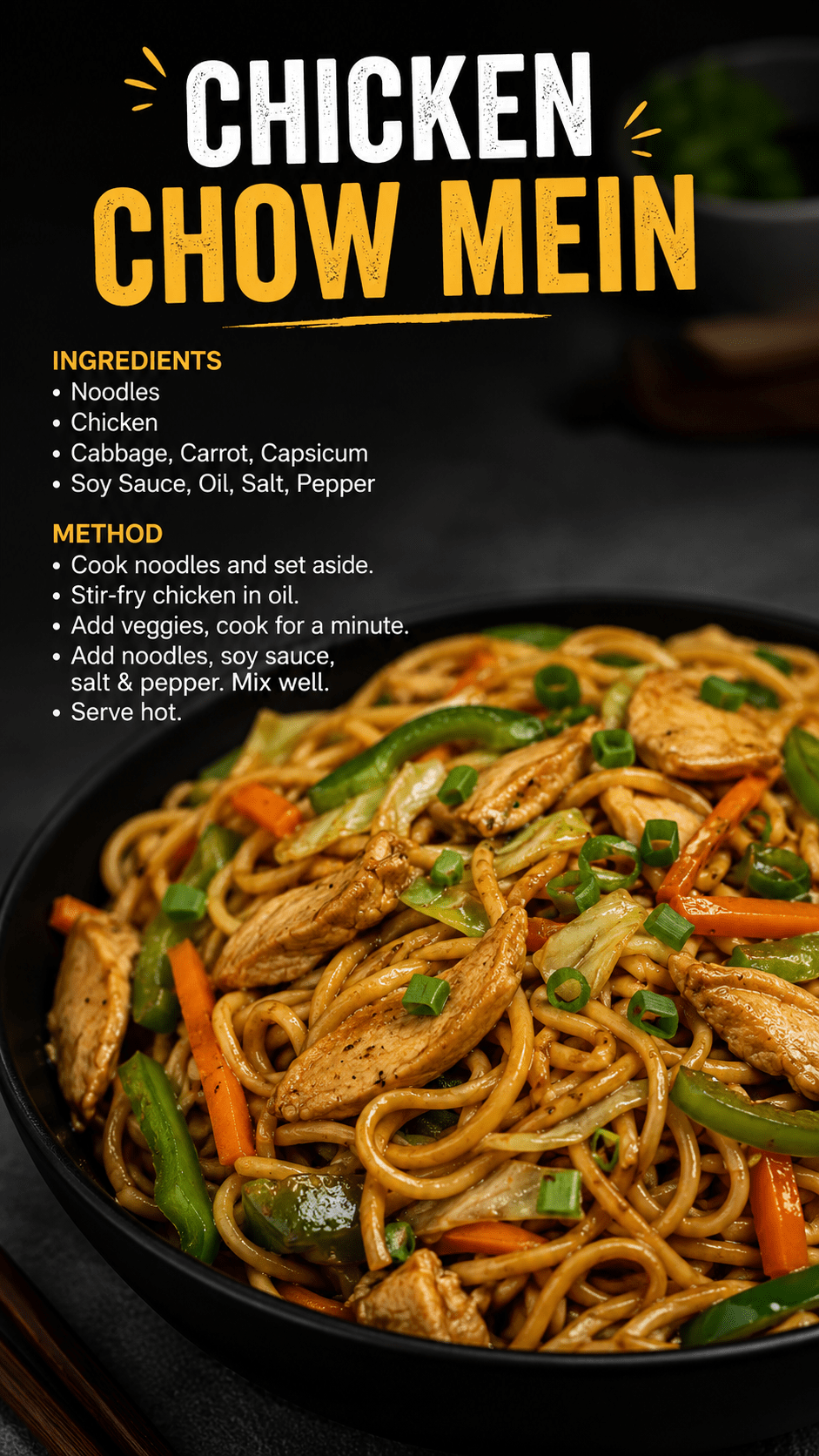
You know that feeling when your takeout arrives and it’s… fine?
Not bad. Not amazing. Just fine.
That used to be my relationship with chow mein until I started making it at home. And honestly? There’s no going back.
This chicken chow mein comes together in under 30 minutes, uses one wok, and produces noodles that are perfectly chewy, smoky, and coated in the most savory sauce you’ll want to eat by the spoonful.
There’s also a trick I use that most recipes skip — and it makes a huge difference. I’ll get to it in the Pro Tips section. Keep reading.
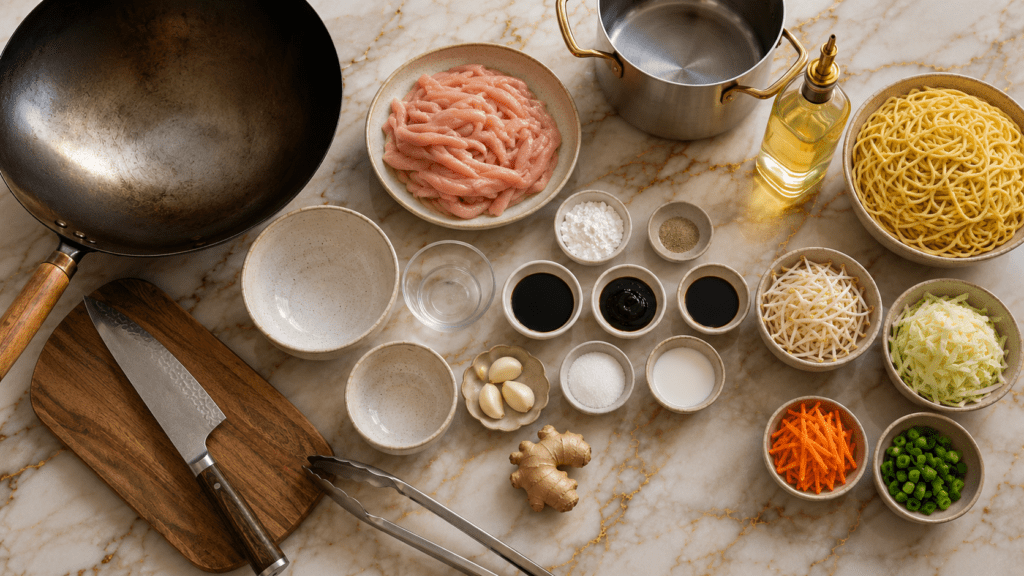
What You’ll Need
For the Chicken Marinade
- 1 lb (450g) boneless, skinless chicken breast, thinly sliced
- 1 tbsp soy sauce
- 1 tsp cornstarch
- 1 tsp sesame oil
- ½ tsp white pepper
For the Noodles & Veggies
- 8 oz (225g) fresh chow mein noodles (or dried lo mein noodles)
- 2 cups bean sprouts
- 1 cup shredded cabbage
- 1 medium carrot, julienned
- 3 green onions, cut into 1-inch pieces
- 3 cloves garlic, minced
- 1-inch piece of fresh ginger, grated
- 2 tbsp neutral oil (vegetable or avocado oil)
For the Sauce
- 3 tbsp soy sauce
- 1 tbsp oyster sauce
- 1 tsp dark soy sauce (this is the secret — it adds color and depth)
- 1 tsp sesame oil
- 1 tsp sugar
- 1 tbsp cornstarch mixed with 2 tbsp water
Tools You’ll Need
- Large wok or a wide skillet (12-inch minimum)
- Cutting board + sharp knife
- Mixing bowls (2)
- Tongs or chopsticks
- Small bowl for the sauce
- Large pot for boiling noodles
Pro Tips
These are the things I wish someone had told me before I made chow mein for the first time.
- Dry your noodles before stir-frying. After boiling, rinse the noodles under cold water and toss with a tiny bit of oil. If they go into the wok wet, they steam instead of fry. You won’t get that slightly crispy texture that makes restaurant chow mein so good.
- High heat. Always. Wok cooking needs to be hot — like aggressively hot. If your pan isn’t smoking slightly when the food hits it, turn it up. Low heat makes everything soggy and sad.
- Marinate the chicken, even for 10 minutes. Cornstarch in the marinade creates a silky, velvety coating on the chicken that you just can’t replicate otherwise. This technique is called velveting and Chinese restaurants use it constantly.
- Mix your sauce in advance. Pre-mixing means it hits the hot wok and coats everything instantly rather than adding liquids one by one and losing control of the dish.
- Don’t overcrowd the wok. If you’re doubling the recipe, cook in two batches. Overcrowding drops the temperature and you end up with a soggy stir-fry rather than a proper sear.
Substitutions and Variations
Protein swaps:
- Shrimp works perfectly here — cook for 2 minutes per side
- Beef (flank steak, thinly sliced) is incredible with this sauce
- Tofu for a vegetarian version — press it well and pan-fry until golden first
Noodle options:
- Dried spaghetti or linguine in a pinch (seriously, it works)
- Rice noodles for a gluten-free option
- Ramen noodles if that’s what you have
Vegetable swaps:
- Bok choy, snap peas, bell peppers, broccoli — all great additions
- Use whatever is in your fridge, this recipe is forgiving
Sauce variations:
- Add 1 tbsp hoisin sauce for a slightly sweeter, richer flavor
- Add chili garlic sauce or sriracha for heat
- Swap oyster sauce for hoisin to keep it vegetarian
Make-Ahead Tips
- Slice and marinate the chicken up to 24 hours in advance. Keep it covered in the fridge.
- Mix the sauce and store it in a jar in the fridge for up to 3 days.
- Prep all your vegetables the day before and store them in an airtight container — this makes weeknight cooking genuinely fast.
The noodles are best cooked fresh, but you can par-boil them, toss with oil, and refrigerate for up to a day.
Nutritional Breakdown
(Per serving, based on 4 servings)
| Nutrient | Amount |
|---|---|
| Calories | ~420 kcal |
| Protein | 32g |
| Carbohydrates | 48g |
| Fat | 11g |
| Fiber | 3g |
| Sodium | ~950mg |
Diet-friendly swaps:
- Lower sodium: Use reduced-sodium soy sauce and skip the dark soy
- Gluten-free: Swap all soy sauces for tamari and use rice noodles
- Lower carb: Use zucchini noodles or reduce the noodle quantity by half
Pairs well with: Egg drop soup, spring rolls, steamed dumplings, or a simple cucumber salad.
How to Make Chicken Chow Mein
Step 1: Marinate the Chicken
Slice your chicken breast thinly — against the grain makes it more tender.
Toss with soy sauce, cornstarch, sesame oil, and white pepper.
Set aside while you prep everything else.
Step 2: Cook the Noodles
Boil noodles according to the package directions, but pull them out 30 seconds early — they’ll finish cooking in the wok.
Rinse under cold water. Toss with a drizzle of oil. Set aside.
Step 3: Mix the Sauce
In a small bowl, whisk together the soy sauce, oyster sauce, dark soy sauce, sesame oil, sugar, and cornstarch slurry.
Set it right next to the stove. You’ll need it fast.
Step 4: Sear the Chicken
Heat your wok over high heat until it just starts to smoke.
Add 1 tablespoon of oil, then the chicken in a single layer.
Don’t touch it for 60 seconds. Let it sear. Then toss and cook another 1-2 minutes until just cooked through.
Remove the chicken and set aside.
Step 5: Stir-Fry the Aromatics and Vegetables
Add another tablespoon of oil to the hot wok.
Toss in the garlic and ginger — this will sizzle dramatically and smell incredible. Stir for 30 seconds.
Add the cabbage and carrots. Stir-fry for 2 minutes.
Add the bean sprouts and green onions. 30 more seconds.
Step 6: Add the Noodles
Add your noodles to the wok and toss everything together.
Let the noodles sit undisturbed for 30-40 seconds so they get a little color on the bottom. This is where that slightly crispy magic happens.
Step 7: Sauce and Finish
Pour the sauce over everything. Toss quickly to coat.
Return the chicken to the wok. Toss again.
Taste and adjust — more soy for saltiness, a pinch of sugar if you want it slightly sweeter.
Plate immediately and top with extra green onions.
Leftovers and Storage
- Fridge: Store in an airtight container for up to 3 days.
- Reheating: A hot skillet with a tiny splash of water works perfectly. Microwave works too but the noodles lose some texture.
- Freezer: Not ideal — noodles get mushy after freezing. Better to freeze the marinated raw chicken separately and make a fresh batch.
FAQ
Can I use dried noodles instead of fresh?
Yes, and they work great. Just follow the package directions and rinse well after cooking. Lo mein noodles or even spaghetti are solid substitutes.
Why does my chow mein taste bland?
Usually two culprits: not enough heat (so the sauce doesn’t caramelize) or skipping the dark soy sauce (which adds depth and that signature color). Taste and season at the end too.
What’s the difference between chow mein and lo mein?
Chow mein noodles are typically stir-fried until slightly crispy. Lo mein noodles are softer and tossed with sauce rather than fried. Same ingredients, different vibe.
Can I make this without a wok?
Totally. A large, wide skillet gets you 90% of the way there. The key is still high heat and not overcrowding the pan.
Is oyster sauce necessary?
It adds a unique savory sweetness that’s hard to replicate, but you can swap it for hoisin sauce in a pinch. The flavor will be slightly different but still really good.
How do I make it spicy?
Add 1-2 teaspoons of chili garlic sauce or a drizzle of chili oil at the end. Start small and taste as you go.
Wrapping Up
Once you make this at home, ordering chow mein from a restaurant starts to feel unnecessary. 😄
It takes less time than delivery, costs a fraction of the price, and you can customize every single element to your taste.
The smoky wok flavor, the perfectly seasoned sauce, those slightly crispy noodles — it all comes together in a way that feels genuinely impressive for a weeknight dinner.
Give it a try this week and drop a comment below. Did you try a different protein? Add vegetables I haven’t thought of? I genuinely love hearing how these recipes turn out in your kitchen — and if you have any questions, leave them below and I’ll get back to you!