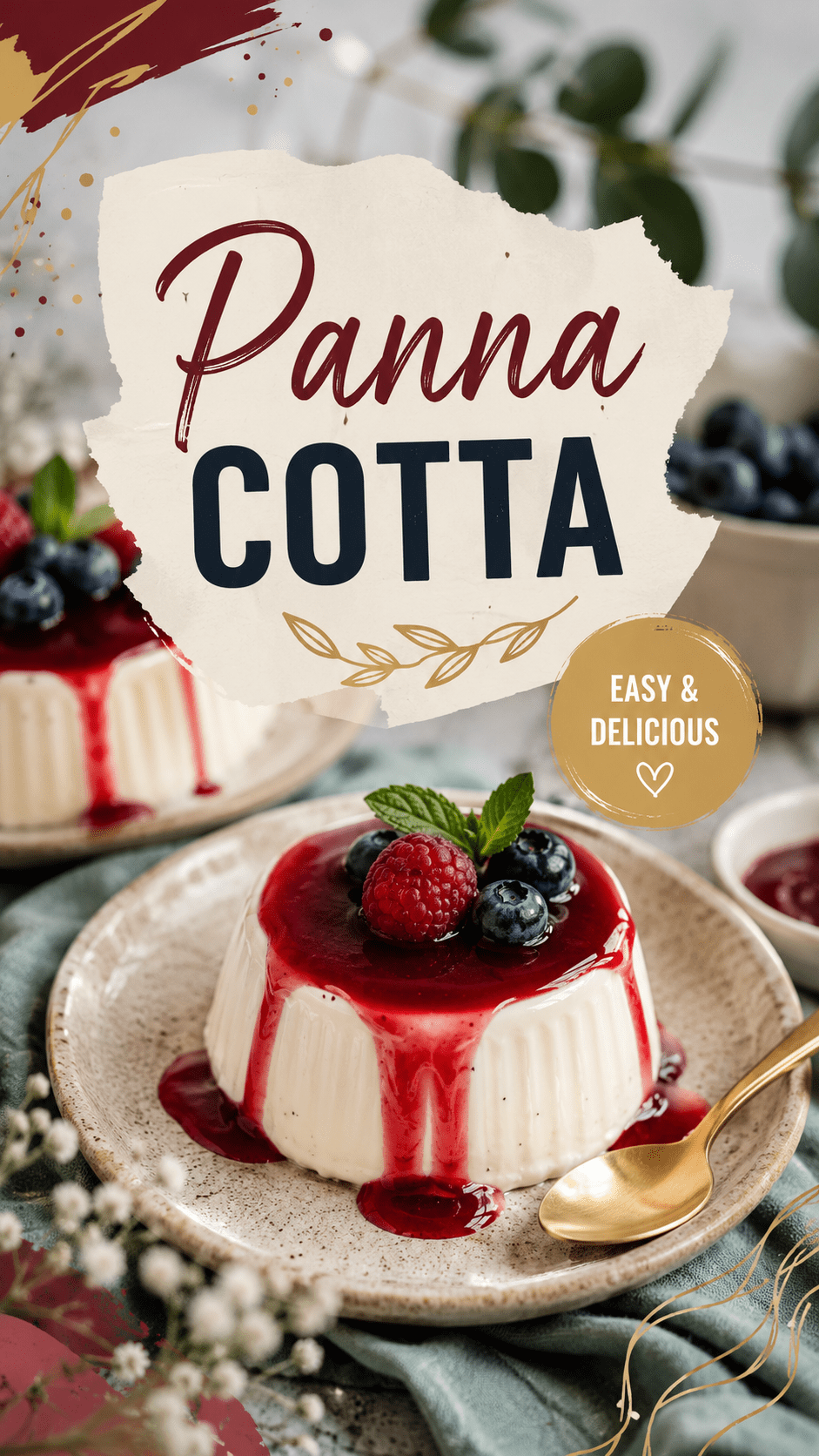
I made panna cotta for the first time thinking it would wreck my whole afternoon.
It took me 12 minutes of actual work.
That’s it. No oven. No fancy equipment. No standing over a double boiler praying you don’t scramble eggs into a custard disaster.
Panna cotta literally translates to “cooked cream” in Italian, and honestly, that’s the whole recipe. Cream, a little sugar, vanilla, gelatin. You warm it, pour it, chill it, and then you get to tell everyone you made an Italian dessert from scratch. 🍮
It comes from Piedmont, in northern Italy, and food historians still argue about exactly when it started (some say early 1900s, some say it’s way older). What they don’t argue about is that it’s ridiculously good.
Let’s make one.
What You’ll Need
- 2 cups heavy cream
- 1/2 cup whole milk
- 1/3 cup granulated sugar
- 1 vanilla bean, split and scraped (or 2 teaspoons vanilla extract)
- 2 1/4 teaspoons powdered gelatin (one standard packet)
- 3 tablespoons cold water
- Pinch of salt
- Fresh berries or berry coulis, for topping
That’s it. Eight things, and one of them is water.
Tools You’ll Need
- Small saucepan
- Whisk
- Small bowl (for blooming the gelatin)
- Fine mesh strainer
- 6 ramekins or small glasses
- Plastic wrap
How to Make It
1. Bloom the gelatin. Sprinkle the gelatin over the cold water in a small bowl. Let it sit for 5 minutes. It’ll turn thick and wrinkly, kind of like wet sand. That’s exactly what you want.
2. Warm the cream mixture. In your saucepan, combine the cream, milk, sugar, vanilla, and salt. Heat over medium, stirring often, until it’s steaming and the sugar is fully dissolved. Don’t let it boil.
3. Melt in the gelatin. Take the pan off the heat. Add the bloomed gelatin and whisk until it’s completely dissolved into the warm cream. No lumps allowed.
4. Strain it. Pour the mixture through a fine mesh strainer into a measuring cup or bowl. This catches any bits of vanilla bean or undissolved gelatin, so your panna cotta ends up silky instead of grainy.
5. Pour and chill. Divide the mixture between your ramekins or glasses. Cover with plastic wrap and refrigerate for at least 4 hours, though overnight is better.
6. Serve. Top with fresh berries, a drizzle of honey, or a berry coulis. If you want the classic unmolded look, dip the ramekin in warm water for a few seconds and invert onto a plate.
Pro Tips
- Don’t rush the chill time. I tried serving one at the 2 hour mark once and it was more pudding than panna cotta. Give it the full 4 hours minimum.
- Low and slow with the heat. If the cream mixture actually boils, you can throw off the texture. Steam rising off the surface is your cue to stop.
- Real vanilla bean makes a difference here. Since there are only a handful of ingredients, each one really shows up in the final flavor. If you have a bean, use it.
- Grease your ramekins lightly if you plan on unmolding them. A tiny bit of neutral oil wiped inside makes it slide right out.
- Taste your cream before you commit. Cream that’s even slightly off will ruin the whole batch, and there’s no way to mask it with 8 ingredients.
Substitutions and Variations
| Original | Swap | Notes |
|---|---|---|
| Heavy cream | Coconut cream | Great dairy-free option, adds a subtle coconut flavor |
| Vanilla bean | Vanilla extract | Use 2 tsp, add it after removing from heat |
| Granulated sugar | Honey or maple syrup | Use slightly less since they’re sweeter |
| Gelatin | Agar agar | Vegetarian option, but the texture turns out firmer, not jiggly |
| Berries | Caramel sauce | For a completely different vibe |
You can also steep the cream with things like coffee, matcha, or lavender before adding the gelatin. Ten minutes of steeping, then strain it out before moving forward.
Make Ahead Tips
Panna cotta is basically made to be a make ahead dessert. It needs to chill for hours anyway, so you might as well make it 2 to 3 days before you need it.
Keep it covered in the fridge and add toppings right before serving. The texture actually holds up beautifully over a few days, which is more than I can say for most desserts.
Leftovers and Storage
Panna cotta keeps in the fridge for up to 4 days, covered tightly with plastic wrap.
I wouldn’t freeze it though. The texture gets weird and a little icy once thawed, and honestly, it’s not worth the trade off when this is quick enough to make fresh.
FAQ
Why didn’t my panna cotta set? Usually it’s one of two things: not enough gelatin, or the gelatin wasn’t fully dissolved before you poured it. Make sure your mixture is completely smooth before it goes into the fridge.
Can I make this dairy free? Yes, full-fat coconut cream works really well as a 1:1 swap for the heavy cream.
Is panna cotta the same as custard? Not quite. Custard gets its set from eggs, panna cotta gets its set from gelatin. That’s why panna cotta is so much faster and more forgiving to make.
Can I use flavored gelatin packets instead of plain? Skip those. They’re loaded with sugar and artificial flavor that will throw off the whole recipe. Stick with plain, unflavored powdered gelatin.
How do I know when it’s set? Give the ramekin a gentle jiggle. It should wobble like jello, not slosh like liquid.
Wrapping Up
Panna cotta has this reputation for being some untouchable, restaurant-only dessert, and I get why. It shows up plated so perfectly, sitting there all smooth and glossy with berries on top, looking like something a pastry chef spent hours on.
It took me 12 minutes of hands-on work and a nap’s worth of chill time.
Make this one, then come tell me how it went in the comments. Did you go classic vanilla, or did you steep something fun into the cream? I want to know.