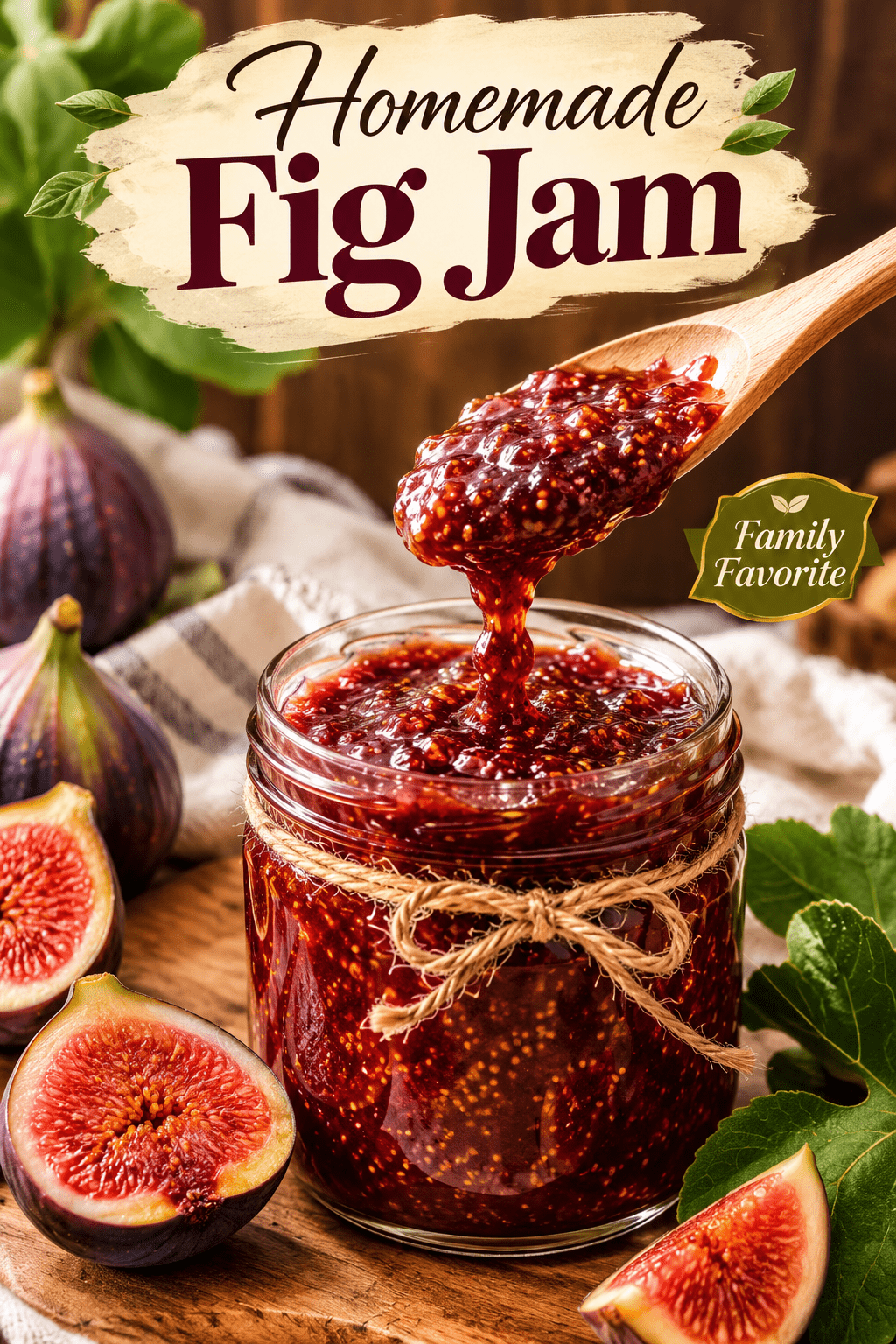
I brought home three pounds of figs from the farmers market last week with absolutely no plan.
Silas took one look at the bag on the counter and asked, genuinely concerned, “are we eating all of these raw?”
We were not. They became jam by that evening, and it’s honestly one of the easiest things I’ve made all year.
Fresh figs only stick around for about a week before they start going soft and a little sad. Turning them into jam is basically the only way to keep that flavor around past September. And once you’ve had jam made from actual fresh figs, the jarred stuff from the store tastes like a rumor of the real thing.
This recipe doesn’t use pectin. It doesn’t require a canning setup. You need a pot, a spoon, and some patience while it simmers down. That’s it.
What You’ll Need
| Ingredient | Amount |
|---|---|
| Fresh figs, stemmed and quartered | 2 lbs |
| Granulated sugar | 1 cup |
| Fresh lemon juice | 3 tbsp |
| Lemon zest | 1 tsp |
| Water | 1/4 cup |
| Salt | pinch |
| Vanilla extract (optional) | 1/2 tsp |
A quick note on the figs: ripe but firm is what you want. Overripe figs turn mushy fast and make the jam taste more like syrup than fruit.
Tools You’ll Need
- Medium heavy-bottomed saucepan
- Wooden spoon or silicone spatula
- Potato masher (or just the back of your spoon)
- Small plate (kept in the freezer, trust me on this)
- Clean jars with lids
Pro Tips
1. Don’t peel the figs. The skin softens completely during cooking and adds color plus texture. Peeling is extra work for zero payoff.
2. Use the frozen plate trick to test doneness. Drop a small spoonful of jam on a cold plate. Push it with your finger. If it wrinkles instead of running, it’s ready.
3. Add the lemon juice early. It’s not just for flavor. The acid helps the jam set properly since there’s no added pectin.
4. Low and slow beats hot and fast. A rolling boil will scorch the sugar before the figs actually break down. Keep it at a gentle simmer.
5. Taste before you jar it. Every batch of figs is different in sweetness. Adjust with an extra tablespoon of sugar or lemon juice at the very end if needed.
How to Make Homemade Fig Jam
- Combine everything in the pot. Add the quartered figs, sugar, lemon juice, lemon zest, water, and salt to your saucepan. Stir gently to coat the figs.
- Let it sit for 10 minutes. This isn’t strictly required, but it lets the sugar start pulling juice out of the figs, which makes the whole process faster.
- Bring to a simmer. Turn the heat to medium. Once it starts bubbling, drop it to medium-low.
- Cook for 25 to 35 minutes, stirring often. The mixture will go from chunky to glossy and thick. Mash some of the figs against the side of the pot with your spoon halfway through for a smoother texture, or leave it chunky if that’s your thing.
- Run the cold plate test. Once the jam looks thick and glossy, do the frozen plate check from the pro tips. Not there yet? Give it another 5 minutes and test again.
- Stir in vanilla, if using. Take the pot off the heat first so the vanilla doesn’t cook off.
- Cool slightly, then jar it. Let the jam sit for about 10 minutes before spooning it into clean jars. It thickens more as it cools, so don’t panic if it looks a little loose right off the stove.
Substitutions and Variations
| Original | Swap | Notes |
|---|---|---|
| Granulated sugar | Honey | Use 3/4 cup, jam will be slightly darker and softer |
| Lemon juice | Lime juice | Works fine, slightly different brightness |
| Vanilla | Cinnamon stick (simmered in) | Remove before jarring |
| Plain jam | Balsamic fig jam | Add 2 tbsp balsamic vinegar in the last 5 minutes |
| Plain jam | Spiced fig jam | Add 1/4 tsp each cinnamon and ground ginger |
Make Ahead Tips
This jam actually gets better after a day or two in the fridge. The flavors settle and the texture firms up a bit more.
You can make a double batch and freeze half in a freezer-safe container. It keeps well for up to 3 months frozen. Just thaw it in the fridge overnight before using.
Diet-Friendly Swaps
- Lower sugar: Cut the sugar to 2/3 cup. The jam will be less thick and won’t keep as long, so plan to use it within a week.
- Vegan: Already vegan as written, just skip the honey swap if you’re using that version and stick with sugar.
- Gluten-free: Naturally gluten-free, no adjustments needed.
Meal Pairing Suggestions
- Spread on warm toast with ricotta and a drizzle of honey
- Swirled into plain Greek yogurt with granola
- Served alongside a cheese board with brie or goat cheese
- Spooned over vanilla ice cream while it’s still slightly warm
- Used as a glaze base for roasted chicken or pork tenderloin
Estimated Nutrition (Per Tablespoon)
These numbers are estimates and will vary depending on your specific figs and any substitutions used.
| Nutrient | Amount |
|---|---|
| Calories | ~35 |
| Carbohydrates | 9g |
| Sugar | 8g |
| Fiber | 0.5g |
| Fat | 0g |
| Protein | 0g |
Storage and Reheating
Store the jam in an airtight jar in the fridge for up to 3 weeks.
Since this isn’t a shelf-stable canned jam (no water bath processing here), it needs to stay refrigerated. It’s not meant for pantry storage.
If it thickens too much after chilling, warm the jar slightly in a bowl of warm water and stir before serving.
FAQ
Do I need to peel the figs first? No. The skins soften completely during cooking and blend right into the jam.
Can I use dried figs instead? Not for this recipe. Dried figs have almost no moisture and will produce a completely different, much denser result. This one is built around fresh figs.
Why isn’t my jam setting? Give it more time on the stove. Fig jam sets from reduction, not from added pectin, so it needs to cook down until enough liquid has evaporated. The cold plate test is your best friend here.
Can I can this for long term pantry storage? This particular recipe is written as a small batch fridge jam. If you want a shelf-stable version, you’ll need to follow proper water bath canning guidelines with tested ratios, which is a different process than what’s outlined here.
What kind of figs work best? Black Mission and Brown Turkey figs are both great choices. Really, any fresh fig variety will work as long as they’re ripe.
Wrapping Up
Fig season doesn’t last long, so this is one of those recipes worth making while you actually can.
It’s low effort for how impressive the result is, and it makes your kitchen smell incredible while it simmers.
Give it a try and let me know in the comments how your batch turned out. I’d love to hear if you tried any of the variations too.