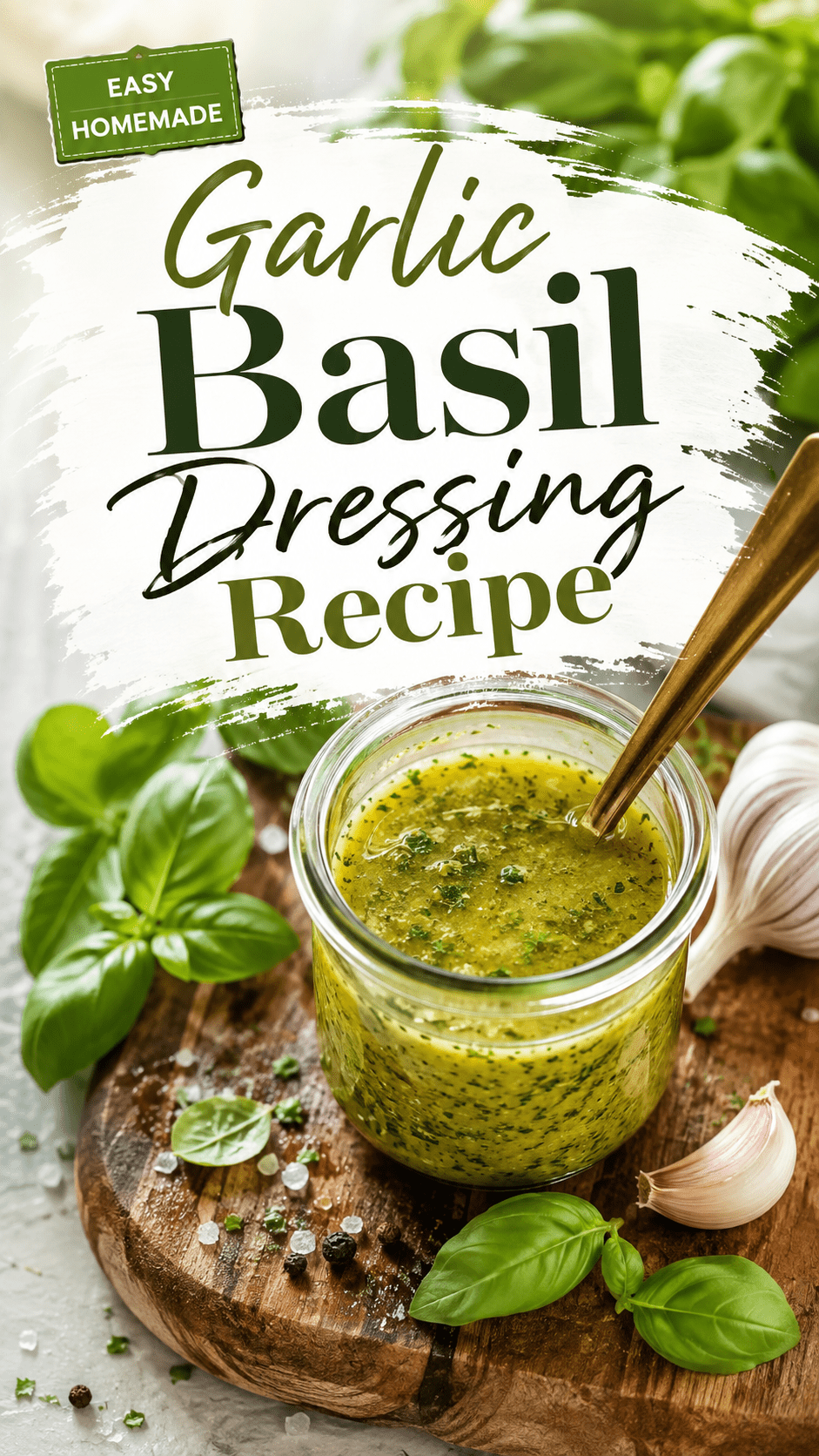
Silas came into the kitchen the other night, stuck his finger straight into the blender, and got a stern talking to about germs and basic kitchen manners.
He didn’t care. He just wanted more dressing.
I’d made a batch of this garlic basil dressing for a completely boring weeknight salad, and by the time I turned around to plate everything, half of it was gone. Not drizzled on anything. Just gone, like he’d been eating it with a spoon (he had).
That’s when I knew this recipe needed to make it onto the blog.
It’s garlicky, herby, a little tangy, and comes together in the time it takes your pasta water to boil. No cooking required. Just a blender, a handful of basil, and five minutes you didn’t think you had.
Let’s get into it.
What You’ll Need
| Ingredient | Amount |
|---|---|
| Fresh basil leaves | 1 cup, packed |
| Garlic cloves | 2, peeled |
| Extra virgin olive oil | 3/4 cup |
| Red wine vinegar | 3 tablespoons |
| Fresh lemon juice | 1 tablespoon |
| Dijon mustard | 1 teaspoon |
| Honey | 1 teaspoon |
| Parmesan cheese, grated | 2 tablespoons |
| Salt | 1/2 teaspoon, or to taste |
| Black pepper | 1/4 teaspoon |
| Water | 1-2 tablespoons, as needed |
That’s it. Eleven ingredients and most of them are already sitting in your pantry.
Tools You’ll Need
- Blender or food processor
- Measuring cups and spoons
- Small jar or airtight container for storing
- Rubber spatula (for scraping down the sides)
Pro Tips
I’ve made this dressing more times than I can count, so here’s what actually matters.
Don’t skip drying the basil. Wet basil waters down your dressing and dulls the flavor. Pat it dry with a paper towel after washing.
Taste before you add all the salt. Parmesan is salty on its own. Add half, taste, then adjust.
Use good olive oil. This dressing has so few ingredients that the quality of your oil actually shows up in the final flavor. You don’t need the fanciest bottle, just a decent one.
Blend the garlic and basil first. If you toss everything in the blender at once, you can end up with chunks of garlic that never fully break down. Pulse the garlic and basil together for a few seconds before adding the rest.
Thin it slowly. Add water one tablespoon at a time. It’s way easier to thin a dressing than to fix one that’s gone soupy.
How to Make Garlic Basil Dressing
- Add the basil leaves and garlic cloves to your blender. Pulse a few times until roughly chopped.
- Add the olive oil, red wine vinegar, lemon juice, Dijon mustard, and honey.
- Blend on medium speed for 30 to 45 seconds, until the basil is fully broken down and the dressing looks smooth and green.
- Add the Parmesan, salt, and pepper. Blend again for another 10 seconds to combine.
- Check the consistency. If it’s thicker than you’d like, add water a tablespoon at a time and blend until it loosens up.
- Taste and adjust. Need more tang? Add a splash more vinegar. Want it garlickier (a bold move, but I respect it)? Blend in another small clove.
- Pour into a jar and store in the fridge until you’re ready to use it.
That’s genuinely the whole process. No stovetop, no waiting, no dishes beyond a blender and a jar.
Substitutions and Variations
| Original | Swap | Notes |
|---|---|---|
| Parmesan cheese | Nutritional yeast | Makes it dairy-free, adds a similar savory note |
| Red wine vinegar | Apple cider vinegar | Slightly fruitier, still tangy |
| Honey | Maple syrup | Great for a vegan version |
| Basil | Half basil, half spinach | Mellows the flavor, adds more green |
| Olive oil | Avocado oil | Neutral flavor, still creamy texture |
| Dijon mustard | Whole grain mustard | Adds texture and a slightly sharper bite |
Want it spicier? A pinch of red pepper flakes blended in does wonders. Want it creamier? Add a tablespoon of Greek yogurt or mayo, it turns into more of a green goddess situation.
Make-Ahead Tips
This dressing actually gets better after sitting for a couple of hours, since the garlic has time to mellow out and the flavors settle into each other.
Make it up to 4 days ahead and store it in an airtight jar in the fridge. Give it a good shake or stir before using, since the oil naturally separates a bit.
I like making a double batch on Sundays so I have dressing ready for salads all week. Cuts down on the “what am I even going to eat” spiral by a lot.
Estimated Nutritional Breakdown
Per 2-tablespoon serving. These are estimates only and haven’t been lab tested, so treat them as a general guide rather than exact numbers.
| Nutrient | Amount |
|---|---|
| Calories | 110 |
| Total Fat | 12g |
| Saturated Fat | 2g |
| Carbohydrates | 1g |
| Sugar | 1g |
| Protein | 1g |
| Sodium | 140mg |
If you’re watching sodium, cut the added salt and lean on the Parmesan for saltiness instead.
Meal Pairings
This dressing is way more versatile than a basic vinaigrette. Some of my favorite ways to use it:
- Drizzled over a simple tomato and mozzarella salad (basically a lazy caprese)
- Tossed with roasted vegetables right when they come out of the oven
- Spooned over grilled chicken or salmon as a quick sauce
- Mixed into pasta salad instead of a heavier mayo-based dressing
- Used as a dip for warm crusty bread
Silas’ personal favorite is drizzling it over sliced tomatoes with a little flaky salt. Very little effort, very big payoff.
Storage and Reheating
Store the dressing in an airtight jar or container in the fridge for up to 4 days.
You don’t need to reheat this one, it’s meant to be served cold or at room temperature. Just pull it out about 10 minutes before serving so the olive oil isn’t too thick and cold.
If it separates in the fridge (totally normal), just give it a vigorous shake before using.
I wouldn’t recommend freezing this dressing. The texture gets weird once it thaws, and the fresh basil flavor fades fast.
FAQ
Can I use dried basil instead of fresh?
You can in a pinch, but the flavor and texture won’t be the same. Fresh basil gives you that bright, herby punch that dried basil just can’t replicate here. If you have to use dried, start with a tablespoon and add more to taste.
Why is my dressing bitter?
This usually happens with raw garlic that’s too strong, or basil that’s slightly old. Try using less garlic next time, or add an extra touch of honey to balance it out.
Can I make this without a blender?
Technically yes, if you finely mince the garlic and basil by hand and whisk everything together, but you’ll lose that smooth, emulsified texture that makes this dressing so good.
Is this dressing keto-friendly?
Yes, it’s naturally low in carbs and high in healthy fats, which makes it a great fit for keto or low-carb eating.
How do I keep the dressing from separating?
A little separation is normal since it’s oil-based. Adding the Dijon mustard actually helps emulsify it and keep it together longer, so don’t skip that ingredient.
Can I double or triple this recipe?
Absolutely. Just make sure your blender has enough room, and you might need to blend in batches if it’s a smaller one.
Wrapping Up
This garlic basil dressing turned into one of those recipes I make without even thinking about it anymore. Five minutes, a handful of ingredients, and suddenly a plain salad feels like something you’d actually want to eat.
If you make it, I’d genuinely love to hear how it turns out. Drop a comment below and let me know what you paired it with, or if you tried one of the variations.
And if Silas ends up finger-deep in your blender too, just know you’re not alone.